Public Design Commission delays Metropolitan Park casino vote

Public Design Commission delays Metropolitan Park casino vote

The city’s Public Design Commission unanimously voted to table its vote on the design of a public-facing portion of the Metropolitan Park casino after a number of people testifying in opposition to the project on Tuesday raised concerns about the $8 billion complex’s impact on the local environment.

Read More

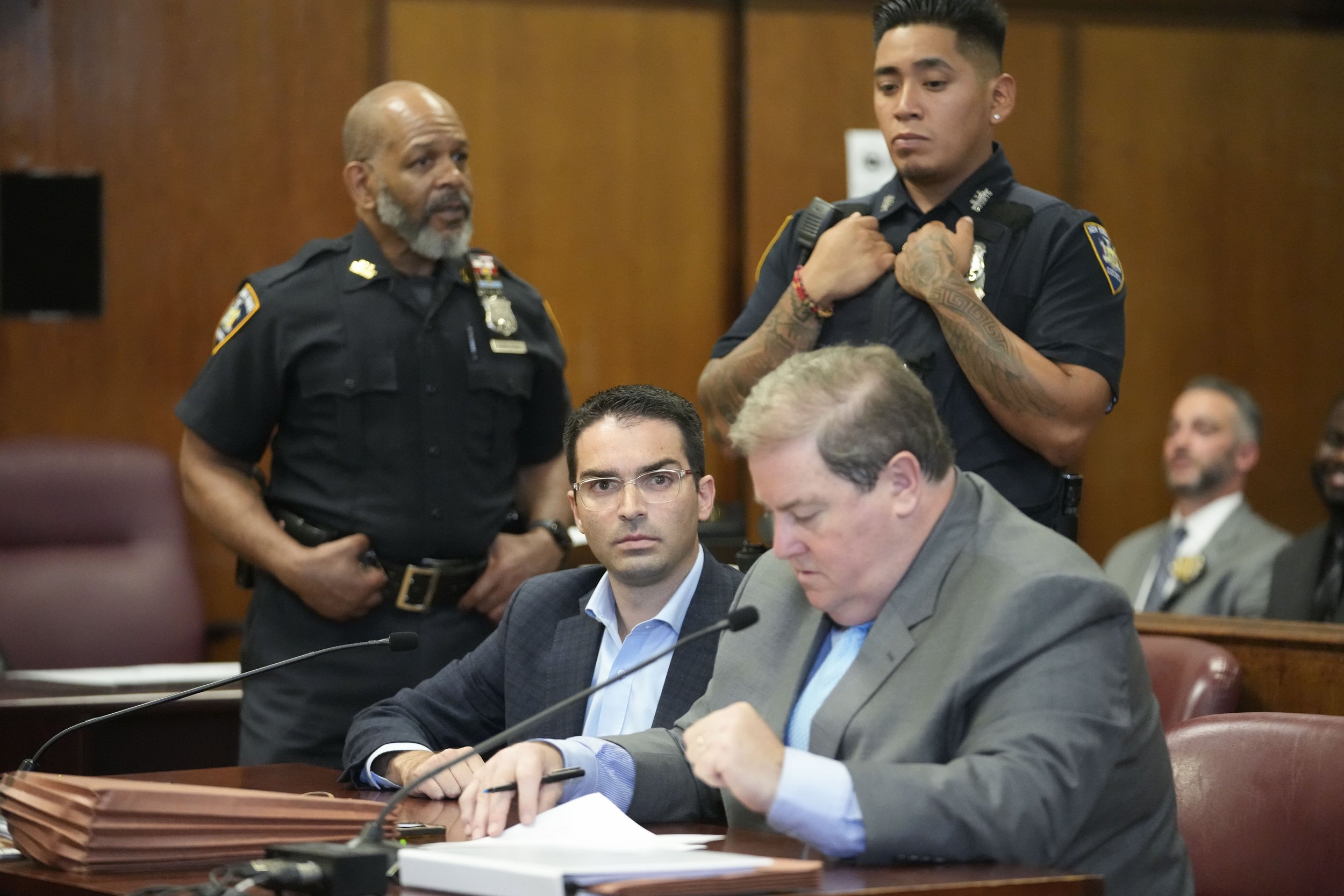
Former Queens Councilmember Eric Ulrich goes on trial in $150K bribery case

Former Queens Councilmember Eric Ulrich goes on trial in $150K bribery case

The trial for former Queens City Councilmember Eric Ulrich, who is accused of taking over $150,000 in bribes while he served as a local lawmaker and as the city’s building’s commissioner under Mayor Eric Adams, officially began on Monday.

Read More

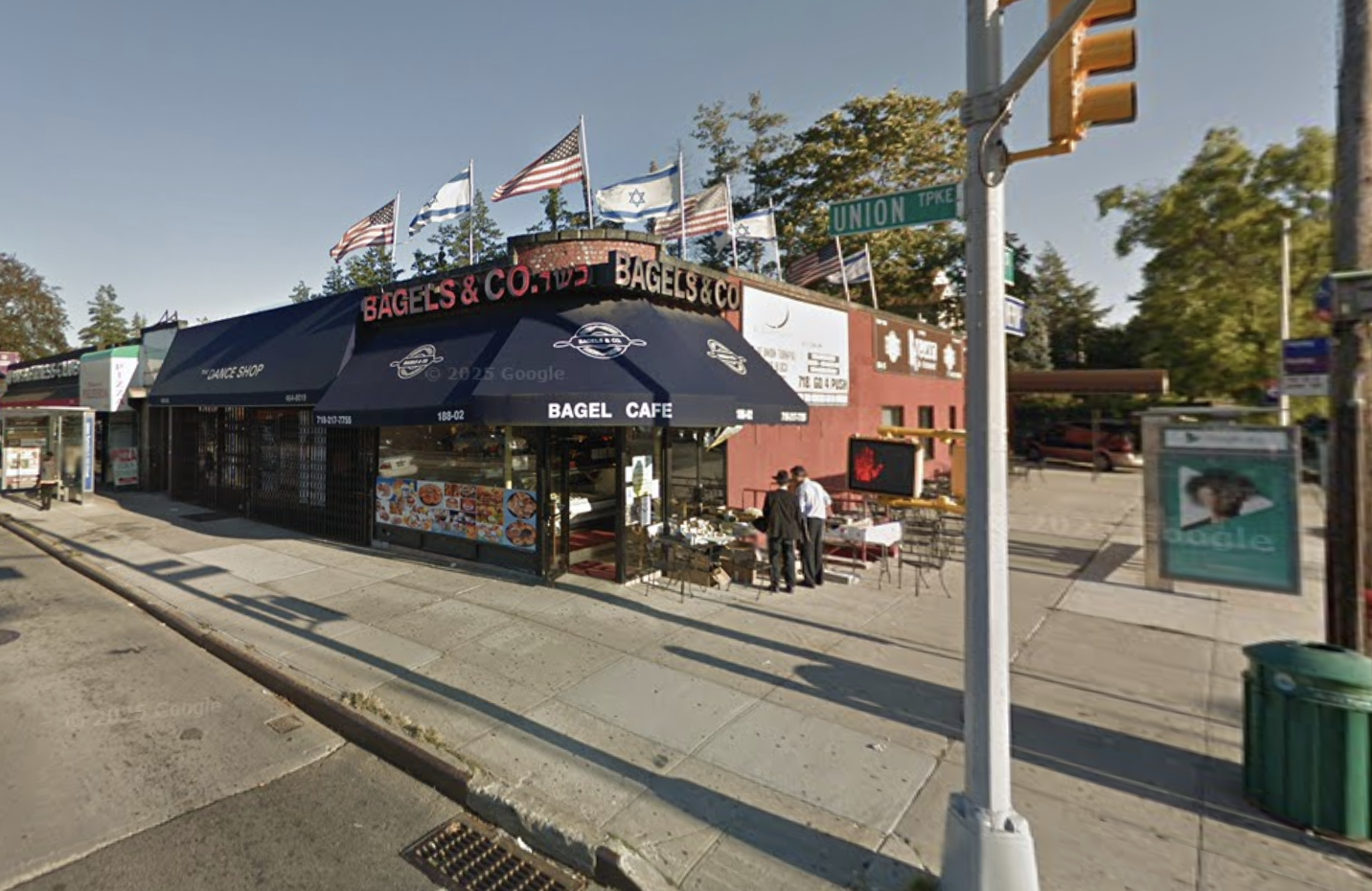
Queens man facing manslaughter charges hit with hate crime allegations for bagel shop vandalism

Queens man facing manslaughter charges hit with hate crime allegations for bagel shop vandalism

A Queens man already facing charges for allegedly killing an elderly woman in a car crash he caused is now facing hate crime charges for wrecking property outside a neighborhood bagel store that was flying Israeli flags.

Read More

Advocates push Mamdani for more accountability after NYPD mishandles Rozario case

Mayor Zohran Mamdani this week rolled out new police reforms that advocates for Win Rozario’s family say don’t go far enough.  Photo by Michael Appleton/Mayoral Photography Office

By Ryan Schwach

Criminal justice advocates and Win Rozario’s family want Mayor Zohran Mamdani to go deeper on a set of police reforms he introduced on Monday, which he said were an “obligation” to the Queens teen and his family.

Mamdani announced new reforms to the NYPD’s use-of-force policies and practices in response to the department’s mishandling of the Rozario case – an officer involved in the teen’s shooting was improperly allowed to retire while still under investigation by both the NYPD and the Civilian Complaint Review Board.

However, criminal justice advocates who have represented the Rozario family since his death in a 2024 shooting involving NYPD officers said this week that the mayor’s new reforms aren’t enough.

“While we appreciate Mayor Mamdani’s intent behind these reforms, they fall far short of what New Yorkers, including Win Rozario’s family, need and deserve,” Justice Committee Executive Director Loyda Colon said in a statement. “The problem is not that the NYPD needs more training or to revise its policies, but that the Department consistently evades oversight, transparency and meaningful change, violates the law and its own rules to do so, and shields officers who harm and kill New Yorkers from facing discipline.”

Mamdani’s new policy announcement came a few days after it was reported that Salvatore Alongi, one of the officers involved in the shooting, had retired, avoiding disciplinary charges from the Civilian Complaint Review Board in an apparent violation of the watchdog group’s agreement with the NYPD.

“Alongi’s retirement with an enhanced pension and the NYPD’s failure to notify the CCRB and report him for decertification is a glaring example of this,” Colon said. “Previous administrations tried to require the NYPD to review and adjust its own policies and it has never worked.”

The Eagle reported on Friday that Alongi qualified for accidental disability retirement, which he applied for before being hit with the CCRB’s charges. Accidental disability retirement, often known as “three-quarters,” allows an officer to retire early due to a mental or physical injury sustained in the line of duty and includes a yearly pension worth 75 percent of their final salary.

The department blamed a civilian employee for failing to alert the CCRB to Alongi’s retirement so that the board could move quickly to hold a trial in the case. The employee was demoted and reassigned, according to the NYPD.

Police Commissioner Jessica Tisch personally apologized for the “human error” in a statement.

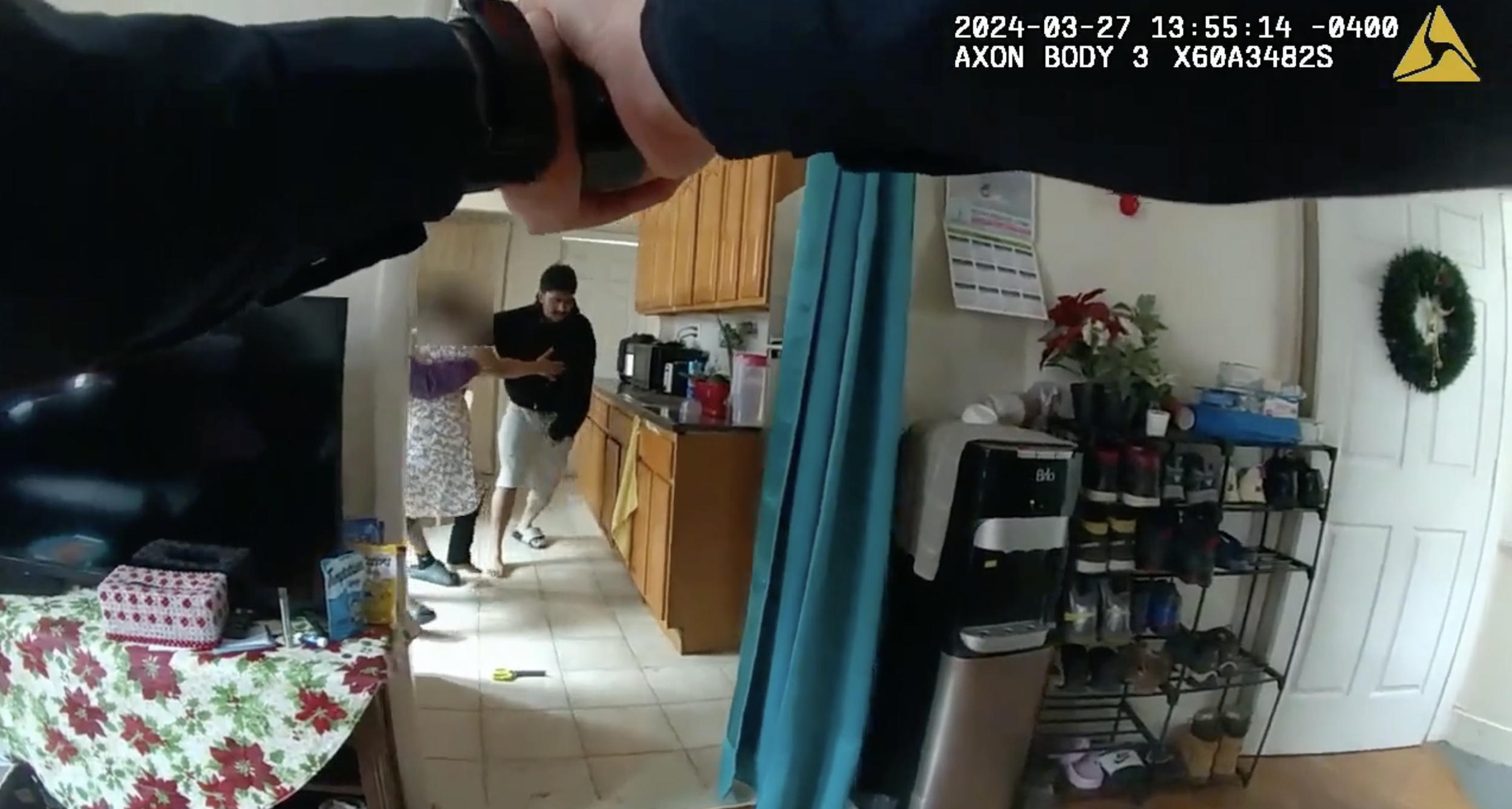
The family of Win Rozario is still seeking consequences for the officers involved in the shooting of the then 19-year-old at his Queens home more than two years ago.  Screenshot via New York State Attorney General’s Office

The NYPD added that following the mistake, it had strengthened its policies regarding officers facing a pending trial with the CCRB. The department said there will now be two layers of review for CCRB matters, and the department advocate will personally notify the CCRB of any retirement application by an officer with a pending CCRB case.

Mamdani’s new set of policies goes further and also intends to change the rules that police follow during incidents like the one that led to Rozario’s death in March 2024, which came while the teen was in the middle of a mental health crisis.

In the coming months, the city will review all of the NYPD’s use-of-force policies and practices.

The mayor specifically mentioned Rozario when announcing the reforms.

“When the government uses force against a New Yorker, the standard for accountability must be at its highest. Every New Yorker deserves to know that force will be used lawfully, carefully and only when necessary,” Mamdani said. “We have an obligation to Win’s family and to every New Yorker who calls for help in a moment of crisis. This review is about making sure our policies reflect that responsibility, that our officers have the guidance and training they need and that New Yorkers and their families can trust their city will treat them with care and dignity.”

The Mamdani administration said it will increase funding for the Office of the Inspector General for the NYPD by $2.6 million to restore staffing levels at that office and help it investigate policies and practices that undermine accountability for police misconduct. The city will also formalize pre-existing policies around information sharing following incidents of police misconduct, including releasing final NYPD Force Investigation Division reports to families of victims.

The Justice Committee, which has represented the Rozario family since the shooting, said the mayor should also appoint a new inspector general to oversee the department, and publicly release information about officers involved in shooting incidents within 24 hours.

“The entire NYPD discipline process needs to be transformed to ensure that officers who kill and harm New Yorkers are fired,” Colon said.

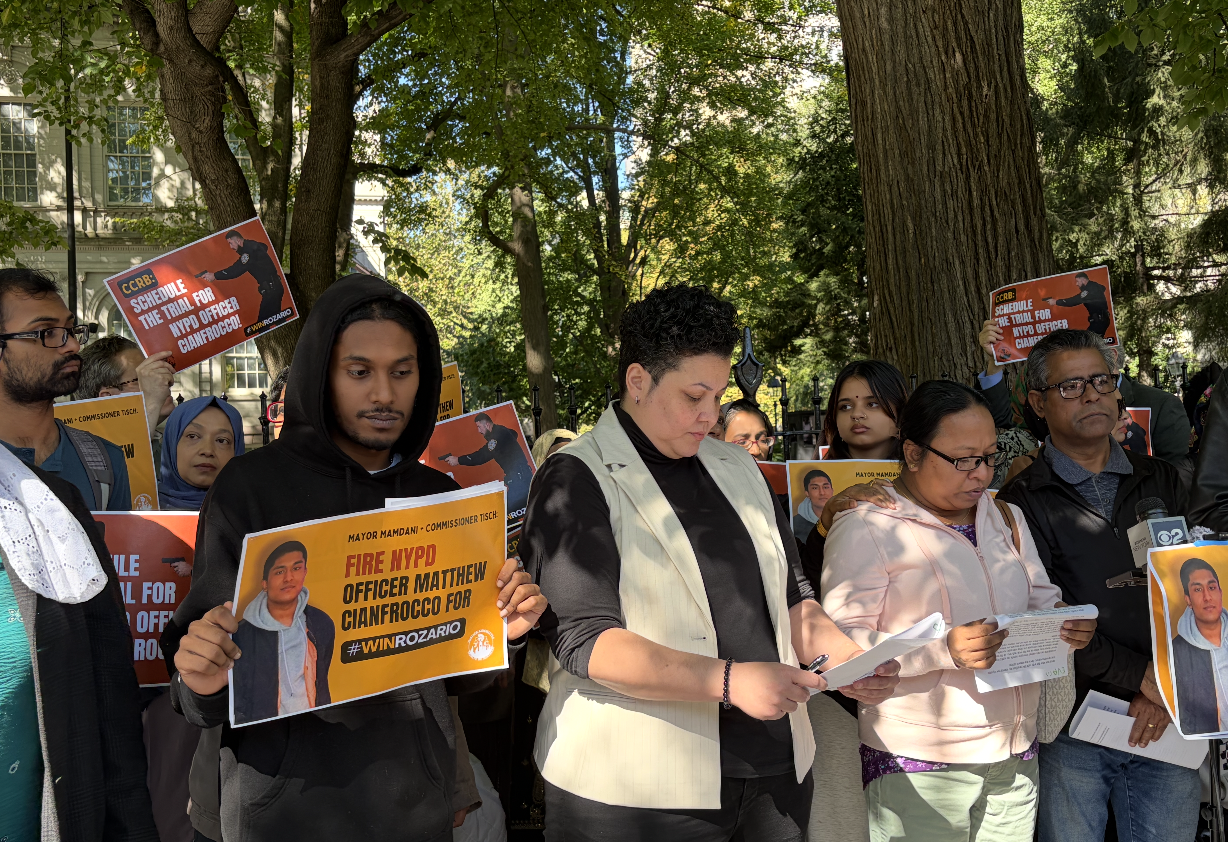
With Alongi now retired, the other officer involved in the Rozario shooting, Matthew Cianfrocco, is still facing a CCRB investigation. A trial date has not yet been set.

Queens honors its friendly neighborhood Spider-Man with street renaming

The Forest Hills street where Spider-Man grew up in the Marvel comics was co-named “Spider-Man Way” this week. Photo by Gerardo Romo / NYC Council Media Unit.

By Ryan Schwach

Queens now has a street dedicated to its very own friendly neighborhood Spider-Man.

On Monday, the intersection of Ingram Street and Ascan Avenue in Forest Hills was co-named “Spider-Man Way” in honor of Queens’ local superhero.

The Marvel character, created by Stan Lee and Steve Ditko, is a Queens local in the original comics and was raised by his Aunt May and Uncle Ben on Ingram Street.

Forest Hills’ councilmember, Lynn Schulman, pushed the legislation to get the street co-named, and said it helps make a permanent connection between the community and its hometown, web-slinging hero.

“Here in Queens, we see that every day in the people who show up for their neighbors and give back to their communities,” she said. “Spider-Man Way celebrates that spirit and recognizes the lasting connection between Forest Hills and one of New York’s most iconic characters. I’m proud to help make that connection a permanent part of our neighborhood.”

“Spider-Man reminds us that you don’t have to be superhuman to make a difference,” she added.

Schulman was joined at the street co-naming on Monday by Assemblymembers Sam Berger and Andrew Hevesi, Council Speaker Julie Menin, U.S. Rep. Grace Meng, Queens Borough President Donovan Richards, Queens District Attorney Melinda Katz and state Sen. Leroy Comrie.

“For decades, Forest Hills has been home to Spider-Man, and we are thrilled to honor that legacy with a street renaming for our very own Webhead,” said Berger. "For millions, myself included, Spider-Man’s heroic exploits in comics, film, and video games were more than entertainment. They inspired us to dream big, stand up for others, and remember that anyone can be a hero. Even a kid from Queens."

In 2023, the Forest Hills home where Spider-Man “lived” with his aunt and uncle at 20 Ingram Street went up for sale for around $2 million. It is currently owned by a man named Jack Shi, who says he often receives fan mail meant for the home’s fictional resident.

Queens case could bring New York’s enhanced sentencing rules before top court

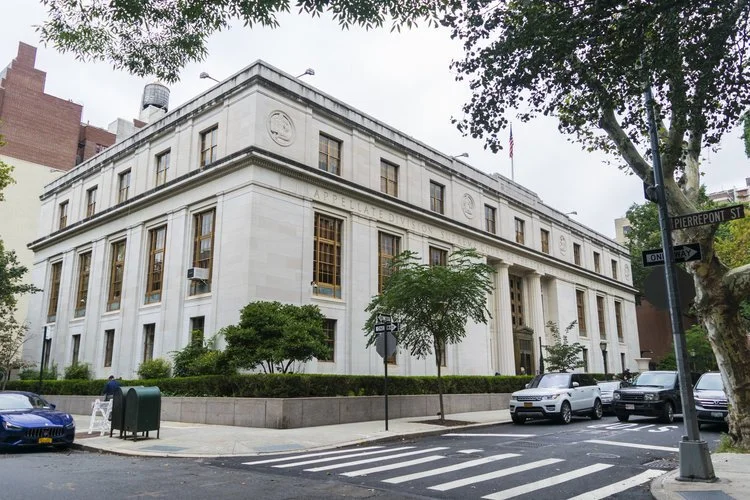
The Appellate Division, Second Department ruled that a U.S. Supreme Court decision does not impact New York’s enhanced sentencing determination practices. Eagle file photo by Rob Abruzzese

By Noah Powelson

Juries are not required for judges to determine if a defendant qualifies for an enhanced sentence in New York, despite the U.S. Supreme Court saying otherwise, according to a landmark ruling from the Appellate Division, Second Department.

The Appellate Division, Second Department ruled on Wednesday that defendants are not entitled to have a jury determine if they qualify for an enhanced sentence based on the timeline of prior convictions. The decision has widespread implications for repeat felons, who can now receive a sentence beyond the maximum otherwise allowed, based on a judge’s determination alone. The ruling also likely will set up a larger legal debate in the state’s highest court.

The appeals court made the decision in the case of a Queens man, Malik Gardner, who was arrested for illegal drug and weapon possession charges in 2018.

Gardner pleaded guilty to the charges and was sentenced in 2019, but he also had a prior criminal weapon possession conviction from 2006. During sentencing, Queens Supreme Court Justice Gia Morris determined he must be sentenced as a second felony offender.

In 2023, Gardner moved to have his sentence vacated and argued, among other things, that only a jury could determine if his prior conviction was within the 10-year timeline used to determine whether he qualified as a first- or second-time felony offender. Morris granted Gardner’s motion in 2024 and resentenced him as a first-time violent felony offender. The Queens District Attorney’s Office appealed and brought the case before the appellate court.

An enhanced sentence is the practice of imposing a sentence beyond the standard maximum for a felony defendant who has two or more qualifying prior felony convictions within the past 10 years.

In New York state, judges have the discretion to determine if a felony defendant qualifies for an enhanced sentence.

But that practice puts the state at odds with the U.S. Supreme Court which, under Erlinger v United States, found that only a jury could determine if a defendant’s most recent conviction fell within 10 years of their previous conviction.

In Gardner’s case, the Appellate Division, Second Department had the unique chance to weigh in on whether a jury is needed solely to determine if a defendant’s prior convictions occurred within 10 years of the current offense.

“We hold that it does not,” the appellate court’s decision read.

“The decision in Erlinger does not alter the landscape of New York’s predicate felony offender statutes, the constitutionality of which is well-settled,” the decision continued. “The defendant in this case was not constitutionally entitled to have a jury determine the length of the previous period of incarceration for the purposes of tolling the 10-year lookback period.”

The court ruled that the issue Erlinger specifically addressed – a sentencing provision of the Armed Career Criminal Act regarding enhanced sentencing – is fundamentally different from the provisions of New York’s repeat felony offender statutes and does not affect their constitutionality.

The appellate court also ruled that courts are already required to determine the dates on which a defendant was admitted to and discharged from a correctional facility while serving a prior sentence, and that that determination is akin to a “fact of prior conviction.” Under Apprendi v. New Jersey, the appellate decision states, judges may properly determine facts of prior conviction without a jury determination.

The judges cited Erlinger itself, and quoted the decision in their ruling – “It is wildly inefficient for our system to try to fit the square peg of factfinding related to past criminality for sentencing purposes into the round hole of the existing processes that govern jury determinations.”

Following their decision, the appellate court judges reversed the resentencing of Gardner as a first-time felony offender, and remitted the case back to Morris’ court.

But the debate over the legal issue is likely far from over.

Gardner’s attorney, Randall Unger, told the Eagle he plans to appeal the decision, bringing the case to the Court of Appeals.

“I’m disappointed but not surprised,” Unger said about the Second Department’s decision. “The First Department previously reached the same decision. I hope the Court of Appeals accepts the case and rules differently.”

The contrasting rulings between the state and federal courts have led to widespread confusion among judges about when they should or should not bring in a jury to determine whether a defendant qualifies for an enhanced sentence.

While the state’s higher courts have maintained that judges have the discretion to enhance a sentence, the lack of clear guidance of how to navigate different federal and state instructions leaves many judges hesitant to do so.

For those judges who say they can’t issue enhanced sentences on their own anymore, the uncertainty often means scheduling a separate jury trial just to determine sentencing. That means spending more time and resources to bring in a new jury just to determine if the defendant has been convicted multiple times over the past decade.

But doing so comes with its own risks, as courts would have to navigate keeping a jury impartial while also telling them the defendant was already convicted of the crime.

One Queens judge, who was granted anonymity, previously told the Eagle the Erlinger decision threw the lower courts into disarray.

“It's impractical to have the same jury hear the trial and then make that determination, so you have to select a new jury to do that,” the Queens judge told the Eagle. “What’s the new jury going to hear? The jury knows [the defendant] is a convicted felon. There’s not going to be much sympathy there. Can they make that determination without bias?”

Anthony Sabino, a private attorney and professor of law at St. John’s University’s Peter J. Tobin College of Business, said that while the current ruling keeps New York’s sentencing practices in place, Gardner’s case could very well make its way to the Supreme Court.

"This is quite possibly a case that might make its way to the Supreme Court of the United States,” Sabino told the Eagle. “The larger question which looms here is the constitutional requirements that a jury and only a jury – not a judge – determines the facts which a judge then relies upon in passing a sentence. The U.S. Supreme Court has been particularly sensitive to that question in recent years, most notably with the Apprendi case, where the high Court found it unconstitutional for a judge to enhance a defendant’s sentence on his own discretion, without the jury deciding the facts necessary for that sentence enhancement.”

“For now, our local courts say it is constitutional, and accords with Apprendi,” Sabino added. “But if this comes before the justices of the U.S. Supreme Court, will they agree? Only time will tell.”

Historic Queens rec center reopens after massive renovation

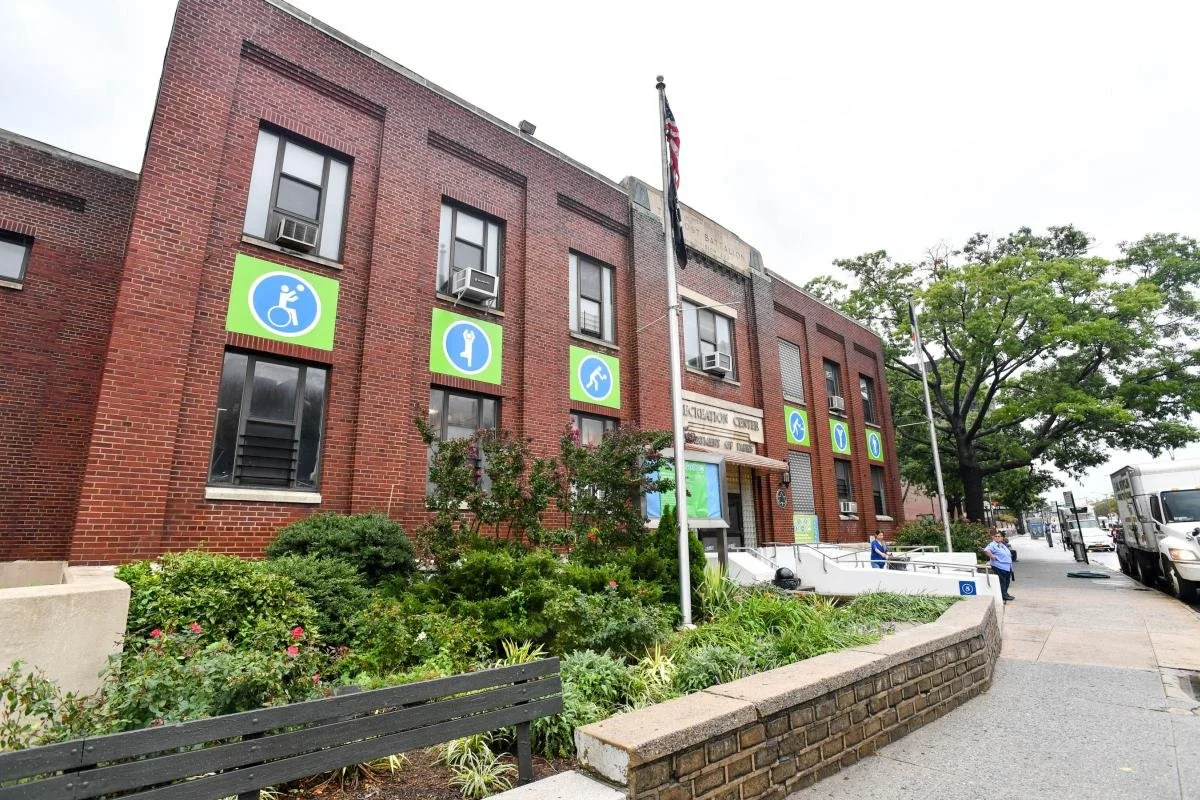
The Lost Battalion Hall Recreation Center in Rego Park reopened last week after a four-year renovation.  Photo via the New York City Parks Department

By Ryan Schwach

A Rego Park community facility built during the Great Depression for $100,000 reopened last week following a four-year, $26 million renovation.

The Lost Battalion Hall Recreation Center, once used as a firing range for Queens veterans, reopened its doors to local residents on Friday as an entirely renovated community and recreation center.

Parks Department Commissioner Tricia Shimamura and Mayor Zohran Mamdani announced the reopening, which brings a more accessible and modern recreation center to the middle of Central Queens.

“Every New Yorker should feel proud of their public spaces,” the mayor said. “We’re reopening Lost Battalion Hall just in time for the weather to cool down and New Yorkers to head indoors to continue playing their favorite sports all winter long.

“With new equipment, accessibility improvements and safety upgrades, Lost Battalion Hall will be even more welcoming to New Yorkers. Whether you’re here to shoot hoops, work out or hang out, this is your recreation center,” the mayor added.

The four-year, top-to-bottom renovation included the redesign of the entrance and lobby, refurbished fitness spaces, updated restrooms, a newly painted basketball court, new equipment and upgraded safety and building systems.

The center’s weightlifting area, spin room and fitness room were also upgraded, as were locker areas, storage facilities and bathrooms.

Most of the work was dedicated to increasing the accessibility and sustainability of the center.

“Rego Park children and families have long deserved high-quality recreation space to call their own, especially in a community that glaringly lacks sizable parks or playgrounds,” Queens Borough President Donovan Richards said. “We are delivering exactly that this massive refurbishment of Lost Battalion Hall, which has been the anchor of this neighborhood for generations, ensuring our neighbors have safe spaces that support our physical and mental wellness is a top priority of my administration.”

Lost Battalion Hall has a long and fabled history in Central Queens.

It was completed in 1939 as a project for the Works Progress Administration, the New Deal program created by President Franklin Roosevelt to give jobs to Americans and improve public works and infrastructure.

Its $100,000 price tag is worth about $2.3 million in today’s buying power, less than the $26 million renovation cost.

The building was first used as a firing range and drill hall for the Queens Veterans of Foreign Wars and the American Legion, according to Forgotten New York.

It became Parks Department property in 1960.

“The Lost Battalion Hall has become a staple in Queens for 87 years,” Queens Councilmember Jim Gennaro said. “It is where neighbors come together, where kids can stay active, where seniors can socialize and where people of all ages and backgrounds can unwind. And now, with these renovations, we have a facility that's better equipped to serve the community here for generations to come.”

A new basketball court and a host of other improvements welcomed Queens locals back into the Lost Battalion Hall Recreation Center in Rego Park last week.  Photo via City Hall

“I'm thrilled to see Lost Battalion Hall getting a new lease on life – especially after such a long wait,” the lawmaker said.

The facility was closed for over a year during the COVID pandemic. It reopened only to be quickly shuttered again to undergo the renovation.

“I am happy to see the return of Lost Battalion Hall, as this investment means so much to families,” Assemblymember Larinda Hooks said. “Access to and investment in youth recreation centers should be a prevalent concern. It is important that every community should have at least one recreation center for young people to enjoy as a safe space to congregate and have fun.”

The facility was named for the “Lost Battalion” of World War I, a unit of mainly New Yorkers that held its ground for five days while surrounded by German troops in the Argonne Forest in France.

Osina leads fundraising with month to go before election

Queens 23rd Assembly District candidates Pesach Osina and Thomas Sullivan are raising money as the race goes into the home stretch.  Photos via campaigns

By Ryan Schwach

Queens is now less than a month away from the November general election, and candidates are building war chests for the home stretch.

In the borough's most competitive race, Democrat Pesach Osina is outraising his Republican opponent Tom Sullivan in the contest for Southeast Queens’ 23rd Assembly District.

Osina, who won a primary in June, raised twice what Sullivan did in the last fundraising period.

The Democrat raised just shy of $45,000, while Sullivan raised over $25,000.

Both still have significant funds in the bank. Osina has $143,000 for the final month of the election, and Sullivan has around $104,000.

Osina is supported by retiring incumbent Stacey Pheffer Amato, the Democratic Party, and its allies. His highest donations have come from political PACs, including the New York Real Estate Board, which gave him $5,000. He also received donations from the carpenters’ union and the powerful Hotel Trades Council Committee. Both donated $3,000 to Osina’s campaign.

Osina, a Council staffer, has also received significant donations from City Councilmember Simcha Felder and Alice Tisch of the Tisch family. Progressive Councilmembers Lincoln Restler and Sandy Nurse have also given to the campaign.

Despite the donations from powerful groups and New Yorkers, Osina said he is running a “grassroots” effort.

“The coalition that I built during the primary is going to get me over to the victory now in the general,” Osina told the Eagle on Monday. “We are stronger than ever.”

Osina won the primary in June over local attorney Mike Scala.

Scala won the majority of electoral districts in the Rockaway-centered district, but ultimately fell short thanks to Osina’s dominant showing in the Orthodox Jewish community in Far Rockaway.

Sullivan, who is making his third attempt to represent the 23rd District, received mostly smaller donations from family members and local Republicans.

But the retired Army colonel has substantially outspent his Democrat opponent by more than $100,000.

Sullivan has spent large sums of money on political consulting.

Queens candidates are raising money with less than a month to go before Election Day.  Eagle file photo by Ryan Schwach

He has paid around $56,000 to McShane LLC, a conservative political consulting company based in Las Vegas. In total, Sullivan’s spending on consulting and communications accounts for about 70 percent of his overall expenditures.

Sullivan told the Eagle he is focused on meeting local voters.

“Not everybody gets mail or follows textbooks or Facebook,” he said. “But when they see you on the corner, it matters. It's time consuming, and not everybody is interested. But the people that engage you are wonderful.”

Other Queens races

District 23 is home to the only truly competitive race between a Republican and a Democrat this November, but that has not stopped money from being raised elsewhere in the borough.

In Assembly District 30, Republican Brandon Castro has more money in the bank than his opponent, Patrick Martinez, who is fresh off a bruising Democratic primary he won by only seven votes after a recount.

Martinez has raised more than Castro, pulling in $12,000 in the last period to Castro’s $2,300. However, Castro still holds about $47,000 in the bank, and Martinez is sitting with under $10,000.

The only other Queens contest where both candidates filed disclosures this week was Senate District 11. In that race, Republican Pamela Michos is challenging longtime Democratic incumbent Toby Ann Stavisky.

Stavisky outraised Michos considerably in the last period, pulling in around $60,000 to Michos’ $16,000. Michos still holds around $88,000 in the bank behind Stavisky’s $99,000.

Two of Queens’ insurgent Democratic Socialist candidates, David Orkin and Aber Kawas, both filed disclosures but their respective Republican opponents, Ruben Cruz and Han-Khon To, did not.

Orkin filed about $11,700 in donations, and Kawas filed about $20,500.

Early voting begins this month on Oct. 24 and runs up until election day on Nov. 3.

Win Rozario’s family slams NYPD for allowing officer to retire before facing discipline for teen’s killing

Win Rozario’s family slams NYPD for allowing officer to retire before facing discipline for teen’s killing

The Family of Win Rozario family rallied alongside advocates at City Hall on Thursday after learning that Salvatore Alongi, one of the officers involved in the shooting, had retired, avoiding disciplinary charges from the Civilian Complaint Review Board in an apparent violation of the watchdog group’s agreement with the NYPD.

Read More

Officials decry conditions at Queens veterans’ shelter

Officials decry conditions at Queens veterans’ shelter

Lawmakers said Wednesday that they remain concerned about conditions inside the Borden Avenue Veterans’ Residence in Long Island City, several weeks after the city pulled out of a federal program that funded the shelter and a week after two Queens officials were turned away when they tried to enter the building.

Read More