Queens case could bring New York’s enhanced sentencing rules before top court
/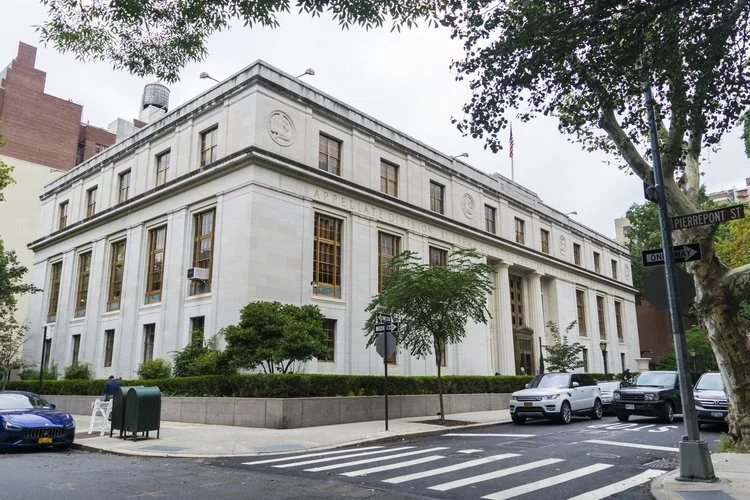
The Appellate Division, Second Department ruled that a U.S. Supreme Court decision does not impact New York’s enhanced sentencing determination practices. Eagle file photo by Rob Abruzzese
By Noah Powelson
Juries are not required for judges to determine if a defendant qualifies for an enhanced sentence in New York, despite the U.S. Supreme Court saying otherwise, according to a landmark ruling from the Appellate Division, Second Department.
The Appellate Division, Second Department ruled on Wednesday that defendants are not entitled to have a jury determine if they qualify for an enhanced sentence based on the timeline of prior convictions. The decision has widespread implications for repeat felons, who can now receive a sentence beyond the maximum otherwise allowed, based on a judge’s determination alone. The ruling also likely will set up a larger legal debate in the state’s highest court.
The appeals court made the decision in the case of a Queens man, Malik Gardner, who was arrested for illegal drug and weapon possession charges in 2018.
Gardner pleaded guilty to the charges and was sentenced in 2019, but he also had a prior criminal weapon possession conviction from 2006. During sentencing, Queens Supreme Court Justice Gia Morris determined he must be sentenced as a second felony offender.
In 2023, Gardner moved to have his sentence vacated and argued, among other things, that only a jury could determine if his prior conviction was within the 10-year timeline used to determine whether he qualified as a first- or second-time felony offender. Morris granted Gardner’s motion in 2024 and resentenced him as a first-time violent felony offender. The Queens District Attorney’s Office appealed and brought the case before the appellate court.
An enhanced sentence is the practice of imposing a sentence beyond the standard maximum for a felony defendant who has two or more qualifying prior felony convictions within the past 10 years.
In New York state, judges have the discretion to determine if a felony defendant qualifies for an enhanced sentence.
But that practice puts the state at odds with the U.S. Supreme Court which, under Erlinger v United States, found that only a jury could determine if a defendant’s most recent conviction fell within 10 years of their previous conviction.
In Gardner’s case, the Appellate Division, Second Department had the unique chance to weigh in on whether a jury is needed solely to determine if a defendant’s prior convictions occurred within 10 years of the current offense.
“We hold that it does not,” the appellate court’s decision read.
“The decision in Erlinger does not alter the landscape of New York’s predicate felony offender statutes, the constitutionality of which is well-settled,” the decision continued. “The defendant in this case was not constitutionally entitled to have a jury determine the length of the previous period of incarceration for the purposes of tolling the 10-year lookback period.”
The court ruled that the issue Erlinger specifically addressed – a sentencing provision of the Armed Career Criminal Act regarding enhanced sentencing – is fundamentally different from the provisions of New York’s repeat felony offender statutes and does not affect their constitutionality.
The appellate court also ruled that courts are already required to determine the dates on which a defendant was admitted to and discharged from a correctional facility while serving a prior sentence, and that that determination is akin to a “fact of prior conviction.” Under Apprendi v. New Jersey, the appellate decision states, judges may properly determine facts of prior conviction without a jury determination.
The judges cited Erlinger itself, and quoted the decision in their ruling – “It is wildly inefficient for our system to try to fit the square peg of factfinding related to past criminality for sentencing purposes into the round hole of the existing processes that govern jury determinations.”
Following their decision, the appellate court judges reversed the resentencing of Gardner as a first-time felony offender, and remitted the case back to Morris’ court.
But the debate over the legal issue is likely far from over.
Gardner’s attorney, Randall Unger, told the Eagle he plans to appeal the decision, bringing the case to the Court of Appeals.
“I’m disappointed but not surprised,” Unger said about the Second Department’s decision. “The First Department previously reached the same decision. I hope the Court of Appeals accepts the case and rules differently.”
The contrasting rulings between the state and federal courts have led to widespread confusion among judges about when they should or should not bring in a jury to determine whether a defendant qualifies for an enhanced sentence.
While the state’s higher courts have maintained that judges have the discretion to enhance a sentence, the lack of clear guidance of how to navigate different federal and state instructions leaves many judges hesitant to do so.
For those judges who say they can’t issue enhanced sentences on their own anymore, the uncertainty often means scheduling a separate jury trial just to determine sentencing. That means spending more time and resources to bring in a new jury just to determine if the defendant has been convicted multiple times over the past decade.
But doing so comes with its own risks, as courts would have to navigate keeping a jury impartial while also telling them the defendant was already convicted of the crime.
One Queens judge, who was granted anonymity, previously told the Eagle the Erlinger decision threw the lower courts into disarray.
“It's impractical to have the same jury hear the trial and then make that determination, so you have to select a new jury to do that,” the Queens judge told the Eagle. “What’s the new jury going to hear? The jury knows [the defendant] is a convicted felon. There’s not going to be much sympathy there. Can they make that determination without bias?”
Anthony Sabino, a private attorney and professor of law at St. John’s University’s Peter J. Tobin College of Business, said that while the current ruling keeps New York’s sentencing practices in place, Gardner’s case could very well make its way to the Supreme Court.
"This is quite possibly a case that might make its way to the Supreme Court of the United States,” Sabino told the Eagle. “The larger question which looms here is the constitutional requirements that a jury and only a jury – not a judge – determines the facts which a judge then relies upon in passing a sentence. The U.S. Supreme Court has been particularly sensitive to that question in recent years, most notably with the Apprendi case, where the high Court found it unconstitutional for a judge to enhance a defendant’s sentence on his own discretion, without the jury deciding the facts necessary for that sentence enhancement.”
“For now, our local courts say it is constitutional, and accords with Apprendi,” Sabino added. “But if this comes before the justices of the U.S. Supreme Court, will they agree? Only time will tell.”