
Rikers ‘deadlocking’ debate continues at oversight hearing
/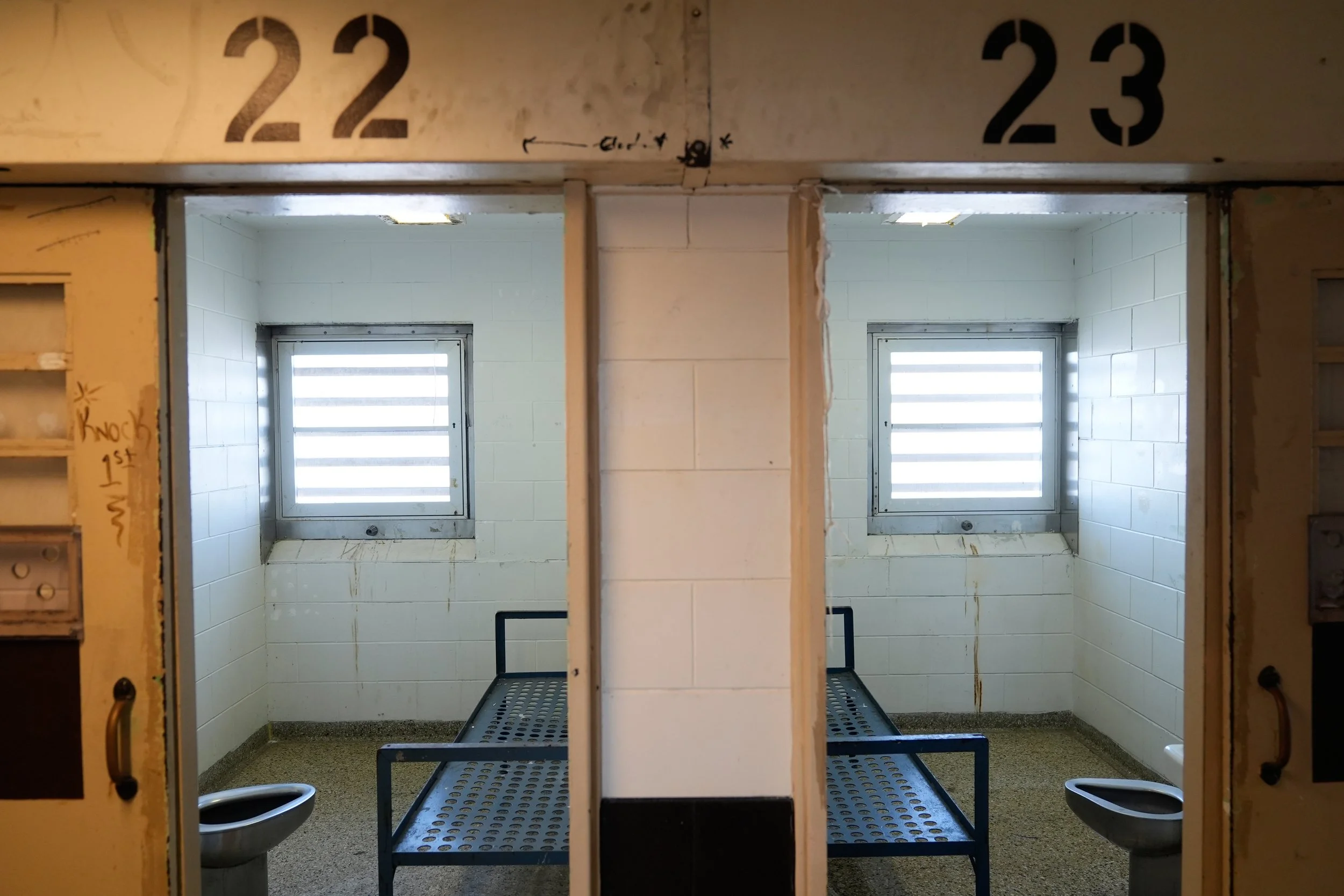
The debate over the existence of “deadlocking” on Rikers Island continued during a Board of Correction meeting on Tuesday, June 9, 2026. AP file photo by Seth Wenig
By Jacob Kaye
The dispute over the existence of “deadlocking,” or the practice of locking up detainees on Rikers Island for weeks or months at a time in violation of Department of Correction policy, cutting them off from health care, services and other people in custody, continued during a jail oversight meeting on Tuesday.
Officials with the Department of Correction during a Board of Correction meeting this week continued to deny that the practice, which was first alleged by a former social worker on Rikers Island in 2024, was used by correction officers.
However, advocates and attorneys said that deadlocking, which was once described by a public defense attorney as Rikers’ worst-kept secret, not only existed when it was first alleged but has been used by officers in recent months. A member of the BOC also said that during her time with Correctional Health Services, which provides healthcare to detainees on Rikers Island, a similar lock-up procedure was pervasive.
The debate at Tuesday’s BOC meeting came a little less than a month after The City Reporter reported that the Department of Investigation, which looked into the alleged use of deadlocking, was unable to substantiate the claims about the practice made by the social worker, Justyna Rzewinski, in 2024. The DOI report said that while its investigation “did not reveal any instances where PICs were locked-in their cells for weeks or months at a time as alleged,” the agency also was unable to obtain portions of video footage of the cells on Rikers Island where Rzewinski claimed deadlocking occurred, and it ran into a number of uncooperative potential witnesses.
The deadlocking discussion on Tuesday came in response to a June 2025 BOC report on the DOC’s general lock-in and lock-out procedures and “whether correctional uniformed staff are locking people in custody in their cells during regular lock-out hours over an extended period, and whether documentation reflects these lock-ins.”
While the BOC’s investigation didn’t find any instances of deadlocking as described by Rzewinski, it found 9 instances of “involuntary lock-ins,” the phrase used by the DOC to describe a similar practice. The BOC also found that the DOC violated its own policies by depriving people in custody in non-restrictive housing of lock-out with no basis or supporting documentation,” which it called in its report a “problematic and unjust practice.”
In the BOC’s report, the oversight board recommended the DOC “address any instances of inappropriate individualized involuntary lock-ins going forward,” and that it “discontinue the practice of unauthorized ‘deadlocking.’”
DOC officials have long denied that officers use deadlocking to punish detainees, as Rzewinski and others have claimed.
The social worker said during a 2024 BOC meeting that officers used the practice as a form of solitary confinement for detainees with mental illnesses.
Rzewinski, who worked on Rikers Island from December 2023 through August 2024, told the BOC that some detainees were deadlocked in a cell for so long that they began to “decompensate.”
“Many would smear feces all over themselves and their cells,” Rzewinski said. “They would sit in their cells almost catatonic, with flies and maggots and feces all over.”
“This is how these individuals woke up, went to sleep and ate the meals that were delivered to them through a slot three times a day,” she added.
James Conroy, the DOC’s general counsel, on Tuesday again did not acknowledge the existence of deadlocking but admitted that the DOC’s lock-in procedures weren’t always followed.
“Let’s be candid – it would be obtuse of us to think that we don't have deviations from policy,” he said. “Obviously we do see instances in any area where there's things that go on outside the scope of what's authorized.”
Conroy’s comment came in response to a question from BOC member Dr. Lauren Stossel, who previously worked as a psychiatrist in a Rikers Island unit for detainees with serious mental illness who had committed violent infractions behind bars.
Stossel said that she often saw a practice similar to deadlocking used during her time on the island.
“Regardless of what the DOI said, I can tell you that during my six years at [Correctional Health Services], I was seeing this all the time,” she said. “People threw a punch, and then they were locked in for over 24 hours because there were not enough staff on the floor, and there was a sense that it was not safe to let them out. People's hands were tied.”
“I don't think anybody was doing anything cruel on purpose, but this was a systemic problem that was happening throughout the jail,” she added.
Advocates testifying during Tuesday’s BOC meeting said that the practice has continued even after the investigations, the DOC’s alleged increased communication with officers about the issue, and the appointment of DOC Commissioner Stanley Richards, a criminal justice reformer who has vowed to change the agency’s troubled culture.
Natalie Fiorenzo, a corrections specialist with New York County Defender Services, said during the meeting that her public defense firm had received six reports of deadlocking in the past two months.
“This is not a practice of the past,” she said.