Mamdani makes first judicial appointments
/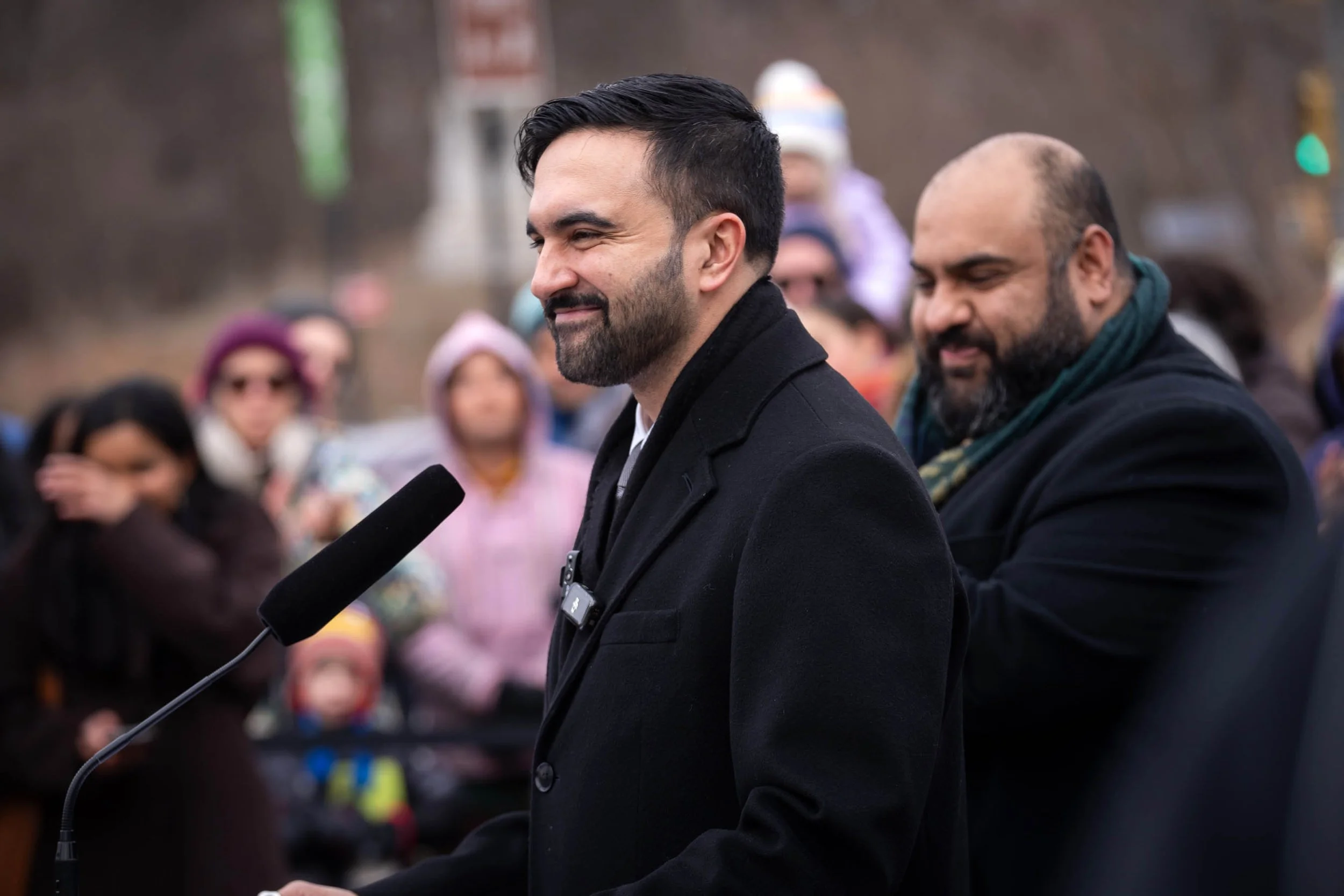
Mayor Zohran Mamdani announced three judicial appointments and nine reappointments in his first week as the city’s mayor. Photo by Ed Reed/Mayoral Photography Office
By Noah Powelson
Mayor Zohran Mamdani made the first judicial appointments of his tenure, just a few days after issuing an executive order reshaping the review and appointment process for city judges.
Mamdani appointed three new judges to the bench late Monday and reappointed nine sitting judges to the city’s Criminal Courts.
Two of the new judges are former prosecutors Cary Fischer and Natalie Barros, who both have over a decade of experience working as assistant district attorneys across the city. The third new judge, Andrés Casas, spent most of his career as a court attorney in Richmond County and as a litigation attorney for the Port Authority of New York and New Jersey.
Fischer began his legal career serving the Bronx district attorney’s office as an assistant district attorney for six years, assigned to the Criminal Court, Grand Jury and Narcotics Bureaus. He eventually joined the Brooklyn district attorney’s office in the Crimes Against Children Trial Bureau where he was promoted to senior trial attorney, then later as deputy bureau chief of the Red Zone Trial Bureau.
Prior to his appointment to the bench, Fischer served as the bureau chief of the Early Case Assessment Bureau and was an adjunct professor of the Criminal Prosecution Clinic at the New York School of Law.
Barros also started her career as an assistant district attorney, serving in Richmond County for a decade before joining the New York State Unified Court System as court attorney in criminal court. She served as a supervising court attorney before being appointed to the bench.
Starting as pro bono attorney with the Safe Passage Project, Casas also served as an ADA in Richmond County for four years before eventually joining UCS. He eventually served as a principal court attorney in Supreme Court, Criminal Term, Kings County before briefly leaving to work as a Litigation Attorney for the Port Authority of New York and New Jersey. Prior to his appointment, Casas served as a principal court attorney in the Supreme Court, Richmond County.
Public hearings for the new judges will take place on Jan. 13 before they officially take their place on the bench.
As well as the three new judges, Mamdani also announced nine judicial reappointments to the city’s Criminal Court, including Queens Judge Jerry Iannece.
"New Yorkers deserve a justice system that delivers accountability, safety, and fairness across the five boroughs,” Mamdani said in a statement. “I am proud to announce these judicial appointments, whose depth of experience and commitment to impartiality will strengthen our courts and restore public trust."
Mamdani’s first judicial appointments come just days after he named Queens lawyer Ali Najmi to serve as the chair of the Mayor’s Advisory Committee on the Judiciary, which recommends candidates for the city’s Family and Civil Courts, as well as interim judges for Criminal Courts.
As ordered by Mamdani, the 19-member committee will also be tasked with overhauling the judicial selection process.
The committee’s selection process under previous mayoral administrations has been criticized by legal advocates for being opaque and biased, primarily recommending prosecutors and court attorneys.
Najmi told the Eagle, after he was made committee chair, that new members will be appointed “swiftly,” and the committee will increase its outreach to bar associations, indigent legal service providers and public defense groups in order to proactively encourage attorneys who have typically been overlooked for judicial positions to apply.
“Not enough people know about the Mayor's Advisory Committee on the Judiciary or how to apply,” Najmi told the Eagle. “And not enough people, historically, have had confidence that if you were not well-connected, or if you were not connected to a judge already, that you could be a judge.”
“But in fact, in this administration, the people who never thought they could be a judge, but deserve to be one, will finally have that chance,” he added.
The mayor’s office said the Mamdani administration reviewed the judges nominated to the bench this week but did not answer questions about whether or not that review first began under the Adams administration.
Mamdani’s executive order six received praise from legal advocates this week. Government watchdog groups Scrutinize and Reinvent Albany, who made recommendations to the mayor to make the judicial selection process more transparent in a December report, celebrated Mamdani’s efforts but called on the mayor to do more.
“Scrutinize and Reinvent Albany thank Mayor Zohran Mamdani for including important new transparency, professional diversity, and outreach requirements in his new Executive Order 6,” Scrutinize said in a press release in response to the issued executive order. “Unfortunately, EO 6 does not adopt several fundamental reforms recommended in Scrutinize and Reinvent Albany’s December 2025 report.”
The groups praised Mamdani’s order requiring the committee to maintain key transparency policies, such as creating a searchable public record of judicial appointees and publishing annual demographic data on the judicial applicant pool. The groups also praised the order’s directive to diversify the committee’s professional backgrounds and include committee members from across the five boroughs.
At the same time, the groups said Mamdani’s executive order kept much of the same policies that led to transparency issues in previous administrations. Changes the group said they hoped to see in the future include adding a more independent nominating authority for committee membership, requiring a written public explanation when the mayor declines a committee member nominee submitted by another nominating authority and making judicial reappointments fully competitive against the applicant pool.
“The practical impact of EO 6 depends on how it is implemented,” Scrutinize said in a statement. “What will MACJ publish about its process and consideration of candidates beyond the order’s minimum requirements? What policies will MACJ adopt under the order’s broad grant of procedural discretion, including on ethics, recusals, and voting procedures?”