Speed between Queens and Manhattan increased during congestion pricing’s first year, data shows
/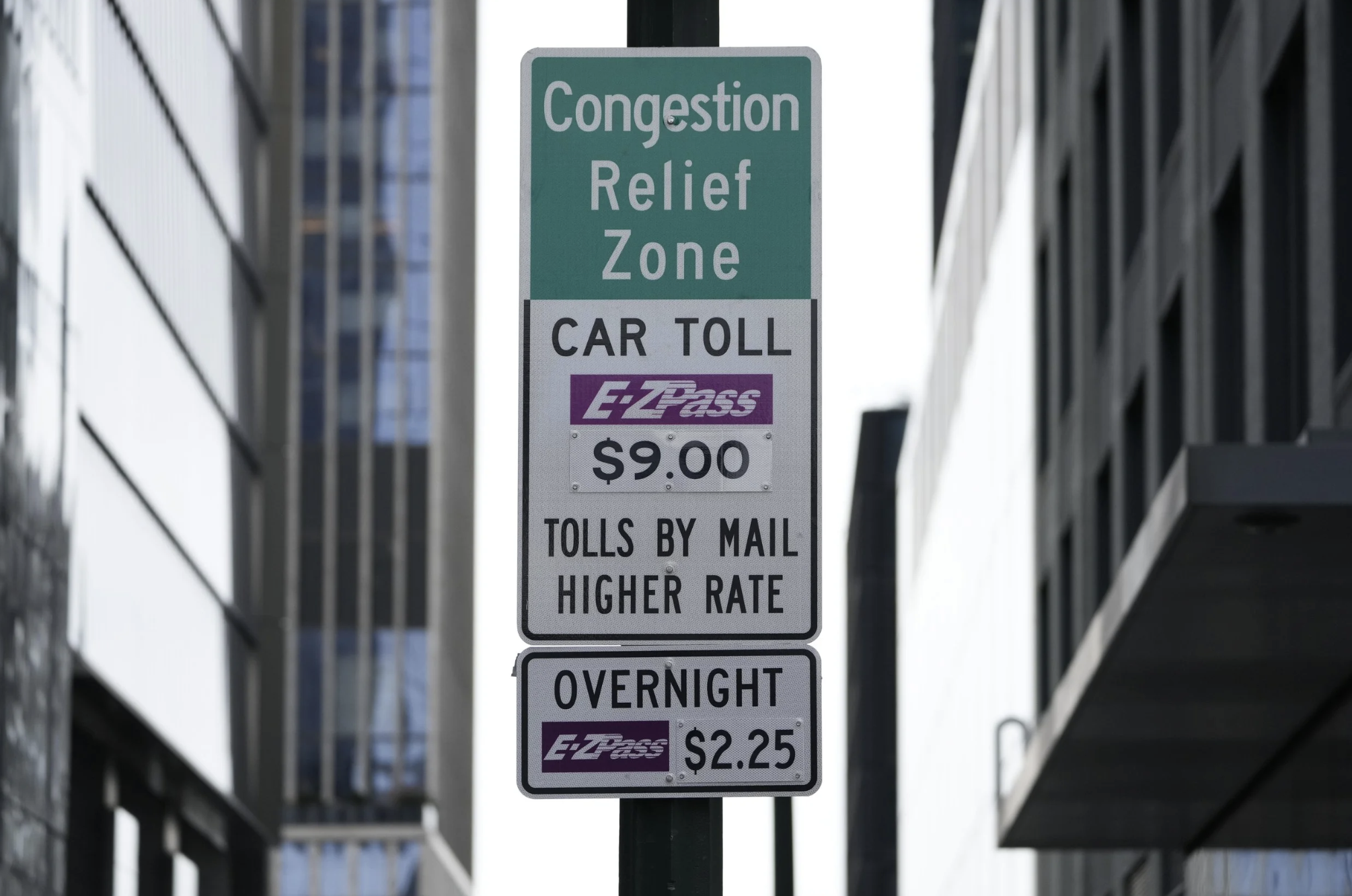
Data from the first year of congestion pricing showed that traffic improved along Queens-Manhattan crossings since the program began. AP file photo/Seth Wenig
By Ryan Schwach
Queens drivers heading into Manhattan are getting there faster and with less traffic, according to new data.
A year after the state’s implementation of the controversial congestion toll, which charges drivers heading into Manhattan $9 during peak hours, the policy seems to be accomplishing its goal, state officials said.
According to the MTA, traffic decreased and speed went up along both Queens-Manhattan crossings.
On the Queensboro Bridge, speeds went from 12.2 miles per hour to 15.7, a 29.3 percent increase. That is the second most among all Manhattan crossings, behind the Holland Tunnel, which had a 51 percent increase in speed.
Speeds in the Queens Midtown Tunnel went up 18.4 percent from 15.7 miles per hour to 18.6 miles per hour.
Along all Manhattan crossings, speeds went from 15.4 miles per hour to 18.6, a 23 percent increase.
Overall, the city saw 11 percent fewer vehicles head into the congestion zone, an uptick in subway usage and $468 million in revenue generated from the toll.
Some worried that with fewer cars heading into the city due to congestion pricing, business would be harmed. But a year’s worth of data seems to indicate the opposite.
According to reports from Colliers, the city and the state, there are fewer vacant storefronts in the congestion zone, employment increased and so did sales tax revenues.
On Monday, officials lauded the successes of the toll, which faced significant opposition in Queens where many rely on cars to get to their jobs in Manhattan.
Governor Kathy Hochul, who at one point halted the implementation of the policy over its price, sung its praises.
“The results are in and it is clear that in just one year, congestion pricing has been an unprecedented success in New York,” the governor said. “By every measure, this program has met or exceeded expectations: traffic and gridlock are down substantially, people are moving faster, air quality is improved, streets are safer and our economy is stronger. New Yorkers are benefitting from congestion pricing every day, and that’s why we have fought to stop any unlawful federal attempt to end this program.”
The hope is that with the continuation of the program, more funding will flood into the MTA and be used to make capital improvements to public transportation.
“The congestion pricing experience demonstrates what the new MTA can accomplish working with our State and City partners,” said MTA President and CEO Janno Leiber. “The result here is flawless execution and unprecedented benefits for all New Yorkers.”
Queens Councilmember Selvena Brooks-Powers, who currently chairs the Council’s Transportation and Infrastructure Committee, was pleased with the first year of data, and wants the city to go further in improving how New Yorkers get around.
“Congestion pricing is still new, but there are some encouraging initial signs,” she said in a statement. “If the early data holds up, fewer cars and faster trips will be good for our families, our health, and our city’s economy.”
“That’s why the real test is what happens next,” she added. “New Yorkers care about whether the bus comes, whether the train moves, and whether they get home on time.”
But even with the new data, not everyone has been thrilled about congestion pricing.
Queens Assemblymember David Weprin was a fierce opponent of the toll, and told the Eagle that despite the data, he doesn’t think the toll has worked.
“They're certainly collecting more money than they had imagined, but I don't think that's necessarily good,” he said. “I've been saying all along, that it was just a revenue grab and nothing to do with reducing congestion, because I've driven into Manhattan, and traffic is as bad as it ever has been.”
“In the beginning I thought it was a market improvement, and then now it's as bad as it ever has been,” he added.