
Mamdani renews long-standing Rikers emergency order, vows to reform jails
/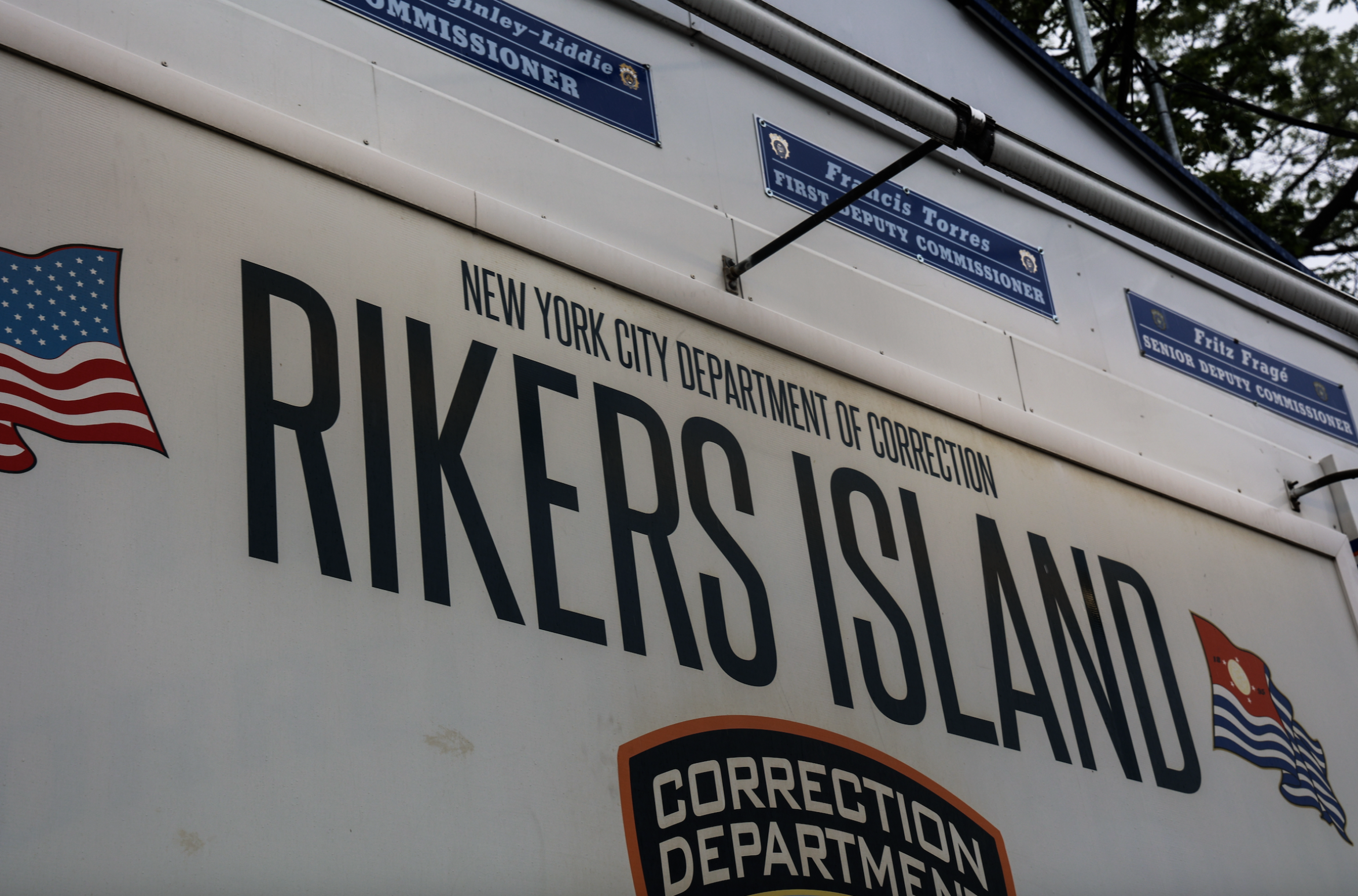
Mayor Zohran Mamdani on Monday signed a long-standing executive order establishing a state of emergency on Rikers Island. Eagle file photo by Ryan Schwach
By Jacob Kaye
Mayor Zohran Mamdani late Monday renewed a long-running state of emergency on Rikers Island, signing an executive order he acknowledged would prolong a controversial legal workaround used by his predecessor for years to skirt rules dictating how the city should treat detainees.
Mamdani, who has inherited multiple ongoing crises in the city’s jail system, appeared reluctant to sign the order, a version of which was issued by former Mayor Eric Adams every five days throughout his four years in office.
Adams’ order – and the original issued by Mayor Bill de Blasio during the waning days of his final term – declares a state of emergency in the jails, allowing the city to circumvent a number of laws and rules governing how detainees are cared for behind bars.
But Mamdani said his order, which also declares a state of emergency on Rikers, is different.
While Adams did little to bring the city into compliance with the rules, which are set by the Board of Correction and are known as minimum standards, Mamdani said his administration would come up with a plan to ensure the standards are followed.
Adams’ executive order also allowed his administration to stall the implementation of Local Law 42, a 2024 law passed by the City Council that bans solitary confinement and provides detainees with a number of new rights in the city’s jails.
Though not detailed in the executive order, Mamdani was also planning Monday to announce that his side of City Hall would change its posture toward a long-delayed law banning solitary confinement at Rikers Island and work toward potentially implementing it, according to his office.
The mayor, who began his first full week in office on Monday, said he was confronted with a tough choice. Had he allowed the executive order to lapse, the city would immediately fall out of compliance with the city BOC’s minimum standards, which the Adams administration had brushed aside for years, much to the chagrin of the oversight board.
The executive order instructs Mamdani’s yet-to-be-confirmed corporation counsel, Steve Banks, to come up with a plan within 45 days to bring the city into compliance with the rules, which regulate things like visitation, recreation and health care.
But when exactly the Department of Correction – which is currently being led in an interim capacity by Adams’ commissioner, Lynelle Maginley-Liddie – will be able to provide its more than 7,000 detainees with the minimum standards is unclear.
It’s equally unclear when or if the city will be able to implement Local Law 42, which a federal judge barred the city from putting in place in July after her federal monitor claimed it would “only exacerbate the current dangerous conditions” on Rikers Island.
“I was elected because of my values, and my promise to always be honest with New Yorkers — and now is a moment for blunt truths,” Mamdani said in a statement. “The previous administration’s refusal to meet their legal obligations on Rikers has left us with troubling conditions that will take time to resolve.”
Mamdani is expected to pass the order every five days for at least the next several months.
Banks was tasked with working to implement the solitary confinement ban in the jails with federal Judge Laura Swain, her federal monitor, the City Council, federal prosecutors and attorneys representing detainees in the ongoing civil rights case known as Nunez v. the City of New York.
It will be a tall order for the City Hall veteran.
After years of negotiation, the City Council passed the law in the final days of its 2023 legislative session. The law prevents incarcerated individuals from being held in an isolated cell for more than two hours per day within a 24-hour period and for more than eight hours at night directly after an alleged offense occurred – the confinement would be referred to as a “de-escalation” period. Should corrections officials determine that further confinement is required to de-escalate a situation, an incarcerated person could be held for up to four hours total in a 24-hour period. The bill would also require that staff meet with the incarcerated person at least once an hour to attempt to de-escalate the situation.
Despite the Council’s support for the bill, Adams vetoed it at the start of 2024. The rejection, however, was short-lived – the Council promptly voted to override the mayor’s veto.
But just before it was to be implemented the following summer, Adams passed a recrafted executive order, putting the law on ice.
Pushback against Local Law 42 came not just from the mayor, but also from Maginley-Liddie, the powerful correctional officers’ union and the federal monitor.
Though the monitor praised the intent of the law, which was spearheaded by Public Advocate Jumaane Williams, he also claimed aspects of the law went against sound correctional practices and that the DOC was in such a state of dysfunction that attempting to overhaul its procedures at the scale required by the law could be disastrous.
The monitor is next expected to issue a report on Local Law 42 on Jan. 14.
“I applaud the public advocate and the City Council for the passage of Local Law 42 and for always standing up for people on Rikers, despite tremendous opposition from City Hall at the time,” Mamdani said. “We will work closely with the federal monitor and the parties to put the City back on track to end solitary confinement as soon as possible.”