Queens robbery case overturned after court says police violated suspect’s rights
/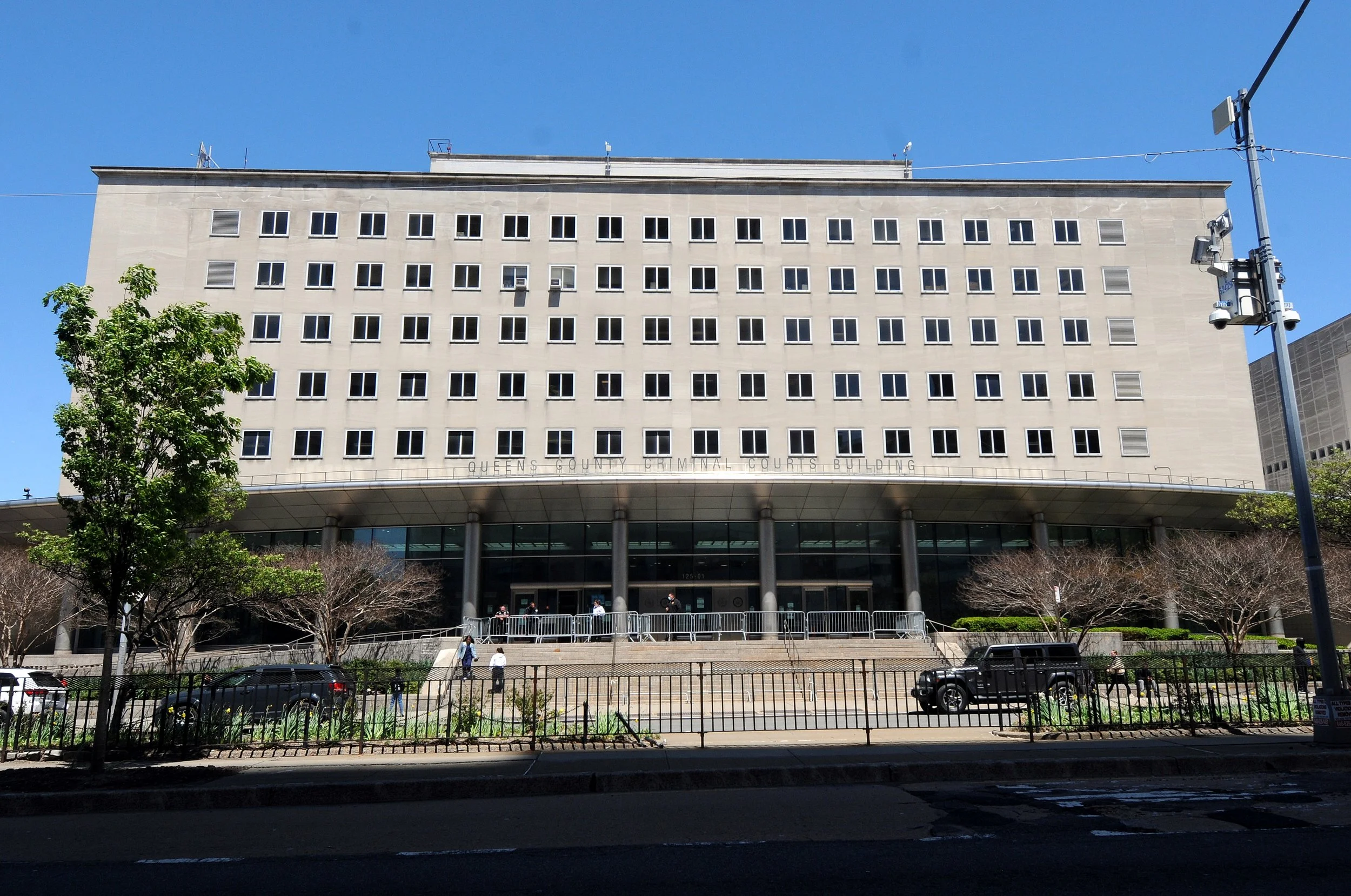
A Queens man who was found guilty of robbery in 2019 had his conviction vacated after an appeal decision ruled the arresting officers committed an unconstitutional search and seizure.Eagle file photo by Walter Karling
By Noah Powelson
An appeals court overturned the conviction of a Queens man after judges said police officers improperly frisked the man who led them on a high-speed car chase throughout St. Albans in 2018.
The Appellate Division, Second Department, vacated the conviction of Shawn Lewis, 27, who was found guilty of stealing someone’s wallet. The appeals court said police officers violated his Fourth Amendment rights during the arrest and ordered a new trial be held in the case.
The issue came not from when officers pursued or detained Lewis, but when they searched his pockets for the allegedly stolen wallet and found it. The court ruled officers had every right to search Lewis for any potential weapons, but once they determined there was no danger, they lost all authority to search him further.
“The Supreme Court properly determined that the officers had a reasonable suspicion that a robbery had been committed, and that…the officers reasonably suspected that the defendant was the perpetrator of that robbery,” the decision reads. “However, even assuming that the officers were justified in performing a protective frisk…there was no justification for searching the defendant’s pants pocket, reaching into it, and removing the wallet.”
The court also ruled Lewis’ right to be protected against unreasonable searches and seizures were violated twice that night — once when the officer removed the wallet from his pocket; and again, when the officer opened the wallet and searched it without a warrant.
According to court documents, Lewis allegedly approached a man late at night wearing a ski mask and a dark colored hoodie, and threatened to shoot the man unless he handed over his wallet. The victim complied.
Nearby police officers responded to the scene within minutes, and Lewis fled the scene. Officers pursued, but Lewis managed to get into a white Toyota Camry with a Texas license and escape. One of the officers smashed the car window as Lewis drove away so that officers could spot the car later.
Throughout this incident, neither the officers or the victim clearly saw the face of the man committing the robbery, who was either facing away from officers or had his face covered during the alleged robbery.
Later, a different police officer by the name of Brian Nelson spotted the car matching the description, including the smashed window. Nelson pursued the car until the driver crashed into a stop sign. Nelson arrested the driver, who was Lewis, patted him down for weapons and then retrieved the stolen wallet.
Legally, the officers had already established a reasonably strong suspension Lewis was the culprit, but that suspension was not enough to frisk Lewis at the scene.
“The error in failing to suppress the wallet and its contents was harmless with respect to the convictions on the flight-related counts, none of which depended upon the defendant’s identity as the perpetrator of the robbery,” the decision reads. “However, with respect to the robbery-related counts, the error cannot be deemed harmless.”
Normally, when police officers arrest individuals for theft, they bring them to a nearby police precinct for processing. During that time, while being recorded by a camera, officers search the defendant’s person for any stolen or illegal items, and log everything found.
The reason for this practice is two-fold: it protects accused criminals by documenting their personal belongings and ensuring nothing goes missing, and protects police officers from legal action for improperly frisking a defendant.
The court ruled that while circumstantial evidence at the time of detainment was “strong,” the law says the officers still should have brought Lewis into the station and not frisk him at time of arrest.
There have been cases where prosecutors have successfully made evidence obtained during an on-scene search admissible by arguing it would have been discovered during processing anyway, but it seems such arguments were not made during the original trial.
“Since the Supreme Court did not rule on the alternative grounds for denying suppression identified by the People on appeal, we lack the authority to address those contentions,” the decision reads.
As such, the appellate court ruled the wallet, which was obtained illegally, should have been suppressed at trial, and the conviction was vacated.
A spokesperson for the Queens District Attorney’s office told the Eagle that they “are reviewing the decision.”
Lewis’ attorney did not respond to multiple requests for comment.
Lewis is next scheduled to appear in court on Jan. 30, 2026.