The NYPD is unconstitutionally surveilling New Yorkers, new suit claims
/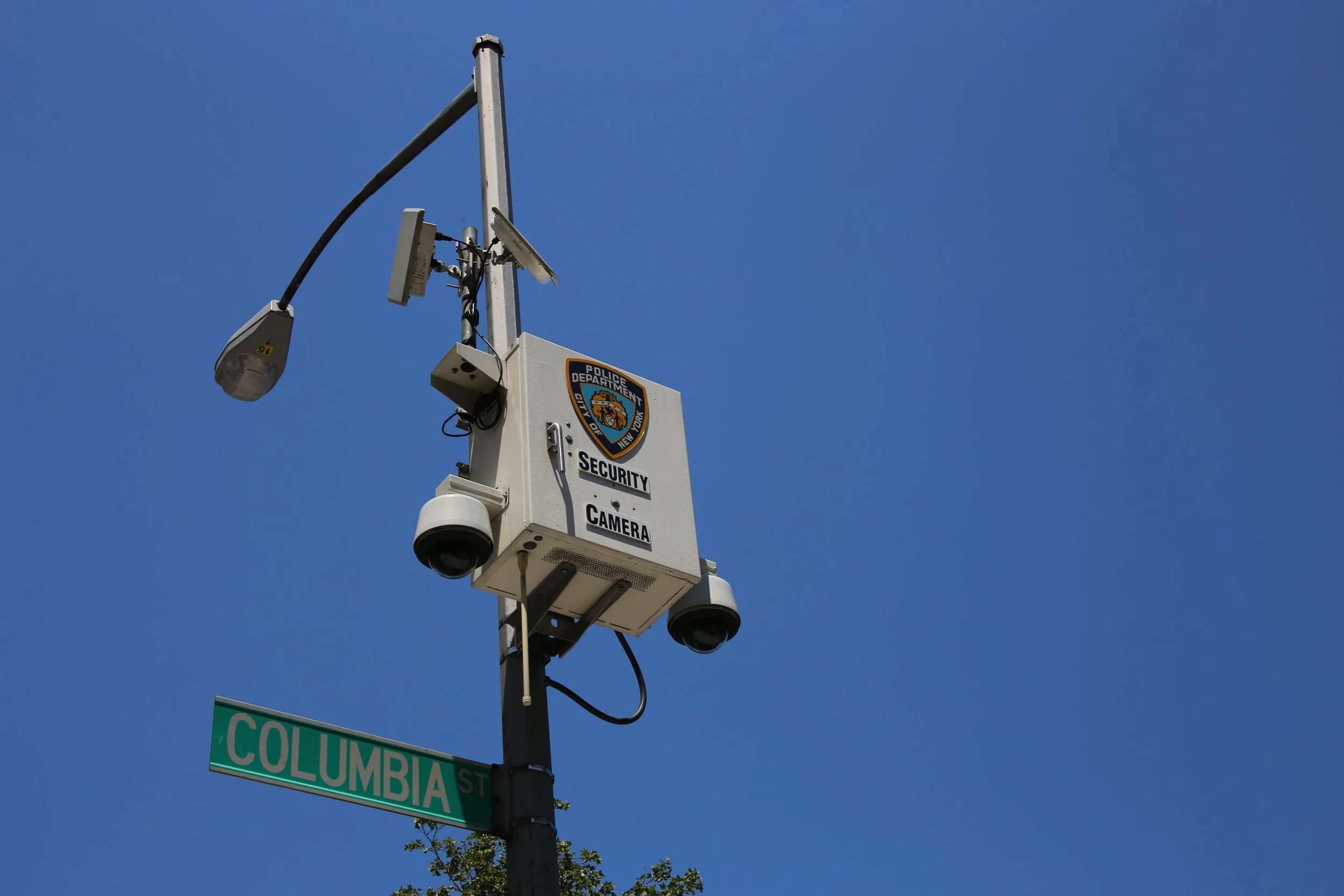
A new lawsuit alleged the NYPD’s wide-reaching surveillance apparatus is unconstitutional. Wikimedia Commons photo by Paul Sableman
By Ryan Schwach
The NYPD’s wide-reaching surveillance apparatus is unconstitutionally spying on New Yorkers, a new federal suit alleges.
According to the lawsuit, filed in the Southern District of New York on Monday, the department’s “Domain Awareness System” – which unifies several pieces of the NYPD’s surveillance system – violates New Yorkers’ civil rights and is a “radical incursion" into their privacy.
The suit is being brought by civil rights firm Emery Celli Brinckerhoff Abady Ward & Maazel LLP on behalf of two Brooklynites who say their rights have been infringed by an NYPD camera directly outside their apartment.
The camera is part of the DAS, which was created in 2008 and brings together various aspects of the NYPD’s surveillance methods, including all NYPD video cameras, automated license plate readers, private cameras in front of shops and homes, ShotSpotter gunshot detectors, DNA collection and online surveillance.
“From the day it was launched, the DAS has subjected New Yorkers to suspicionless, citywide surveillance that undermines their rights,” the 29-page suit reads. “It is an unprecedented violation of American life and now stands as one of the largest surveillance networks operated anywhere in the world.”
The NYPD’s website describes the DAS as a “crime-fighting and counterterrorism tool, jointly developed by the NYPD and Microsoft…that provides enormous advantages in managing patrol and ensuring officer safety.”
However, lawyers and advocates argue it goes too far.
“The constitutional harm is greater than the sum of its parts,” said Albert Fox Cahn, the founder of the Surveillance Technology Oversight Project, or S.T.O.P. “No other police department in the country has ever amassed this much data. Tens of thousands of NYPD cameras, tens of thousands of private cameras, automated license plate readers, transit data, drone footage, all social media monitoring, predicted policing software. It is basically a living Orwellian nightmare.”
The suit argued that DAS’ massive scope allows the NYPD to constantly track, watch and inform on specific individuals regardless of whether or not they committed a crime.
The plaintiffs in the suit are Brooklyn residents Pamela Wridt and Robert Sauve, who claim that an NYPD mounted camera is aimed into their Bed-Stuy apartment, infringing on their constitutional rights and making them feel uneasy in their home.
“I feel constantly watched by a state-sanctioned peeping Tom, able to look into our bedroom and living room windows at any time,” said Wridt. “Countless other New Yorkers live this nightmare, with tens of thousands of cameras across our city, particularly in communities of color.”
Wridt and Sauve have covered their windows with foil to block the camera's view, according to the suit.
“Far too often, we overlook what we give up in terms of privacy and freedom under the guise of safety and convenience,” said Sauve. “The installation of two cameras just outside my window, with the ability to look directly into our home, shook me to my core. We fear that the NYPD's notorious abuse of power, especially in low-income neighborhoods, will be exacerbated by the invasion of privacy these cameras represent.”
Attorneys in the case say that the court should declare the NYPD’s practices unconstitutional, and stop the city from using DAS against New Yorkers without a warrant.
“The NYPD should be required to obtain a warrant before deploying these powerful tools against the public, which have essentially turned every street, stoop, and window into a site of government monitoring,” said attorney Andrew F. Wilson in a statement. “Protecting safety should never come at the expense of our constitutional rights and the basic expectation that our private lives remain private.”
The NYPD did not respond to the Eagle’s request for comment on Tuesday.
Fox Cahn, who has dealt with a litany of lawsuits regarding police surveillance tech, said this new suit is the first of its kind.
“People have had lawsuits about individual surveillance systems in the past, but no one's really challenged this sort of surveillance aggregation,” he told the Eagle.
The S.T.O.P founder also claims that the system doesn’t even do what the NYPD created it for – prevent crime.
“I think this surveillance system is incredibly effective at undermining our rights and eroding the Constitution, but there's little evidence that's actually been effective living up to the sales pitch,” said Fox Cahn. “We see countless millions being spent on private contracts with surveillance vendors who never actually have to prove you know how often their technology works or fails.”
The suit adds that “despite all its invasiveness, the DAS has had no measurable impact on public safety.”
The NYPD has rejected that sentiment.
A 2021 internal report, co-authored by NYPD Commissioner Jessica Tisch, who was then serving as the department’s chief information officer, said that the DAS had helped policing.

Mayor Eric Adams and Police Commissioner Jessica Tisch have increased the NYPD's use of technology during their tenures. Ed Reed/Mayoral Photography Office.
“The NYPD has used [DAS] to combat terrorism and improve its crime-fighting effectiveness,” the report reads. “Since DAS was deployed department wide in 2013, the overall crime index in the city has fallen by six percent.”
“The DAS project is critically important for the people of New York City,” the report continued. “Every day, the NYPD uses the analytics built into DAS to save lives, arrest criminals, prevent crimes, and keep the public and our officers safe. In this section, we discuss evidence for these public-safety impacts.”
The NYPD’s use of technology under the Adams administration has sparked a number of controversies.
In August, the Legal Aid Society called on the city Department of Investigation to probe the NYPD’s use of facial technology, claiming the department went against its own guidelines when an officer circumvented policy to gain facial recognition information for a pro-Palestine protestor at Columbia University.
The incident, first reported by THE CITY, involved an NYPD detective getting help from FDNY fire marshalls to obtain data on Zuhdi Ahmed, who was later charged with a hate crime.
In that incident, NYPD detectives relied on a Fire Department marshal’s access to Clearview AI to identify Ahmed, who was accused of hurling an object at a student and later charged with a hate crime.