
Major Queens rezonings move forward after Council votes
/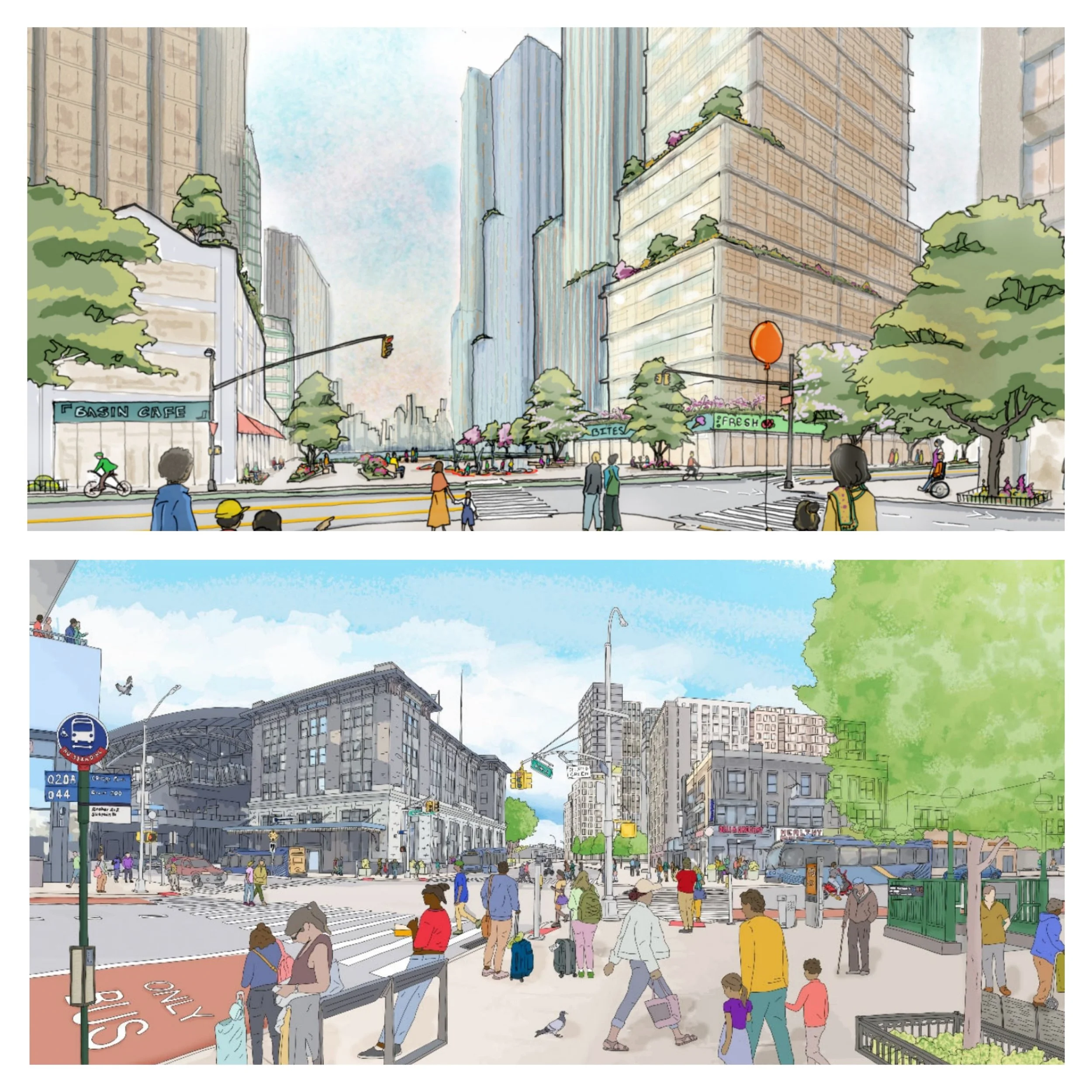
Both the OneLIC and Jamaica rezoning plans cleared Council votes on Wednesday, making the way for 27,000 new homes in the World’s Borough. Renderings via DCP
By Ryan Schwach
The city’s plans to transform large swaths of two of Queens’ most bustling neighborhoods both cleared Council votes on Wednesday, setting the stage for the rezoning of nearly 300 blocks of the World’s Borough to encourage the construction of nearly 27,000 new homes.
Both the OneLIC and Jamaica Neighborhood rezoning plans were passed in council votes on Wednesday. OneLIC cleared a vote from two land use committees and the Jamaica Neighborhood Plan was approved by the full Council.
But while one of the projects faced little opposition ahead of the vote, the other’s fate was unclear just hours earlier.
Up until Wednesday afternoon, it wasn’t clear if local City Councilmember Julie Won was going back on the plan to rezone parts of her Long Island City district after threatening to kill the project in the waning days before the vote.
If she had voted against the plan, it would have made the ambitious rezoning dead on arrival in City Hall.
Following the last minute negotiations that went well into Wednesday afternoon, the plan now includes nearly $2 billion in investments for Long Island City that will be used to fund a connected waterfront, restore Queensbridge’s Baby Park and make infrastructure improvements and increased affordability, all of which Won said was needed for her approval.
The agreement also comes with seemingly no changes to housing unit counts.
OneLIC cleared both relevant Council committees unanimously, and will now head back to the City Planning Commission and then the entire Council for what is expected to be the final greenlight in November.
The Jamaica Neighborhood Plan, which is backed by Council Speaker Adrienne Adams and local Councilmembers Nantasha Williams and Jim Gennaro, was cleared unanimously by the full Council on Wednesday.
Prior to committee votes Adams and Williams negotiated $413 million in city funding for the Jamaica neighborhood, albeit with around 500 less housing units than initially planned.
The Downtown Jamaica plan will come with the largest mandatory inclusionary housing zone in the entire city.
Both plans had plenty of detractors in the communities they will affect, and a substantial amount of conditions and demands from the local councilmembers. However, their passing are ultimately big wins for those members as well as the outgoing Adams administration, which has staked their legacy on major rezonings like the ones passed on Wednesday.
‘A sigh of relief’ in LIC
The approval of the OneLIC redevelopment means encouraging the construction of 14,700 new housing units, including approximately 4,350 affordable units in Long Island City, one of the city’s fastest growing neighborhoods.
Less than 24-hours before the Subcommittee on Zoning and Franchises would vote and decide the fate of OneLIC, Won, whose approval was pivotal to the plan’s passing as the local member, had not indicated where she would land.
Won, although having spearheaded a substantial amount of the rezoning’s outreach, made it clear that if a list of demands were not met she would not lend her support.
Her role as the local councilmember and the Council’s general tendency towards siding with the deference of the local representative, made her approval or disapproval pivotal to the outcome.
Her concerns mainly centered around the amount of affordability included in the housing numbers, infrastructure issues and a public space.
“I will not green light this project if the city fails to meet our collective demands,” Won said in a statement back in June.
At the eleventh hour, Won hinged her support of the project on an aspect of the plan that would connect LIC with the waterfront through industrial private property.
When the subcommittee vote finally happened nearly two hours after it was initially scheduled, Won said it was time for a “deep sigh of relief.”
“We've had four failed rezonings before I took office, and these past two years, through those lessons we have learned, thousands of my neighbors have come together to envision our own future,” Won said at the subcommittee meeting. “We will be one Long Island City for current and future residents that want to call this neighborhood home.”
Most of Won’s concerns were met within the new agreement.
The agreement includes LIC’s first private MIH zone that will require a minimum of 20 to 25 percent permanently affordable units with units mainly for renters making no more than 40 to 60 percent the area median income.
On public land, there will be 1,000 units of housing with at least half for “extremely and very low-income families.”
The deal restores Queensbridge Baby Park, a five-acre area under the bridge that was once a children’s park but has been more recently used by city agencies for storage. It also includes a guarantee of 1,300 new school seats.

City Councilmember Julie Won approved the massive OneLIC Neighborhood Plan after previously threatening to veto it if her demands were not met. Photo via Councilmember Julie Won/X
Won will also get her connected waterfront that connects Gantry Park to Queensbridge Park.
In total, the agreement includes $1.97 billion in investments for LIC and Astoria that will go towards addressing long-time issues at the NYCHA Queensbridge Houses and addressing sewer and stormwater infrastructure.
“This plan shows how the city and community members can come together to create a vision that pairs high levels of housing production with responsible infrastructure investment, ensuring that our neighborhoods have the resources they need to grow and thrive for existing neighbors as well as future neighbors,” Won said.
Mayor Eric Adams applauded the plan’s passing on Wednesday.
“At a moment when too many people are still struggling to find an affordable place to live, we have to move past the status quo and say ‘yes’ to more homes and more jobs — and that is exactly what the OneLIC Neighborhood Plan will do,” Adams said in a statement. “This plan is about more than just homes and jobs; it’ll bolster Long Island City’s infrastructure and improve everyday life for residents, workers, students, and visitors. Through significant investments in new public parks, new schools, and more, we’re setting the stage for a more vibrant Long Island City where people from all walks of life can come together.”
For the community, the votes are a major milestone that extends past the two year planning process for OneLIC.
On four separate occasions there have been plans to rezone LIC to make up for the overdevelopment of luxury housing that has gone up in the neighborhood in the last decade or so. All of which failed.
“It’s a win in many ways,” said Queens Community Board 2 Chair Anatole Ashraf.
Ashraf said that the deeper affordability, and promises around school seats and green space were nearly “verbatim” from the 12-page list of conditions CB2 included in their conditional approval of the plan earlier this year.
“But we’re not letting people off the hook,” Ashraf said. “CB2 is watching.”
Ashraf called for the creation of a community oversight committee to “ensure promises on housing, infrastructure, arts and open space are delivered.”
Heading into the vote, there was community pushback among locals who thought OneLIC was more of the same luxury development that had priced out many long time residents.
This deal didn’t go far enough, some said.
“These concessions are unfortunately not enough to mitigate the harms of such a massive, market-based rezoning,” said Jenny Dubnau, a local organizer with the Western Queens Community Land Trust who has long been opposed to the plan. “We are very glad [Won] negotiated $1.97 billion in infrastructure improvements, but needed improvements like flooding protections, new schools, and open space should not be contingent on an influx of private development.”
“We are disappointed that this harmful plan is advancing, but we will be demanding binding community agreements from the city to ensure that these promises made are kept,” she added.
A new Downtown Jamaica
The Jamaica Neighborhood Plan, which was approved by the land use committees on Oct. 9, cleared the full Council unanimously on Wednesday.
The plan is nearly three times the size of OneLIC, and will encourage the private development of 11,829 new housing units over a 230-block rezoning arena, with around 4,000 of those being affordable.
The MIH zone will be the largest of its kind in the city.
“As a long time resident of Jamaica and a former co-chair of the Jamaica Now Leadership Council, this neighborhood rezoning is deeply important to me and my community,” Speaker Adams said on Wednesday. “Our Jamaica is a thriving and vibrant community whose success is pivotal to the prosperity of Southeast Queens and our entire city. Its growth and transformation to a bustling, residential, commercial and transportation hub for local residents, with opportunities to advance careers, build homes and raise families, has always been a top priority.”
Speaker Adams along with Williams had some doubts on the project, and like Won, Williams also had demands that she staked her support of the project on.
“I know I stressed you out a little bit,” Williams said at the subcommittee earlier this month.
She was pleased with the outcome on Wednesday, though.
“We are proving what happens when the city listens, when government and community work together and when we dare to believe every neighborhood deserves investment, beauty and hope,” she said.
The final agreement for Jamaica approved by the Council on Wednesday includes $413 million in city funding to address additional concerns around local green space, sewer infrastructure, flooding and overall community impact.
Borough President Donovan Richards applauded Jamaica’s unanimous passing.
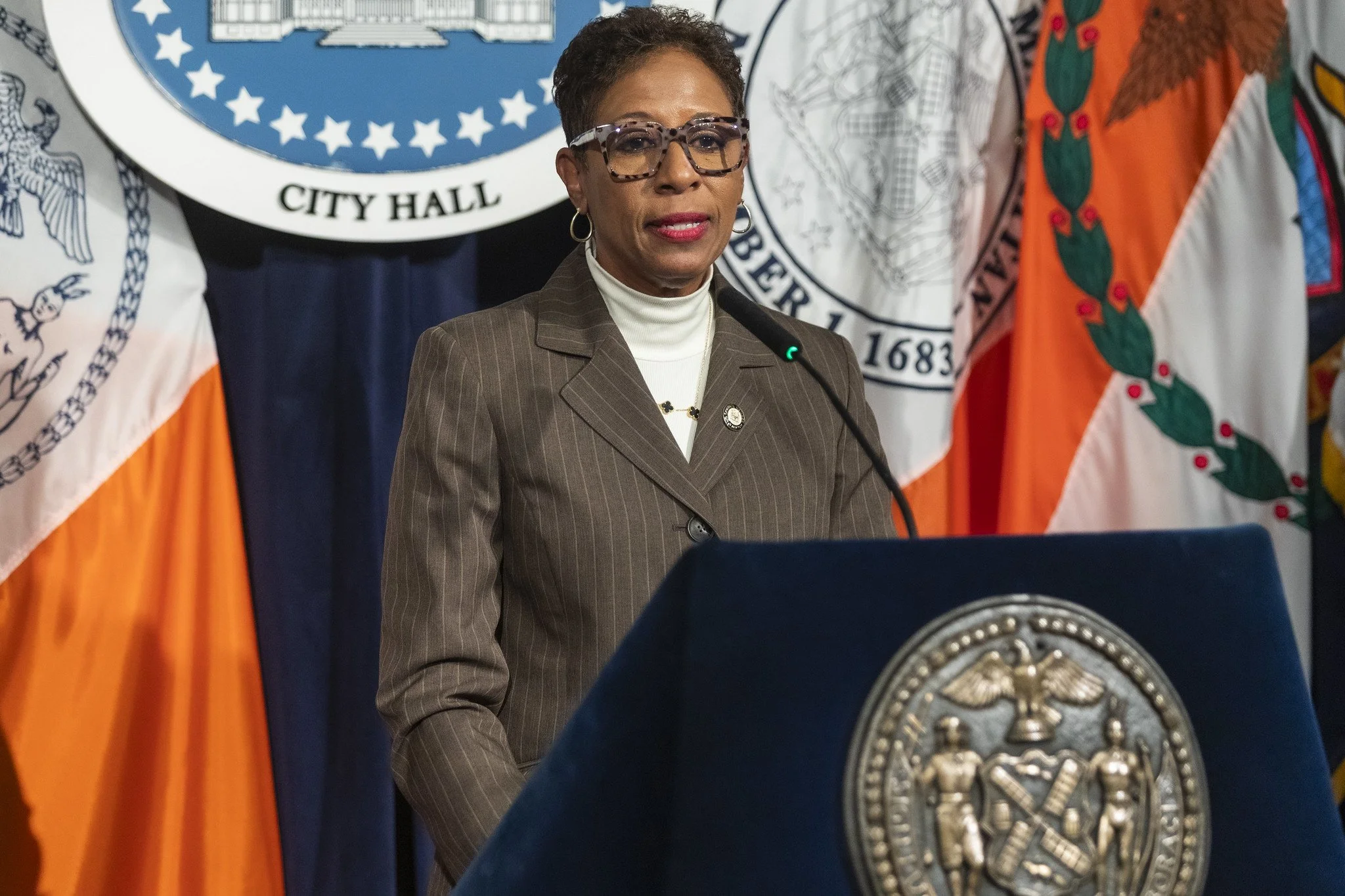
The City Council is currently fighting to hold onto its ability to weigh in on land use decisions. Three proposals on the ballot would strip the power away in order to streamline the construction of housing. Emil Cohen/NYC Council Media Unit
“There is no community that better embodies what it means to be from Queens or the values of New York City than Jamaica,” the BP said. I commend the City Council for affirming today our shared belief that the Jamaica Neighborhood Plan is the right path forward, as we unlock this community’s potential and build that brighter future for the hard-working families of Southeast Queens.
Ballot props hang over votes
Hanging over the head of the votes in the Council on Wednesday are the votes New Yorkers are making on the back of their early voting ballots this week.
There were a handful of proposals on the ballot this year that would pull the Council’s role in greenlighting housing.
Housing advocates say the ballot questions, specifically propositions 2,3 and 4, would streamline housing construction and would stop some councilmembers who oppose affordable housing in their districts from killing development.
“While New York City has built homes over the last several decades, it isn't enough – and not every part of the city has done its fair share,” a coalition in favor of the proposals says in the website's homepage. “If we want a future where our children can afford to live in New York City, we need to build more housing. We need to build more affordable housing. We need to fix our broken housing system.”
The Council writ large however is in opposition to the proposals, arguing it would strip them of key oversight as elected officials.
“The final version of the Jamaica Neighborhood Plan, with its level of neighborhood investment, housing affordability and targeted commitments, would not have been possible without the work of this Council and the community to negotiate for the public goods needed,” Speaker Adams said on Wednesday, not referencing the proposals specifically.
During her statement approving the OneLIC project, Won argued that the proposals would have limited her ability to get the new agreement on the plan.
“I also want everyone to pay attention to your proposals, two to four, which would make it impossible for me to ever negotiate on behalf of my community ever again to this level,” she said.