Rikers monitor rips DOC leadership over ‘grave concerns’ about transparency
/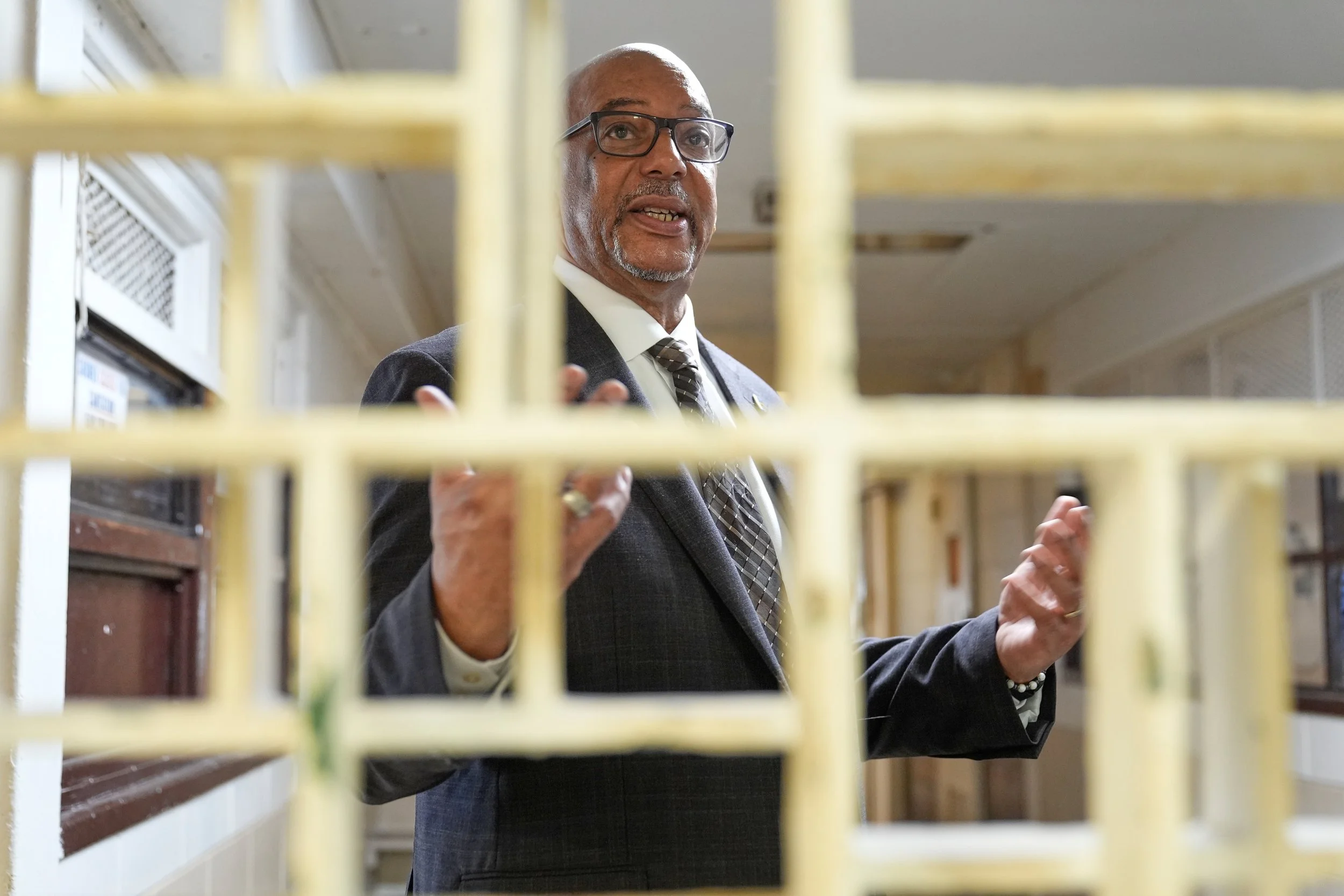
Department of Correction Commissioner Stanley Richards was criticized by the federal monitor for a recent directive to top DOC officials that the monitor said would cause major transparency issues. AP photo by Seth WEnig
By Jacob Kaye
After months of praising a shift toward greater transparency at the Department of Correction, the federal watchdog overseeing Rikers Island sharply changed course Thursday, accusing agency leadership of taking steps that could undermine court-ordered reforms.
Steve J. Martin, who has been monitoring the city’s troubled jails for a decade as part of the detainee rights case known as Nunez v. the City of New York, told federal Judge Laura Swain on Thursday that he had “grave concerns” about DOC leaders’ “efforts to evade transparency and impede cooperation and collaboration” with various oversight groups.
The monitor said that DOC leadership had been exhibiting “long-standing patterns to evade transparency and oversight” in recent months, despite promises to break from the historic obstructionist behavior that, in part, led Swain to strip the city of its control of Rikers Island earlier this year.
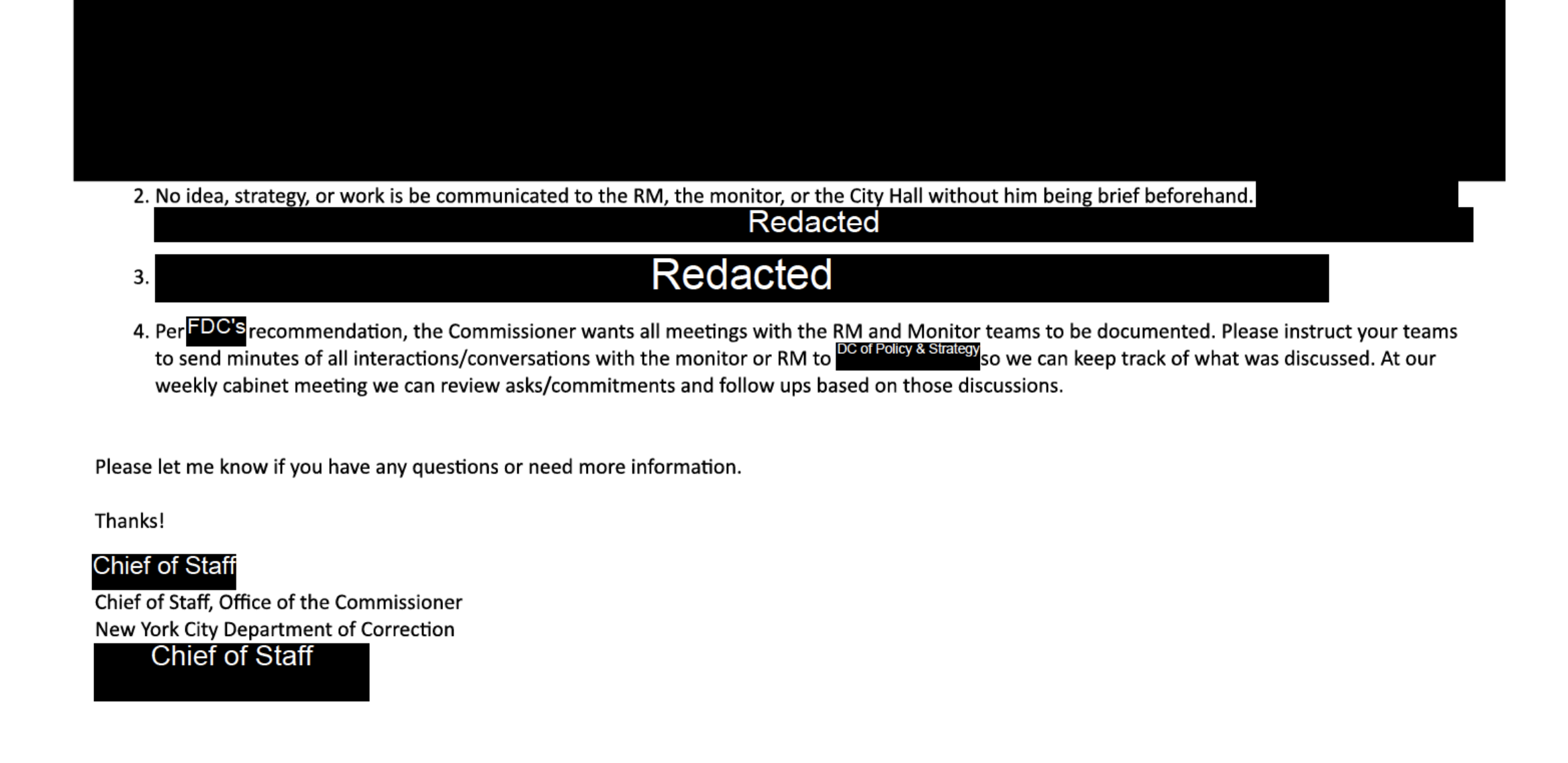
Martin said that while he had “raised concerns” about the DOC’s mismanagement of reform efforts previously ordered by the judge, he was particularly incensed by a recent directive from DOC Commissioner Stanley Richards’ chief of staff, ordering agency leaders not to communicate their work or jail improvement ideas to the monitor, the recently installed remediation manager, or City Hall without first briefing Richards.
The monitor said the directive, which was sent to the DOC’s first deputy commissioner, senior deputy commissioner for administrative operations, the chief of department, and the agency’s attorney on Sept. 1, was “extraordinary.”
“In the [monitoring team’s] more than ten years of experience monitoring this department, regardless of their intention, the recent actions of department leadership are among the most specific, direct, and consequential actions the [monitoring team] has observed to undermine the court’s orders and obstruct the flow of information required for the [monitoring team] and [remediation manager’s team] to meet their responsibilities,” the monitor wrote to Swain.
“This is not an isolated failure to comply with the court’s orders, nor is it the product of misunderstanding, inadequate implementation, or bureaucratic dysfunction,” he added. “Rather, it is an affirmative directive from department leadership that, if followed, would impede compliance with the court’s orders and materially interfere with the [monitoring team’s] and [remediation manager team’s] ability to perform their court-ordered responsibilities.”
While the monitor acknowledged that aspects of the commissioner’s directive – including an order to document all meetings with the monitor and remediation manager – would contribute to reforming the DOC, he warned that it would “discourage routine problem-solving, delay the exchange of information, and prevent city and department personnel from engaging directly and candidly with” the judge’s deputies.
“The September 1, 2026 instructions are unequivocal and impede the free flow of information and communication necessary to advance the reform effort and ensure effective oversight occurs,” Martin said.
The rebuke marks the first time Richards, the first formerly incarcerated man to lead the DOC, has received harsh, public criticism from those charged with leading or monitoring the Rikers reform effort.
Since being appointed to the role by Mayor Zohran Mamdani at the beginning of the year, Richards has repeatedly vowed to be transparent with Rikers’ many oversight groups, including the monitor and remediation manager Nicholas Deml, who was tapped by Swain in January to take control over much of the management of the dangerous jail complex where over 100 people have died in the past decade.
Richards, who is the only person Deml does not have the power to fire, has described his work with the remediation manager as a “partnership.”
“My whole approach to management is transparency and partnership,” Richards told the Eagle during a wide-ranging interview in February before he officially began serving as commissioner. “I anticipate being very transparent and in partnership with advocates, community-based service providers and with the public, because I think you can't address something that's in the dark.”
In the same interview, Richards said that before assuming their respective roles, he spoke with Deml about “working together” to address the 18 court orders in the Nunez case under which Swain found the city in contempt in 2024 – the contempt ruling led to the creation of the remediation manager.
“What he said to me, and what I said to him, is that I'm looking forward to this partnership,” Richards said in February. “That’s going to be the seeding that I need to transform the way the department operates, the way the department is seen, the way officers feel and the way incarcerated people experience our department.”
The approach earned early praise from Martin, and was seen as a sharp contrast to the way the DOC was run under Mayor Eric Adams, whose commissioners were accused of being obtuse toward oversight and reform efforts.
“The monitoring team has observed a positive shift in the approach to working with the monitoring team upon the appointment of the new commissioner,” Martin said in a June report about Rikers.
But his assessment changed drastically in the letter sent to the judge on Thursday.
Martin said that he was especially upset with Richards’ alleged backslide in communication because the commissioner, a longtime criminal justice reform advocate, previously served on several jail oversight groups.
“This is particularly disappointing given that the commissioner and first deputy commissioner have significant experience serving in oversight roles (both were members of the NYC Board of Corrections) and should understand the need for the very requirements of the Nunez court orders that they now appear to be impeding,” Martin wrote.
According to Martin, Richards’ Sept. 1 directive was immediately rescinded by the remediation manager, who also directed the DOC to “issue clear and unambiguous directions to department leadership and staff regarding their obligations under the Nunez court orders to communicate openly and candidly with the [monitoring team] and [remediation manager’s team].”
As a result of the directive, Deml also said that he was changing the DOC’s organizational chart and requiring the assistant commissioner of the Nunez compliance unit to report directly to the DOC’s general counsel, instead of the first deputy commissioner.
Sam Raskin, a spokesperson for Mamdani, said the mayor has “complete confidence in Commissioner Richards and his commitment to this work” and that the city was “addressing the concerns raised in the monitor’s letter.”
“The Mamdani administration is committed to working closely and collaboratively with the remediation manager and federal monitor to make our city’s jails safer and ensure they are operating as they should,” Raskin said in a statement. “That means keeping lines of communication open, sharing information transparently and taking the steps required to deliver the reforms mandated by the Nunez court orders.”