City public defender strikes are over, for now
/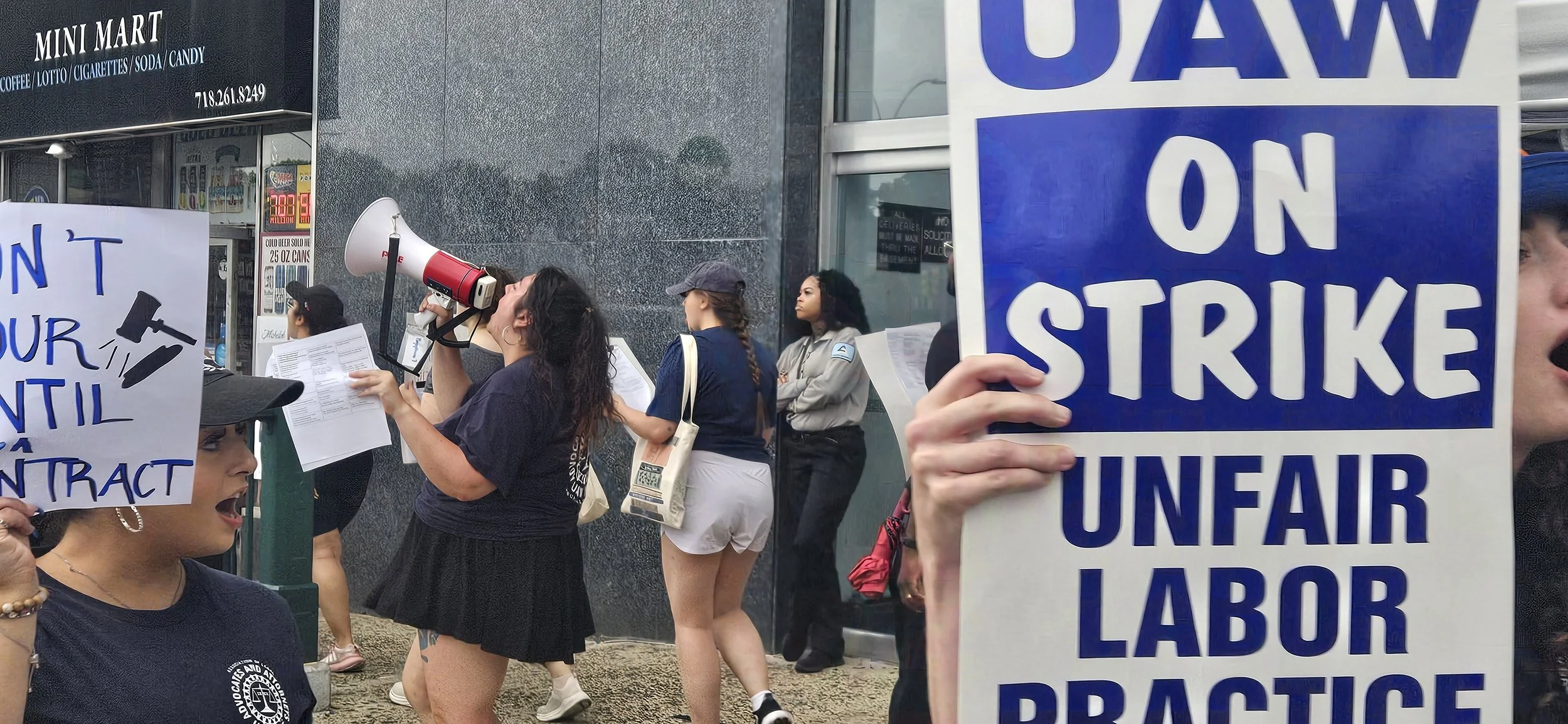
Union members at Brooklyn Defender Services’ Queens office ratified a new labor contract that will last for the next three years. Eagle file photo by Noah Powelson
By Noah Powelson
In each of the last two years, the city has seen thousands of public defenders walk off the job threatening to upend the city’s court system. It could very well become a reoccurring trend unless the city finds a solution.
In both June 2025 and 2026, public defender unions represented by the Association of Legal Advocates and Attorneys – UAW Local 2325, timed their labor contracts to expire on the same day to put pressure on the city to expand public defense funding. In both years, hundreds of unionized attorneys and staff went on strike at various points as negotiations stalled, forcing the organizations to rely on the few remaining staff members and outside attorneys to fill in the gaps.
While both bargaining seasons ultimately ended with new deals and court operations continuing without severe disruptions, those contracts are only valid for the next two to three years and the threat of another mass strike is still very real.
Many of those organization’s contracts are set to expire in June 2028, including the agreement at the Legal Aid Society, the city’s largest public defender organization that employs over 1,000 attorneys and staff.
In the next two years, the question remains: What can the city and state do to prevent the same labor fight from starting all over again?
For Jane Fox, the chair of the ALAA chapter at the Legal Aid Society, the answer is obvious – public defenders in New York City have been historically underfunded in comparison to city district attorney’s offices and even the NYPD.
"The easiest way for the city to avoid a strike of public defenders is to put appropriate money into public defense," Fox told the Eagle. “If you want to put everybody on a level playing field, you have to put significantly more money in…Why do public defenders have to beg for crumbs every year?”
While policy disagreements can be just as much of a roadblock to reaching new labor deals, the first and most important sticking point has been getting the funding needed to increase pay and hire new attorneys.
In New York City, starting salaries for public defenders can range from $80,000 to $90,000 a year. Meanwhile cities with comparable cost of living to NYC like Los Angeles, Atlanta, Seattle and San Francisco pay their public defenders upward of $100,000 or more.
It’s one of the few issues public defender unions and their managers can agree on.
Three months before their labor contracts were set to expire this year, leaders of some of the city’s largest public defender organizations told the City Council they needed $100 million to $150 million in additional funding to recruit and retain attorneys. Tina Luongo, the chief attorney of the Legal Aid Society’s criminal defense practice, said at the time that the new funding was needed to boost attorney pay and ensure indigent New Yorkers can receive their constitutionally mandated legal representation.
“We are failing the people who are dragged every day to the criminal legal system, the family separation system and the immigration detention system,” Luongo said. “Because that is who is at the heart of representing clients and representing those families.”
Some additional funding has come through as a direct result of public defender advocacy and union demands. According to the Mayor’s Office of Criminal Justice, which oversees New York City's public defender contracts, the Fiscal Year 2027 adopted executive budget included an additional $32 million for criminal legal service providers. An amount that both public defender managers and unions acknowledged was pivotal in progressing negotiations.
“Public defenders — and the organizations we contract with — play an essential role in our justice system, providing critical representation to vulnerable New Yorkers,” A MOCJ spokesperson said in a statement. “Ultimately, the terms and conditions of employment are up to the providers and defenders' unions. However, the city has continued to invest tens of millions of dollars in new funding in these organizations, to help increase salaries, staffing and other quality of life benefits.”
But it’s an increase that falls far short of what both public defenders and their unions said they’ll need in the long term.
"Every single day, our staff work around the clock in every borough, fighting for the New Yorkers we serve,” a Legal Aid Society spokesperson told the Eagle in a statement. “We will continue to push both Albany and City Hall for additional funding for salaries and for the resources we need to fulfill our constitutional and legal mandates."
A trial run for new unions
In many ways this year’s bargaining season was just as much about new unions establishing their authority as it was about the contracts themselves.
While the Legal Aid Society has had a union for over three decades, other union shops were only recently formed.
Some of these public defender organizations, like Brooklyn Defender Services or Bronx Defenders, were formed after the city cut their contract with the Legal Aid Society in 1994 following a mass strike. Former Mayor Bill de Blasio then divided up contract funds to newly formed public defender organizations.
In the past thirty years, many of those organizations unionized under the ALAA umbrella and it was their first time bringing their members to the bargaining table.
During the most recent bargaining season, union members repeatedly accused their management of intentionally refusing to schedule new bargaining sessions and stall out the strike.
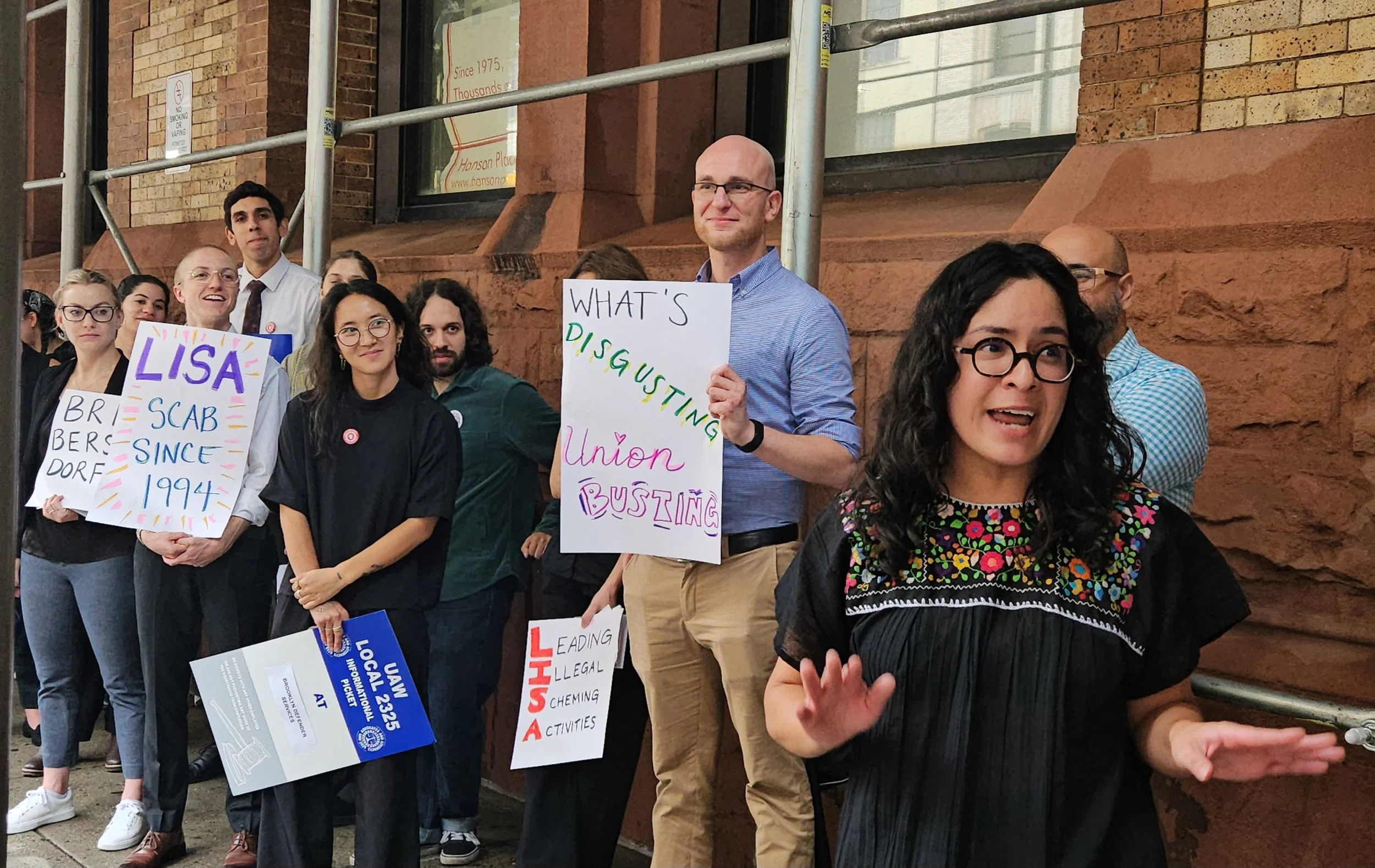
Assemblymember Claire Valdez regularly appeared on the picket line when city public defenders went on strike earlier this year. Eagle file photo by Noah Powelson
Forrest Stakelum, a union bargaining committee member at Brooklyn Defender Services, said he felt that BDS management were intentionally trying to stall out negotiations and wait out the union when it came to negotiating issues like a work from home policy.
“Management needs to seriously engage with the demands sooner because a majority of the tactics that we were dealing with from management were stalling tactics,” Stakelum told the Eagle.
When asked if he felt management was taking union demands seriously, Andrew Eichen, the chapter co-chair of the BDS union, said “I think they do now.”
“I think that we tried to express that [remote work] is extremely important to us, and we are willing to strike over it,” Eichen said.
A unique political moment
At the same time, the current political landscape offers the union shops an especially advantageous position to demand further funding.
Mayor Zohran Mamdani has been an outspoken friend of the UAW union, who endorsed him when he was still a little known Queens politician running for mayor.
Fox said that the Mamdani administration has been much more open to working with the UAW union, especially in comparison to former Mayor Eric Adams. Both Mamdani’s public appearances with the union and the recent funding boost to public defenders, Fox said, makes the union optimistic when it comes time to advocate for more funding.
"We were incredibly grateful in the final city budget that the administration really heard from us and found as much money as they could," Fox said. “Going forward, we are very optimistic that we can have a good relationship with the administration.”
Additionally, UAW allies and former members found themselves making huge political gains the past year, creating new opportunities for the union to leverage.
Queens Assemblymember Claire Valdez, a former UAW organizer and strong union supporter is likely headed to congress next year, where she will expectedly be joined by Darializa Avila Chevalier, a former union member at Neighborhood Defender Services who defeated longtime incumbent Representative Adriano Espaillat in June.
Both rallied with defense attorneys on picket lines this summer.
At the same time, Fox said, a labor strike is the most powerful weapon in any union’s arsenal, and limiting its use would be tactically disadvantageous.
“Can a labor union promise we will never go on strike? No of course not,” Fox said. “Our strongest tool is a strike.”
Correction: A previous version of this story inaccurately stated that the budget increase for public defenders in the FY27 budget was $10 million, not $32 million. The story has been upated to reflect the accurate number.