
Rikers detainees allege city denied them outdoor recreation for weeks
/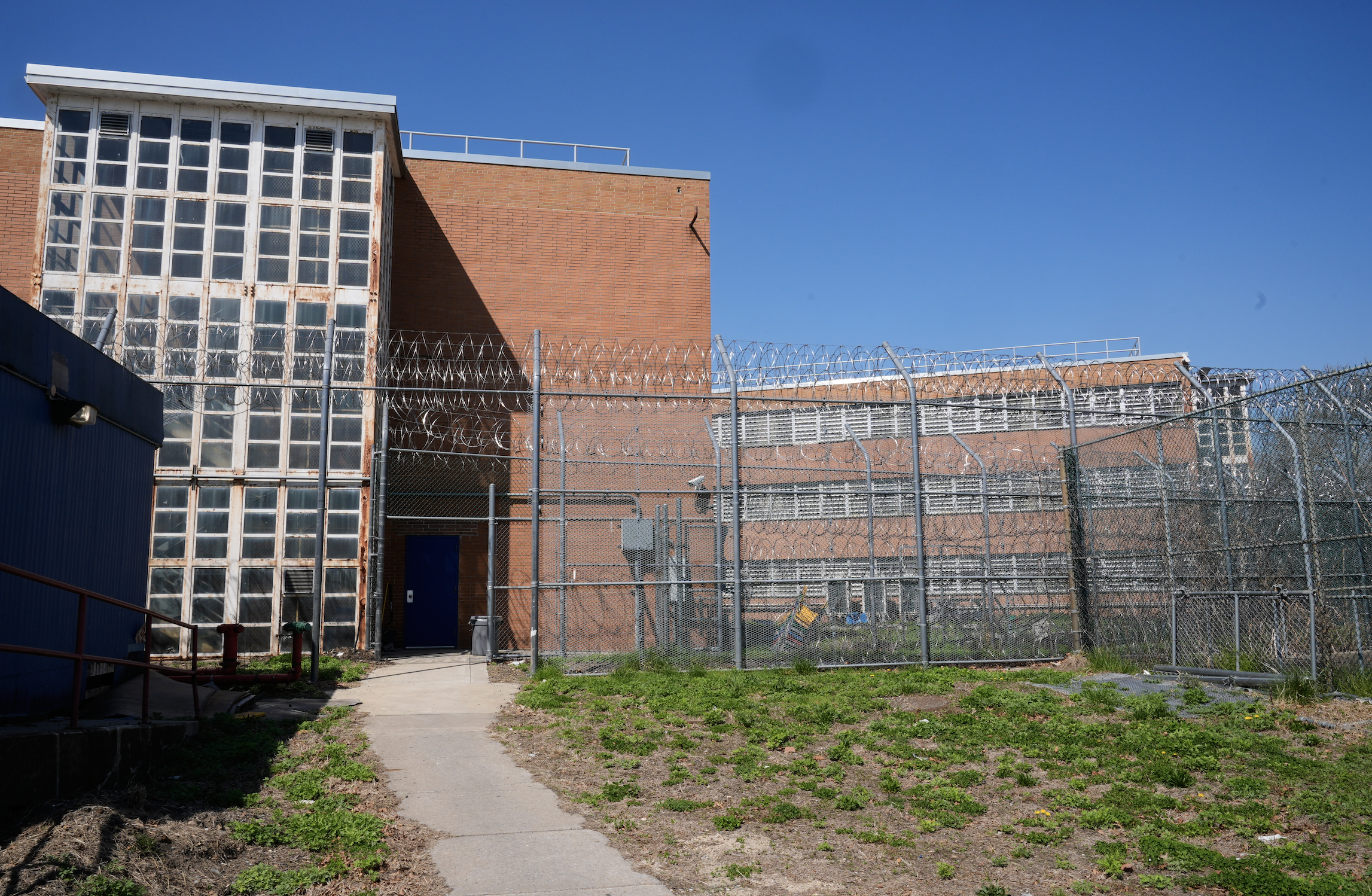
Two new lawsuits accuse the city of failing to provide detainees on Rikers Island an hour of outdoor recreation time, as required by the Board of Correction. AP file photo by Seth Wenig
By Jacob Kaye
Two new lawsuits allege that the city’s Department of Correction illegally kept Rikers Island detainees indoors without access to outdoor recreation time for weeks on end, wreaking havoc on detainees’ mental and physical health.
A pair of class action lawsuits recently filed in federal court claim that the DOC regularly failed to offer detainees outdoor recreation time, despite city rules that mandate that New Yorkers held on Rikers get an hour of outside time per day.
Instead, detainees allege that they were locked indoors or in their cells while being given various and sometimes conflicting reasons for why officers weren’t able to get them their fresh air.
While the allegations detailed in the lawsuits largely occurred when the DOC was run by former Mayor Eric Adams and former DOC Commissioner Lynelle Maginley-Liddie, attorneys representing the detainees say they haven’t seen much evidence that conditions have improved under Mayor Zohran Mamdani and his DOC commissioner, Stanley Richards.
“Detained people were going weeks without feeling the sun touch their face,” Callen Lowell, an attorney at Kaishian & Mortazavi LLC who is representing the detainees in the case, told the Eagle on Wednesday.
“DOC is brazenly disregarding city, state and federal laws that require incarcerated people to be able to access exercise, including out-of-cell recreation, as a basic human right,” Lowell added.
The city’s Law Department declined to comment on the lawsuit, which was first reported by NBC4.
The class action lawsuits include several named former detainees who say they rarely saw sunlight while being locked in the troubled jail complex where over 100 people have died in the past decade.
Peter Perna, who was incarcerated on Rikers for around seven months in 2025, said in the lawsuit that the issue was particularly pronounced at the Otis Bantum Correctional Center and the Rose M. Singer Center, where he was held in an enhanced supervised housing unit. There, he “did not have access to any out-of-cell exercise other than the rare occasions he was taken to recreation,” according to the lawsuit.
Perna filed a number of complaints about the lack of outdoor time during his time on Rikers.
However, the lawsuit claims that DOC officers did little to properly investigate Perna’s claims. When they did investigate, they falsified records so that there wouldn’t be a record of officers violating city rules, the lawsuit claims.
On the occasions when Perna’s complaints were found to be substantiated, officers said there was nothing to be done but report the incident to their superiors. But no effort was made to ensure that detainees had regular access to outdoor recreation time, the lawsuit said.
During one stretch of his incarceration, Perna went 21 consecutive days without recreation before getting outside for a single day. He then went 16 days without going outdoors. After getting another single day of outside time, he then went another 10 days without recreation, the lawsuit claims.
While some officers were sympathetic to Perna’s complaints, others allegedly saw him more as a nuisance.
He was told by one officer that pushing to receive the recreation time that’s supposed to be afforded to him was “not going to get you anywhere.”
Lowell said that detainees reported that the lack of time outside had “a tremendous impact on both their mental and physical health.”
The attorney also said the lack of movement made the dangerous jail complex even less safe.
“We've heard from our clients that when parts of Rikers are forced to go days or weeks at a time without going outside, it raises the temperature for everyone there,” Lowell said. “You have many people who are locked up, who are in crisis, who don’t have any outlet, and have been removed from any of the coping mechanisms that they might use, including with exercise, which is not in anyone's best interest.”
“The DOC knows this,” the attorney added.
Detainees have complained for years about the DOC’s failure to meet the minimum standard of one hour of outdoor recreation time set by the city’s Board of Correction, the DOC’s watchdog agency.
In 2024, the BOC reported that more than 1,000 detainees held in the Eric M. Taylor Center on Rikers Island, had gone at least a year without outdoor recreation.
More recently, advocates told the BOC in July that detainees being held at the Bellevue Hospital prison ward, which holds detainees too psychiatrically ill to remain at Rikers, were going months without rooftop recreation.
“Over the last year, most patients haven't been given sunlight or fresh air at all,” Leonard Simmons, an attorney with Mental Hygiene Legal Services, told the BOC last month. “DOC has largely abandoned its responsibility for this vulnerable population.”
Richards, the DOC commissioner, was in attendance at the July BOC meeting and said that while he was unaware of the issues at Bellevue, he told the board that the lawyer’s descriptions of DOC’s management of the unit were “not how we should be operating.”
Lowell told the Eagle on Wednesday that the lack of recreation time has continued over the past seven months under the new administration, describing efforts to fix the issue as a game of “Whack-a-Mole.”
“I think there's a real opportunity here for the city to chart a different path forward that respects the rights of incarcerated people,” Lowell said. “It's a political choice to be made whether the city wants to come to the table and really commit to policy change, or whether it wants to continue defending suits like this tooth and nail.”