Locals breathe sigh of relief after Kew Gardens Hills skyscraper project cut in half
/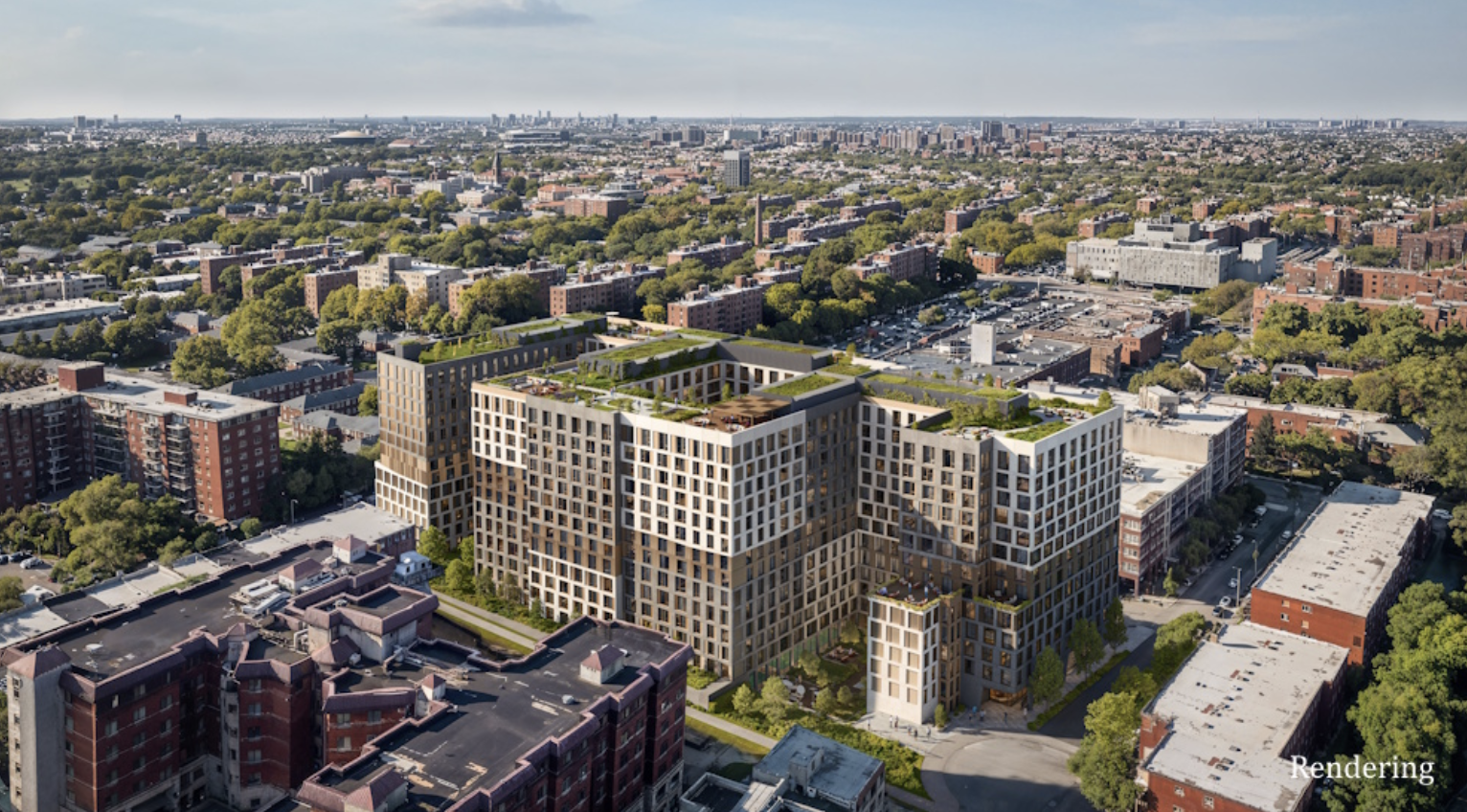
New renderings for Utopia Living, a Kew Gardens Hills housing development that was initially pitched as two massive skyscrapers. Rendering via Manhattan Regional Center
By Ryan Schwach
A controversial skyscraper proposed for a quiet corner of Kew Gardens Hills is no more, much to the relief of local officials.
Originally proposed as a massive two-tower skyscraper project, Utopia Living on Park Avenue in the suburban Queens enclave will now be half the size of what was originally pitched by private developer, Marx Development Group.
When the Eagle first reported about the proposal in October 2024, the plan was to build two cloud-scraping towers 50- and 42-stories high, making it significantly taller than all other buildings in the neighborhood. At the time, Kew Gardens Hills locals wanted no part in a Manhattan-style building going up in their community.
Now the project, which is being constructed by Marx Development Group subsidiary Manhattan Regional Center, will be a 13-story, 784,000-square-foot structure with around 800 rental units.
The changes in the project were reported in real estate outlet New York YIMBY last week.
New renderings of the project, published in New York YIMBY as well as the New York Post, show a much more humble building than the skyscrapers that were originally planned for the site.
The residential breakdown, according to the developer's website, will include 61 studios, 378 one-bedroom units, and 361 two-bedroom units.
Around 30 percent of the units will be affordable.
The overall number of units changed very little, despite the change in height.
Utopia Living will also include an underground parking garage, courtyard and rooftop lounges, a fitness center, swimming pool and an outdoor terrace.
Manhattan Regional Center did not respond to questions about why the change was made.
Nonetheless, locals this week took a sigh of relief after learning the skyscraper was no more.
“I am pleased that the developers heard the community’s concerns and voluntarily chose to make this development shorter, dramatically reducing the height while maintaining the same number of units,” said local City Councilmember Jim Gennaro. “This version of the project is much better suited for the character of our neighborhood. I look forward to welcoming this new and badly-needed high-quality housing to our neighborhood.”
Assemblymember Sam Berger, whose office is just around the corner from the construction site, agreed with his city colleague.
However, the state elected said he still wanted the community to have some input on whatever ultimately goes up at the site, even though the developer owns the site and does not need to go through the city’s land use review process in order to build there.
“While land use and development are city matters, communities should always have a meaningful voice in projects of this scale,” he said in a statement. “With this proposal appearing to be moving as of right without a full ULURP process, Kew Gardens Hills needs a full review of the impact on schools, roads, transportation, infrastructure and affordability. We must also ensure union labor is used throughout the project, including the many proud Local 3 families that live across the street and who helped build this community.”
When locals first became aware of the proposal in 2024, they were irate.
“It will be a disaster,” said Sorolle Idels, a local Jewish leader and community board member, when asked about the plan in 2024. “It's a congested area, making it unbelievably more congested…This is a big fat mess.”
According to DOB records, neighbors were already complaining about the limited work the developers were doing at the site well before true construction began.
Between April and October 2024, there were 13 complaints about the initial excavation of the site, shaking neighboring homes.
The communities frustrations were not helped by the proposal being as of right, meaning the developer would not have to undergo any kind of rezoning process and garner approval from the local community board, borough president or City Council.