
Advocates push city to revive long-ignored part of Rikers shutdown plan
/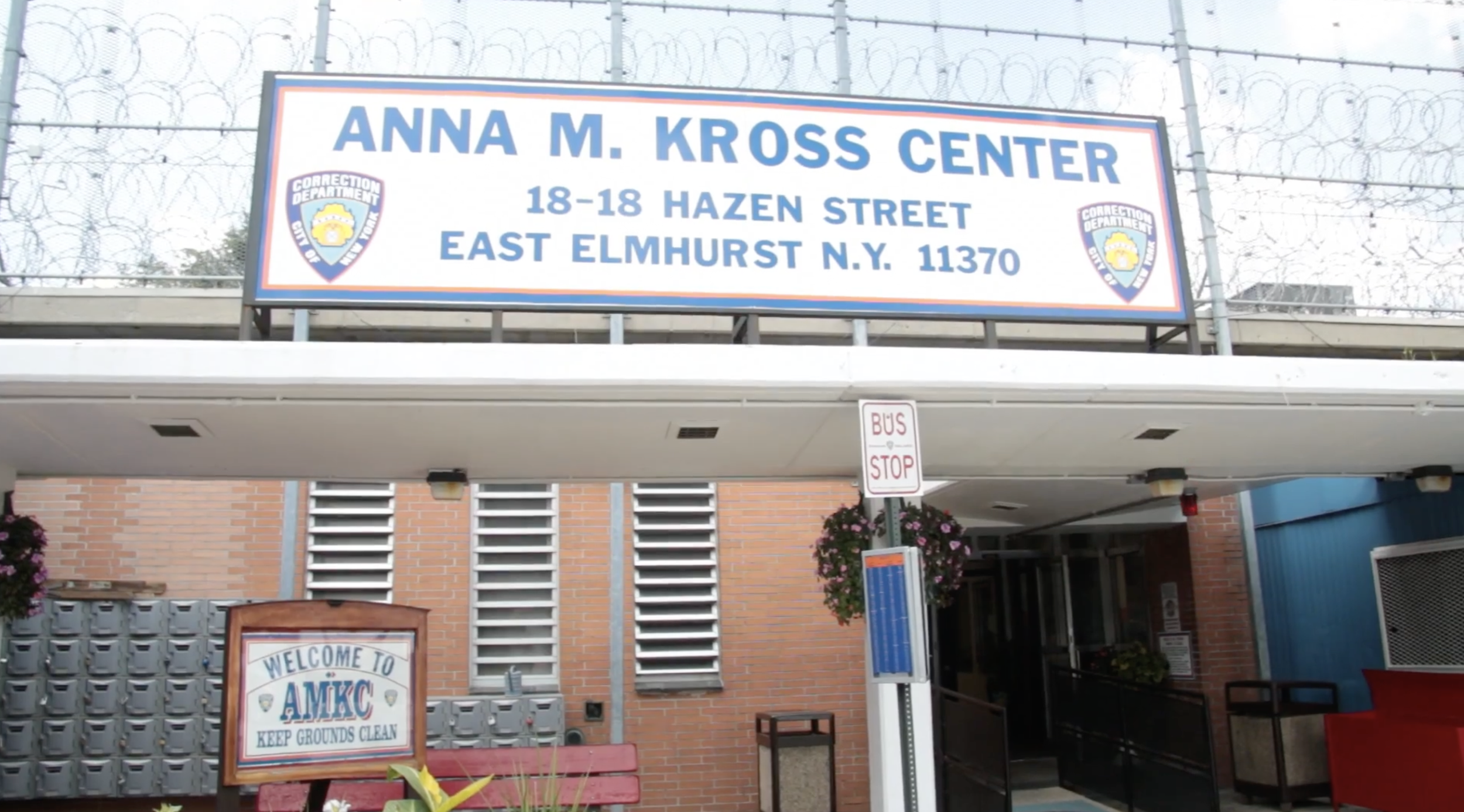
Advocates are calling on the city to transfer the long-vacant Anna M. Kross Center from the Department of Correction to the Department of Citywide Administrative Services as part of its plan to close Rikers Island. Screenshot via DOC/YouTube
By Jacob Kaye
Advocates are urging the Mamdani administration to transfer a long-vacant Rikers Island jail facility out of Department of Correction control, saying the city must revive a jail decommissioning process that came to a complete halt under former Mayor Eric Adams.
Criminal justice advocates have renewed a push for the city to recommit to gradually transferring unused facilities and land on Rikers Island from the DOC to the Department of Citywide Administrative Services ahead of the jail complex’s legally-mandated closure in 2027. The transfers, which are supposed to occur every six months, are meant to help facilitate the city’s plan to turn the island into a renewable energy hub once the jails close.
While the DOC transferred its first jail facility and 43 acres of unused land to DCAS during the final year of Mayor Bill de Blasio’s administration, the mandate was ignored under Adams.
With a little more than a year before the city’s Rikers closure deadline — which officials have acknowledged is no longer feasible — the two transfers made in 2021 remain the only ones the city has completed.
But advocates say Mayor Zohran Mamdani, who has pledged to close Rikers and open the four borough-based jails to replace it as soon as possible, now has a chance to restart the transfer process.
They say he can begin with the Anna M. Kross Center, which has effectively sat vacant for the last three years.
“It's just been sitting there,” Zachary Katznelson, the executive director of the Independent Rikers Commission, told the Eagle during a recent interview. “Now is the time to transfer that jail over.”
AMKC was once one of the largest jails on Rikers Island, with the capacity to hold 2,300 detainees – nearly a third of the jail complex’s current population.
Like many facilities on Rikers, AMKC was dangerous. At least one person died in the facility every year but one from 2010 until 2023, according to an analysis by Freedom Agenda, an organization that advocates for the closure of Rikers Island’s jails.
The building was also falling apart. In addition to the grime and dirt that cover most jails on Rikers, the sewage in the building would often back up, causing waste to spill out onto cell floors, according to Tammy Reed, whose son was incarcerated at AMKC in 2020.
“It’s just a crummy place,” Reed said. “It's just disgusting. From the minute you walk in, it's dirty, it's grungy.”
Originally opened in 1978, the facility deteriorated to the point that it was too costly to make safe, and the DOC shuttered it in July 2023.
But while the agency emptied AMKC’s jail cells, it held on to the building, passing up one of eight opportunities during the Adams administration to transfer unused land or facilities to DCAS.
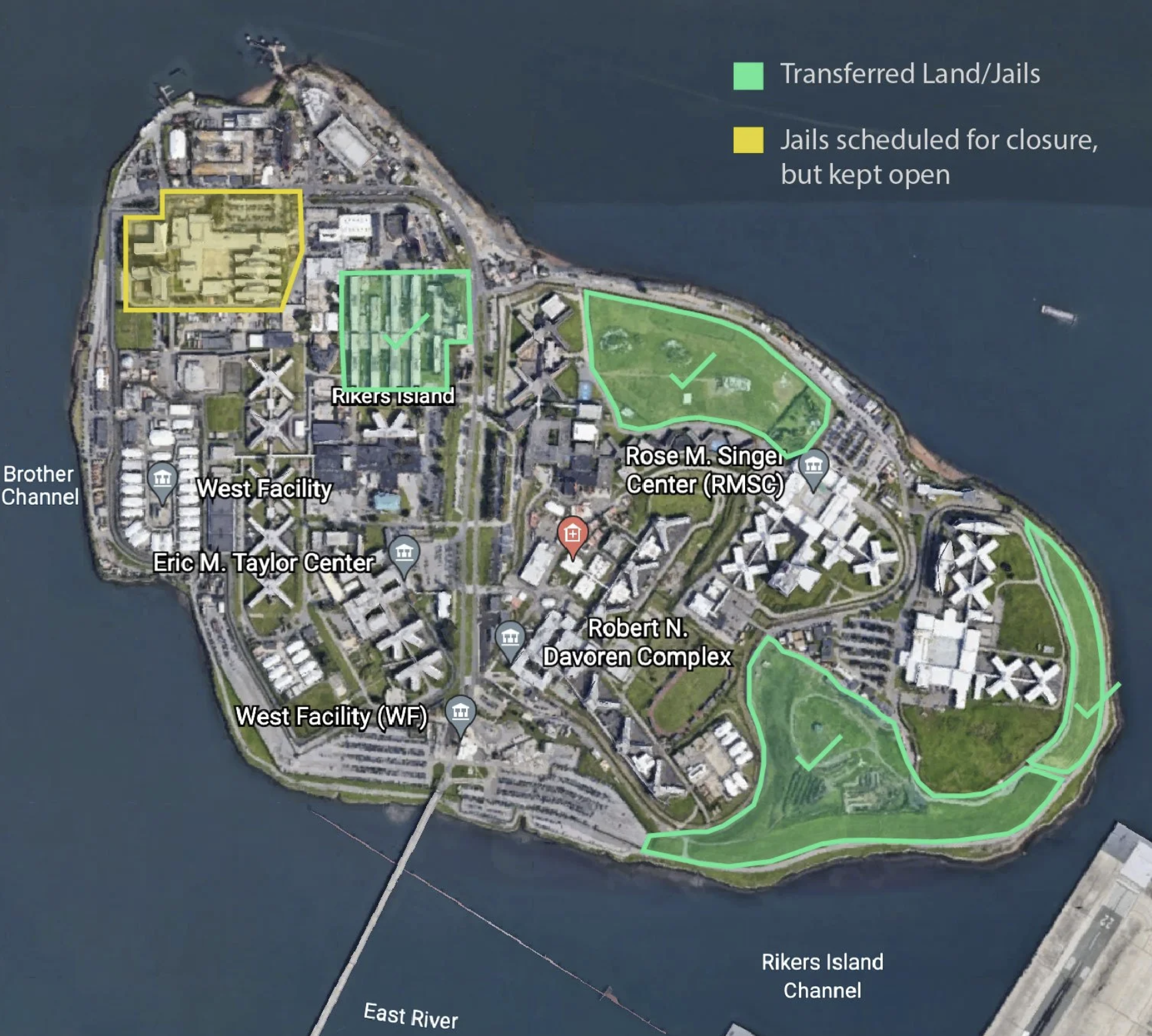
Advocates are calling on the Mamdani administration to restart the transfer of vacant land and facilities on Rikers Island from the Department of Correction to the Department of Citywide Administrative Services. Map via Freedom Agenda
With Rikers’ population surging at the time, the agency said it was possible it would need the jail cells in the future. That became the case in 2025, as a state correctional officer strike led to a spike in the number of state-ready detainees being held on Rikers. In April of that year, the DOC asked state regulators to allow it to reopen AMKC, but the request was denied.
But DOC officials have said the primary reason for holding onto AMKC is its large industrial kitchen, which is used to prepare food for detainees and staff. More than half of the 7.3 meals prepared on Rikers each year are made in AMKC’s kitchen, according to a DOC spokesperson.
In February, the Eagle asked recently-appointed DOC Commissioner Stanley Richards, the first formerly incarcerated person to hold the top agency role, if he would commit to transferring AMKC to DCAS. While he didn’t say AMKC would be the first to go, the reform-minded commissioner pledged to resume the transfers.
“I'm committed to closing Rikers, and as part of that, as we do population reduction, we will absolutely be turning over facilities that will put us on a path to closing Rikers Island,” he said.
A DOC spokesperson told the Eagle on Friday said the agency “is reviewing space and working on a timeline and process for when we would be able to close facilities.”
‘Moving forward’
The transfers of empty land or unused facilities are outlined in the city’s Renewable Rikers Act, a package of bills that was signed into law by de Blasio in 2021.
The legislation calls for studies on bringing renewable energy, organics and wastewater processing to Rikers Island, and establishes a process for transferring control of the jails and land from the DOC to DCAS to help speed the island’s transformation.
While Adams faced criticism for failing to make any transfers, the law gives the administration significant discretion. It only requires the city to twice a year turn over facilities deemed “not in active use” for housing incarcerated people or providing direct services. If officials determine a facility is still in use, they are not required to transfer it.
But advocates say that even with the alleged need for AMKC’s kitchen, the DOC should figure out how to get AMKC into DCAS’ hands by the time the next transfer deadline rolls around in July.
“It would be a symbolic gesture from this mayor and this administration that they are moving forward with the closure of Rikers Island,” said Darren Mack, the co-director of Freedom Agenda. “And it wouldn’t cost the city a penny.”
The lack of transfers isn’t the only way the city has fallen behind on its plan to shutter Rikers.
The new jails, including the one that will be built behind Queens Criminal Court in Kew Gardens, are years behind schedule. The first of the new borough-based jail facilities likely won’t be completed until 2029, two years after the current closure deadline, and the final jail isn’t expected to be completed until 2032.
It also doesn’t appear that DCAS has begun planning to turn what few properties on Rikers it received nearly five years ago into renewable energy sources.
“Activating the land transferred to DCAS is a priority for this administration; planning is active and ongoing, and we expect to have more to share in the coming months,” a DCAS spokesperson told the Eagle in a statement.
Katznelson, who said meeting the 2027 deadline “is just not possible at this point,” urged officials to begin work on making Rikers a renewable energy hub and kicking the transfers back into gear as soon as possible.
“Let's start moving forward with the future of Rikers,” he said. “Instead of just being stuck with these decrepit hulks of the past.”
Update: This story was updated with a statement from the Department of Citywide Administrative Services at 8:03 a.m. on Monday, April 6, 2026.