Council and mayor at odds over budget
/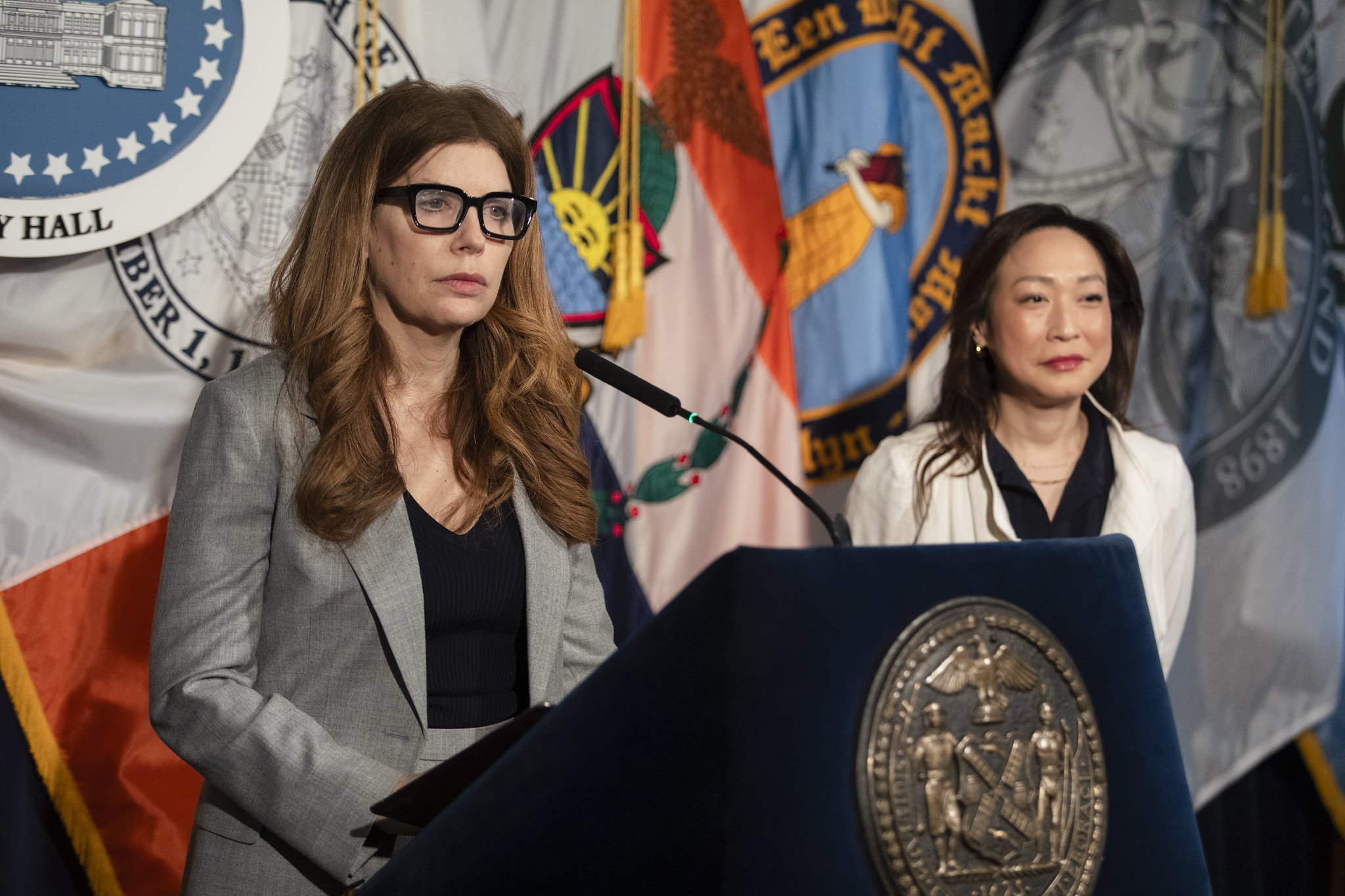
City Council Speaker Julie Menin outlined the Council’s preliminary budget on Wednesday, which was quickly criticized by Mayor Zohran Mamdani. Photo by Emil Cohen/NYC Council Media Unit
By Ryan Schwach
Mayor Zohran Mamdani and the New York City Council began to butt heads Wednesday over how to address the city’s multi-billion dollar shortfall after the Council released its response to the mayor’s preliminary budget proposal.
On Wednesday, Speaker Julie Menin released the Council’s preliminary budget response, which she said would find $6 billion to close the city’s budget gap, doing so with new found savings without dipping into the city’s rainy day fund, making cuts to services, or implementing tax increases.
Mamdani immediately slammed the proposal, calling it “unrealistic.”
The disagreement puts the two sides of City Hall truly at odds for the first time since Mamdani took office, and continues the trend of the tense budget negotiations that defined former Mayor Eric Adams’ relationship with the Council.
“We're taking a disciplined, responsible approach,” Menin said on Wednesday. “Our plan outlines a viable path forward, one that closes the shortfall without raising property taxes without cutting critical services and without drawing down the rainy day fund.”
Menin also said the proposal would not require any property tax increases, a controversial plan Mamdani pitched as a “last resort” option to fill the city’s budget gap.
The Council’s plan also ignores Mamdani’s call to the state to raise taxes on the wealthiest New Yorkers and corporations to fill the gap, and for the state to increase how much money it gives its largest city to be more proportional to the revenue the five boroughs raise.
“The City Council’s Preliminary Budget Response serves to confront the challenges facing our city, while responsibly addressing fiscal uncertainty,” said Queens Councilmember Linda Lee, the chair of the Committee on Finance.
“New Yorkers grappling with an affordability crisis should not see a decline in the quality of the services they receive due to a budget dance, and the City Council is committed to fighting to ensure residents receive the investments they deserve,” she added. “As the budget negotiations continue, the Council has outlined an alternative path to close the budget shortfall and preserve and expand the services and programs for families across our city.”
On Wednesday, the mayor said the Council’s plan would actually slash city services, not increase them. But the Council vehemently denied that assertion.
“[Menin’s] plan claims to close the city's $5.4 billion fiscal gap without taxing the rich or cutting services,” Mamdani said in a video posted to social media after the speaker’s announcement. “The problem is that's not what it would do if her proposal was adopted, it would result in slashing billions of dollars from agency budgets, and working New Yorkers would pay the price.”
In their own post, the Council pushed back and said Mamdani’s statement must have been an April Fools’ Day joke.
“The Council wasn't kidding when we said NO CUTS to any services or staff,” the Council said on social media. “Despite these untrue accusations, the Council stands ready to negotiate a budget that delivers and maintains critical services for New Yorkers.”
While the City Council has little power to meet Mamdani’s revenue demands, which lie with the state, he had hoped they would be an ally in his fight for a millionaire’s tax and an increase in Albany funding.
Some members of the state legislature support the proposals, but Governor Kathy Hochul has said she wouldn’t greenlight the tax raises or an increase in funding down the Hudson River.
“Without it, our deficit won't disappear,” Mamdani said, referring to his demands for the state. “It will repeat year after year, asking future generations to shoulder the burden. We will solve this budget crisis, but I'm not going to let it come at your expense.”
The Council's preliminary budget plan includes re-estimations of city revenues and expenditures, $80 million in Department of Buildings construction permits and $42 million worth of rental revenue from Queens’ two airports, LaGuardia and John F. Kennedy International Airport.
The main source of savings, the speaker said, will be $175 million in Fiscal Year’s 2026 and 2027 secured through reevaluating consulting contracts within the Department of Education.
“We believe that you've got to audit the agency's non-essential contracts,” Menin said. “We need to right size some of those contracts, and we need to competitively bid them.”
The Council also called for additional budget funding for city programs, including an expansion of the Fair Fares program, which provides subsidized transit fares.