Appeals court again rebukes Queens judge for acting like a prosecutor
/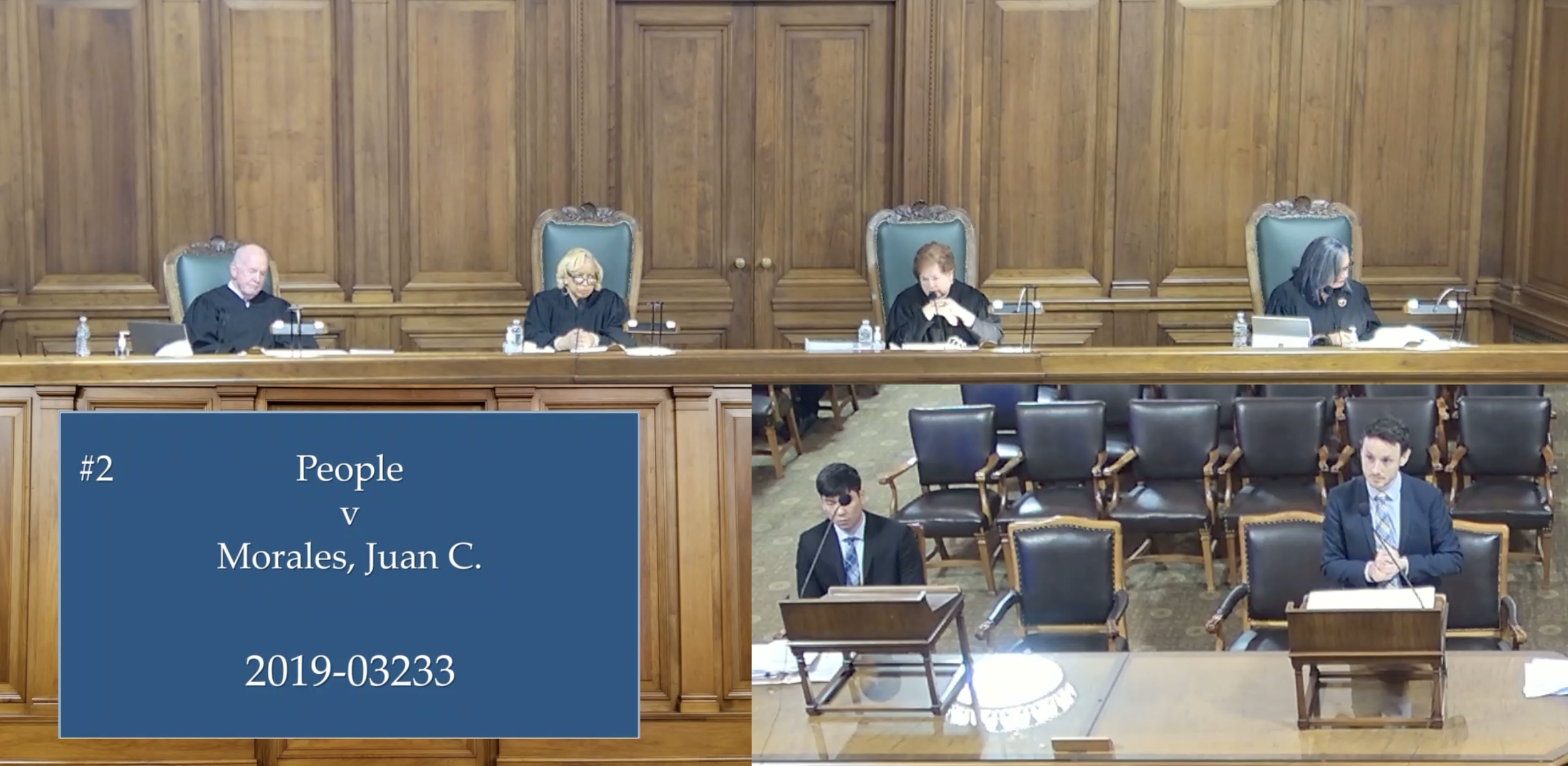
The Appellate Division, Second Department overturned a 2019 conviction after finding that former Queens Supreme Court Justice Stephen Knopf improperly took the prosecution’s side during the proceedings. Screenshot via Appellate Division, Second Department
By Jacob Kaye
For the second time in a month, a state appellate court has overturned a Queens conviction after finding that a trial judge abandoned his role as neutral referee, asking witnesses more than 800 questions and berating the defense attorney in front of the jury.
A panel of judges in the Appellate Division, Second Department said in a ruling this week that now-retired Queens Supreme Court Justice Stephen Knopf interfered in the trial of Juan Morales, who was convicted in 2019 of drunkenly stealing a taxi cab and taking it for a joyride through Queens. The appeals court panel overturned Morales’ conviction and ordered a retrial overseen by a new judge.
“The prosecutor didn’t prosecute this case,” Appellate Division, Second Department Justice Betsy Barros said during a January hearing. “There were two prosecutors, it seems.”
Knopf repeatedly took over questioning witnesses on behalf of the Queens district attorney’s office throughout the short trial, the judges found. He also bashed the defense, telling Morales’ attorney at various times during the trial to “stop blubbering from the mouth,” and to “put that in your pipe and smoke it.”
The appellate court ruled that the judge’s behavior likely influenced the jury, which found Morales guilty of robbery, grand larceny, criminal possession of stolen property, unauthorized use of a vehicle, driving while intoxicated, and unlicensed operation of a motor vehicle.
The behavior was not new for Knopf. The same court found last month that the judge acted like a member of the prosecution during a separate 2019 trial. A third 2019 trial overseen by Knopf was overturned on similar grounds in 2023.
“Viewing the record as a whole, the Supreme Court improperly took on the function and appearance of an advocate,” the judges, including Justices Deborah Dowling, Lourdes Ventura, James McCormack and Barros, said in their Wednesday ruling. “The court’s conduct left the impression that its opinion favored the credibility of the People’s witnesses and the merits of the People’s case.”
Throughout the trial, Knopf appeared to be working in tandem with the DA’s office, Morales’ attorney David Fitzmaurice argued before the appeals judges in late January.
“This isn't calling balls and strikes,” Fitzmaurice said.
Knopf allegedly argued with a witness and their interpreter at one point during the trial. He also helped prosecutors create a map to help the jury better understand the timeline of the alleged theft, a job typically left to prosecutors.
Fitzmaurice argued that Knopf’s interference often came in an effort “to rescue a prosecutor who is not asking a proper question.”
At one point during the trial, Knopf apologized to the jury for asking a number of follow-up questions about the defendant publicly urinating before the theft, telling them that he was “forced to ask these questions.”
“I don't think anyone's forcing a court to ask these questions,” Fitzmaurice told the Appellate Division judges.
Even the prosecutor was concerned about Knopf’s conduct.
After the prosecutor finished questioning one of her witnesses, Knopf continued probing them. When the prosecutor objected, the judge snapped back.
“Don't object,” he said. “Especially when I'm on a roll.”
The Queens district attorney’s office did not respond to a request before comment before print time.
Knopf oversaw Morales’ case similarly to the way he ran the 2019 trial of Fred Q. Coleman, who was convicted of assault, disorderly conduct and criminal possession of a weapon.
Over more than 200 pages of witness testimony, the judge asked 461 questions in the case, many of them leading questions that were favorable to the prosecution.
Central to the DA’s case were the victim, whom Coleman slashed with a knife, and the paramedic who responded to the scene. Both were peppered with questions by Knopf, according to a January ruling from the Appellate Division, Second Department.
Knopf allegedly asked the victim leading questions about the pain they felt from the slashing and instructed them to stand up and approach the jury to show the scar they had sustained from the attack.
Knopf also allegedly repeatedly used phrases that may have made it appear as though he was on the side of the Queens district attorney’s office, saying things like, “let’s rephrase that,” or that he was “glad that we made things clear for the jury.”
The Appellate Division overturned Coleman’s conviction and ordered a new trial.
The court made the same ruling in 2023, when it heard an appeal from Kerry Pulliam, who was convicted in 2018 of stealing shoes from a department store.
The appeals judges found that Knopf’s questioning of the witnesses in the case established key facts about the robbery.
“[T]he Supreme Court engaged in its own lines of inquiry, which detailed the nature of the surveillance equipment tracking the defendant, elicited a detailed description of the perpetrator and the bags he was carrying, and what the perpetrator was observed doing on the video surveillance camera, asked leading questions as to what the guard saw and heard as the perpetrator left the store and triggered the store alarm, and noted that when the guard
approached the perpetrator and asked for the merchandise back, the guard even said, “please,” but the perpetrator still refused to return the items,” the 2023 ruling read.
Knopf was first elected to the bench in 1996, winning a spot on the city’s Civil Court.
He was assigned to Criminal Court the following year, and served there until 2005.
In 2006, he was elected to serve in the Supreme Court in Queens. He was reelected in 2019 after the conclusion of his first 14-year term. He retired at the end of 2024.