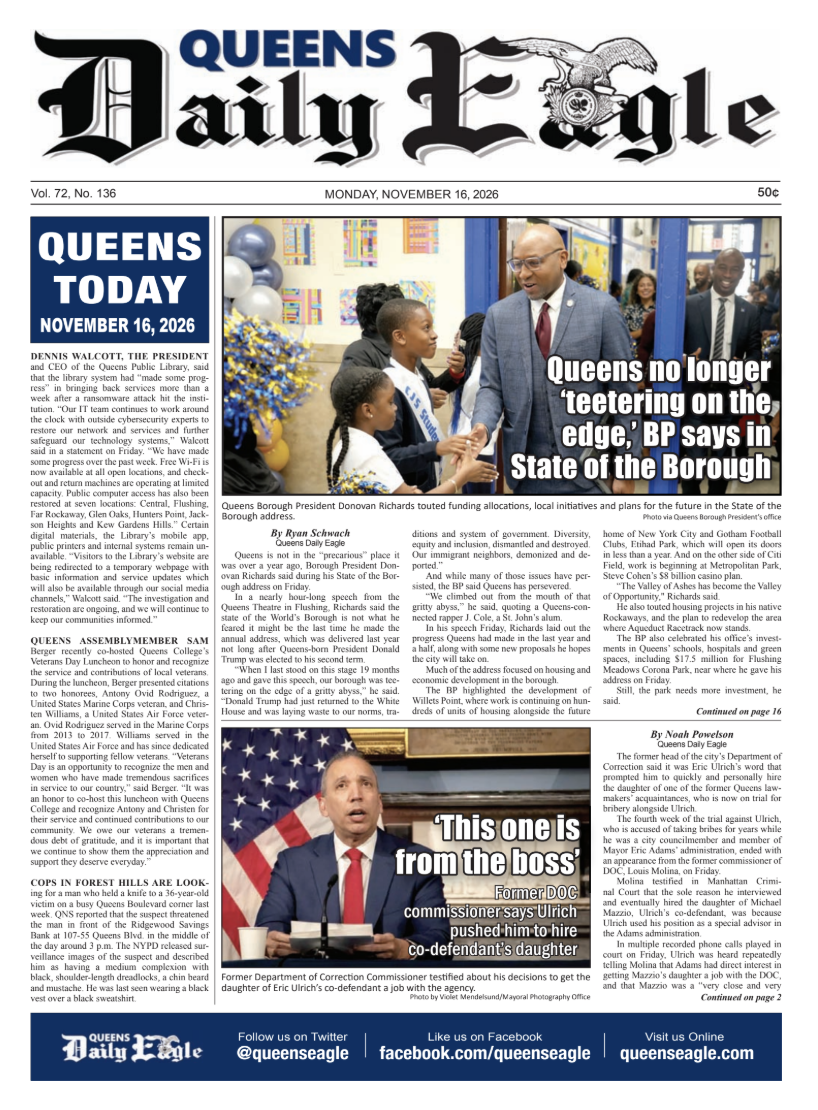
Queens begins next phase of $413M Downtown Jamaica rezoning
/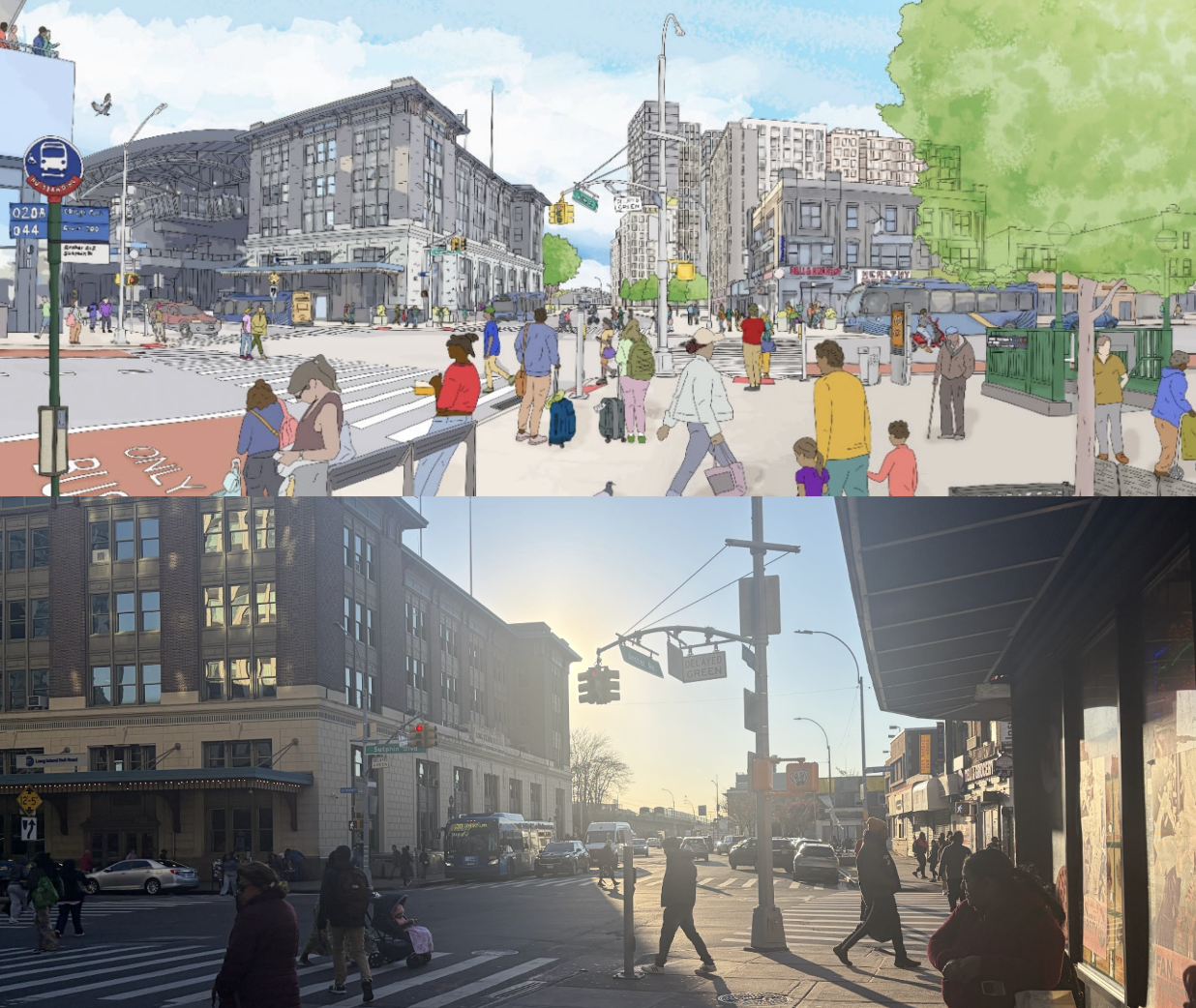
The city is moving forward with the Downtown Jamaica Rezoning plan, a massive endeavor to overhaul the historic Southeast Queens neighborhood. Rendering via Department of City Planning, Eagle photo by Ryan Schwach
By Ryan Schwach
A year after the city passed a nearly half a billion dollar plan to completely overhaul one of Queens’ most historic and bustling neighborhoods, Southeast Queens officials are moving forward with the massive Downtown Jamaica rezoning plan.
Thirteen months after the City Council gave its final approval to the $413 million plan that aims to essentially create an entirely new Jamaica, local Councilmember Nantasha Williams this week named the people who will bring the project to fruition.
A steering committee, made up of 10 Queens community leaders, will facilitate the creation of a task force that will oversee the implementation of 82 projects associated with the rezoning.
The proposal features a Mandatory Inclusionary Housing provision that officials say would make Jamaica the largest MIH zone in the city. Officials say the rezoning is expected to result in the creation of 12,000 new housing units.
The steering committee includes Sharon Lee, who served as an interim borough president; Rev. Patrick O'Connor, pastor of the First Presbyterian Church in Jamaica and an affordable housing advocate; Michelle Stoddart from Resorts World; and Amir Abbady, Williams’ former chief of staff.
The steering committee will recommend task force appointments to Williams and will dissolve once the task force is in place.
The Downtown Jamaica Task Force will provide oversight over the city’s progress in meeting the commitments negotiated as part of the plan's approval last year. The task force will be led by Dr. Melva Miller, a Jamaica community leader and former deputy borough president.
“The Jamaica Neighborhood Plan will shape this community for generations, long after any of us currently in office have moved on,” Williams said in a statement. “Seeing this next phase take shape with the leadership and expertise of Dr. Melva M. Miller, a Steering Committee whose members bring an impressive range of professional experience and community knowledge, and the continued partnership of the Center for New York City Neighborhoods gives me tremendous confidence in the process we're establishing.”
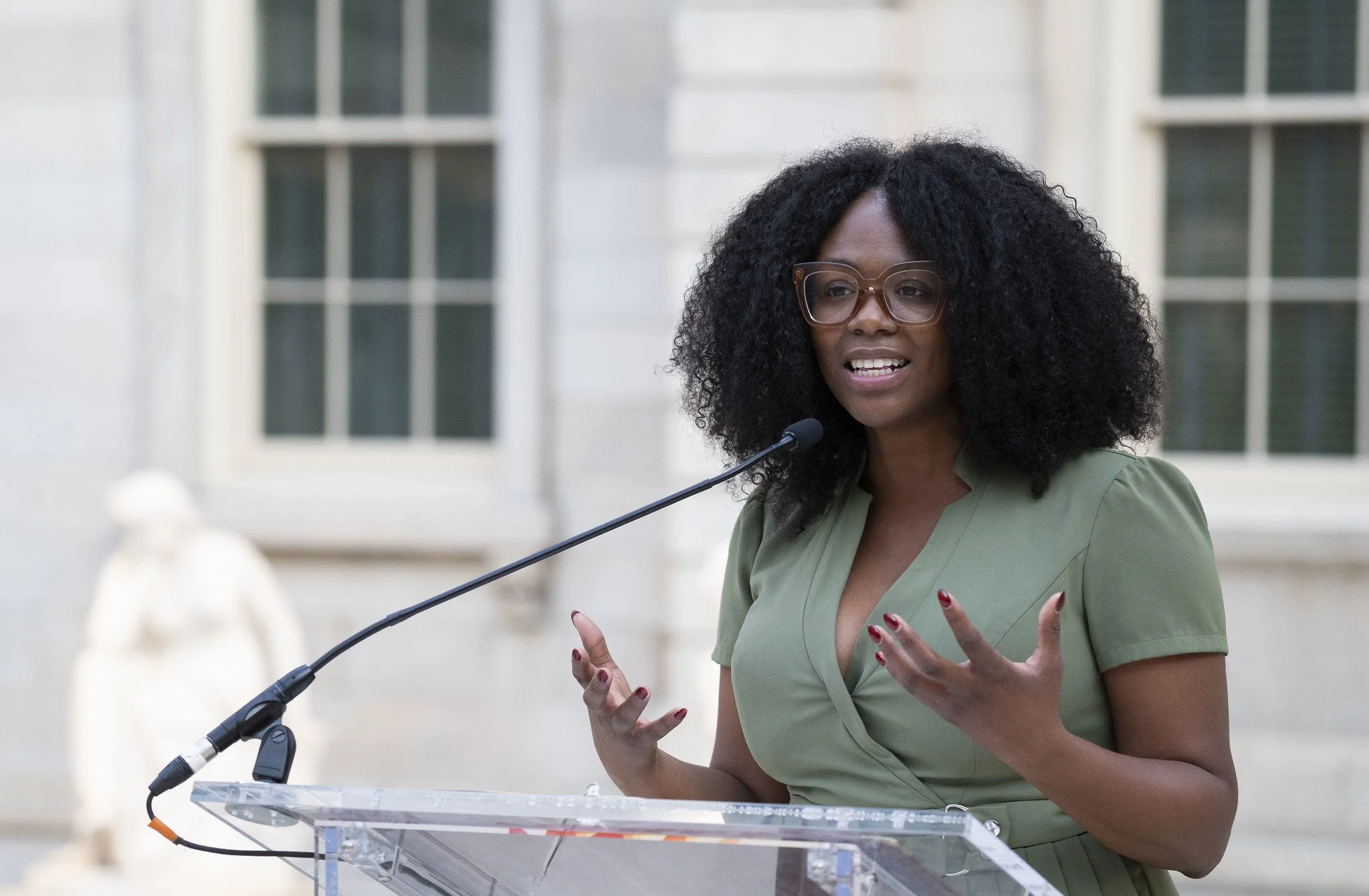
Queens Councilmember Nantasha Williams named a steering committee, which will recommend task force members who will facilitate the project. File photo Gerardo Romo/NYC Council Media Unit
Miller, a former deputy borough president under Melinda Katz, is also the founder of the Sutphin Boulevard Business Improvement District, which lies in the center of the rezoning’s 230-block catchment area.
“This could be an example,” Miller told the Eagle during a phone interview Tuesday. “This could be a case study of how folks could work together to grow a community in a responsible way.”
Miller’s role will be to facilitate the work of the task force, while also working with the city to make sure the commitments are kept.
“I think the only way it really works, from my experience, is if the task force is a true partner with the city,” she said. “The task force shouldn't operate from a defensive space. It should really work in collaboration.”
Those commitments come in the form of 82 specific projects, ranging from upgrades to local parks to sewage infrastructure fixes to initiatives for local small businesses. The 82 commitments were negotiated by Williams and then-City Council Speaker Adrienne Adams.
Of the 82 commitments, 10 are already completed, including $83,000 in baseline funding for the Jamaica Center for Arts and Learning, and more than half are already underway, according to an online dashboard.
“These priorities came directly from the people,” Williams said after the rezoning plan cleared Council committees in October last year. “They came from the voices we heard at town halls, from steering committee members, from youth symposiums and from neighbors who showed up and spoke up over the last two years.”
The rezoning wasn’t without its controversies. Both local community boards with jurisdiction over the project opposed the rezoning because of concerns regarding the amount of new housing within the plan. The Council reduced the number of units by 500 before passing it into law.
“Some community members have raised concerns about the scale of new development proposed by the rezoning, in particular – they're concerned about the impacts on low-scale residential blocks with small homes,” Adams said at the time. “We are concerned about the concerns, and we want to make sure that they are taken into account.”
Borough President Donovan Richards approved the plan, but with several conditions.
The steering committee will accept applicants for the task force through Nov. 23, ahead of the task force’s first meeting, scheduled for Dec. 16.