Rikers reform effort falters as DOC struggles with basic jail operations
/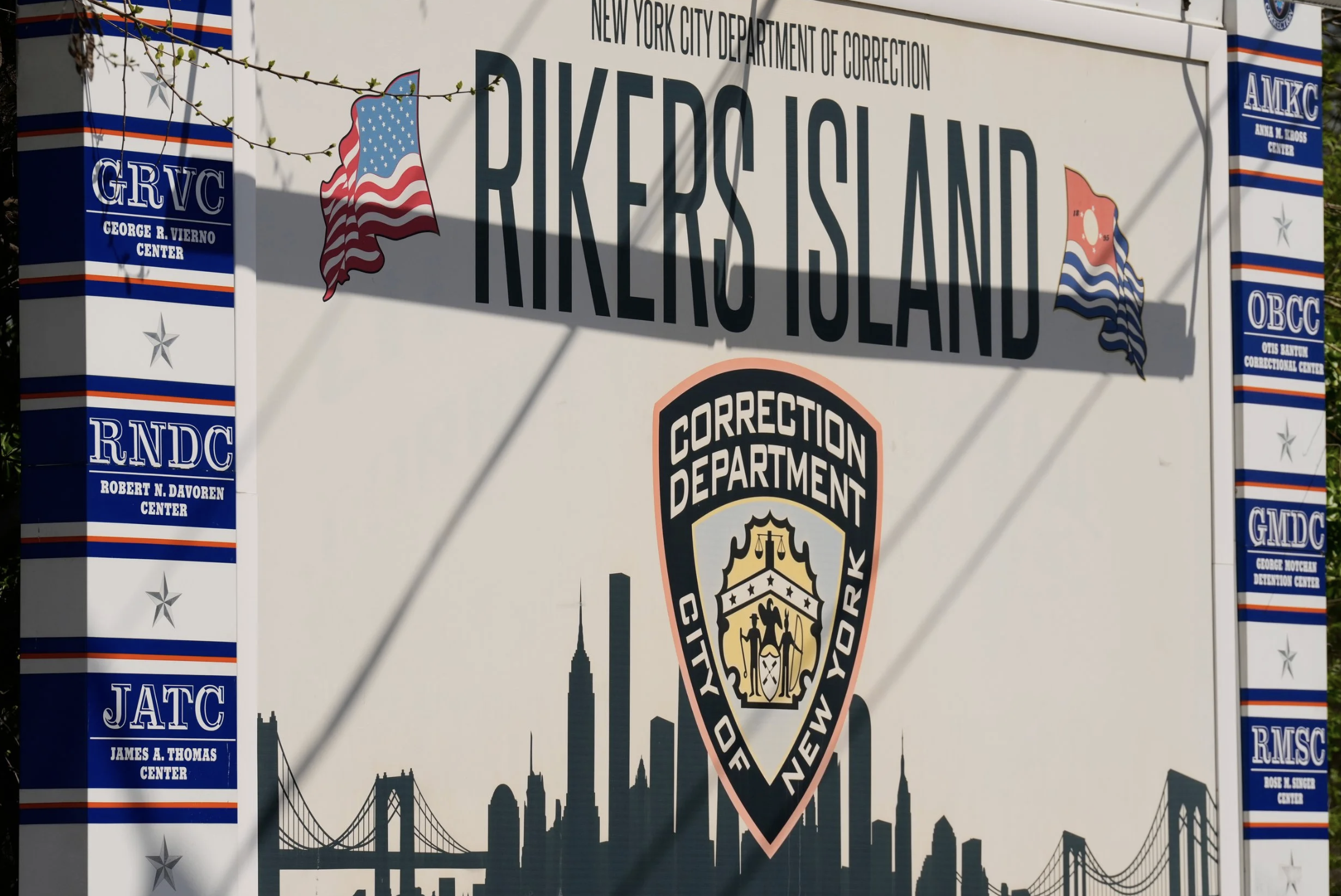
The federal monitor tracking conditions on Rikers Island said the past year has seen much of the same dysfunction and constitutional violations that led to the city being stripped of its control of the jails earlier this year. AP file photo by Seth Wenig
By Jacob Kaye
The federal monitor tracking conditions on Rikers Island said the dangerous jail has remained mired in dysfunction and constitutional violations a little more than six months after a federal judge stripped the city of its control of the jail complex and appointed a remediation manager to lead the reform effort.
Steve J. Martin, the monitor appointed by a federal judge to document and advise on conditions in Rikers Island as part of the ongoing civil rights case Nunez v. the City of New York, said the Department of Correction has yet to master foundational correctional practices, including supervision and safety, and that the deficiency has prevented them from instituting any of the other major reforms ordered by federal Judge Laura Swain.
“The constitutional violations underpinning this case simply cannot be resolved given the current trajectory, where the Department is being pulled in many directions and is attempting to develop and implement a variety of initiatives without first establishing the proper and necessary foundations in basic correctional practice,” the monitor said in his report, which was issued on Wednesday.
The monitor said that “the seemingly impenetrable gordian knot and polycentric issues compromising the jails’ operations” have played a role in a number of the eight deaths of detainees in DOC custody this year.
Officers have abandoned their posts and failed to check on the welfare of detainees, the monitor said. Security failures “remain rampant” throughout Rikers Island, where cell doors have been left unsecured and officers are unable to find dangerous contraband. The monitor also said the DOC is unaware of where its staff is deployed and that the agency’s leaders generally have “limited operational experience and expertise in actual day-to-day correctional management and practice.”
“Unfortunately, the consequence of these failures is that the constitutional violations that led the court to impose escalating forms of remedial relief remain present and the violence in the system remains persistent,” the monitor said. “These conditions will continue unabated if the core issues underlying these problems are not addressed first.”
The latest update from the monitor paints a generally poor picture of the reform effort on Rikers Island, which appeared to be turning over a new leaf at the start of the year with Mayor Zohran Mamdani’s appointment of Stanley Richards as DOC commissioner and Swain’s appointment of Nicholas Deml as the remediation manager.
Richards, the first formerly incarcerated man to lead the department, is a criminal justice reformer who vowed to work in partnership with Deml, who was given immense power by Swain over the day-to-day management of Rikers Island and the agency that runs it.
While Martin, who has been tracking conditions in the jails for over a decade, and Swain had praise for Richards at the beginning of his tenure, their tone shifted a month ago, when Martin accused the commissioner of stifling communication between top DOC leadership and the court-appointed officials.
At the start of September, the monitor said that he had “grave concerns” about a request from Richards’ chief of staff that agency leaders not communicate their work or jail improvement ideas directly to the monitor, the recently installed remediation manager, or City Hall without first briefing Richards. The memo, which was sent via email, was not shared with the monitor or remediation manager until it was leaked anonymously to Martin.
The memo raised many of the same transparency issues the monitor has said he’s been dealing with for years as the DOC has failed to address the pervasive violence, from both detainees and officers, on Rikers Island that led Swain to take the extraordinary step of appointing a remediation manager to take charge of the jails.
In his report on Wednesday, Martin said that the commissioner’s memo had been rescinded and that DOC staff and leadership had been reminded of their obligations to communicate openly with the monitor and remediation manager.
While Martin said that “improved engagement has already been observed” over the past month, “the monitoring team has identified issues regarding failures of transparency, lack of consultation when required, and an instance in which information should have been provided to the [monitoring team] but was not.”
Sam Raskin, a spokesperson for the mayor, said “the Mamdani administration remains committed to working collaboratively with the federal monitor and remediation manager to improve conditions in our city's jail system and make it safer, for both people in custody and staff.”
“That means keeping lines of communication open, sharing information transparently and taking the steps required to deliver the reforms mandated by the Nunez court orders,” he said. “The Mayor has complete confidence in Commissioner Richards and his commitment to this vital work, and that he and DOC leadership will continue to work in partnership with the monitor and remediation manager toward their shared goals.”
But Martin’s concerns about the DOC extend well beyond any one commissioner.
Three mayors and twice as many DOC commissioners have failed to enact the reforms required in the settlement of the Nunez case, which centered on detainee allegations about abuse from officers. Swain found the city in contempt of 18 provisions of the settlement in 2024 and began mapping out the creation of the remediation manager.
Since being appointed to the position earlier this year, Deml, who previously led Vermont’s correctional system, has been confronted with many of the seemingly intractable problems facing the city’s jails that were previously documented by Martin.
But before the DOC can begin to solve many of the issues on Rikers, it has to first adopt some basic correctional practices, Martin said on Wednesday.
The monitor said the agency has to begin to promote “stable [and] capable” leaders and create a more cohesive governance structure.
It also has to complete a staffing analysis to begin to understand how its officers are deployed throughout the jails, Martin said. Once the DOC understands where its officers are, it then needs to “make appropriate adjustments so that staff deployment practices become efficient and provide for the appropriate management and supervision of people in custody.”
The monitor also said the DOC has to come up with a better way of deciding which detainees are housed where so as to prevent violence between detainees.
“Ultimately, without a strong operational foundation based on sound correctional practice, the department will not be able to achieve the reforms required by the Nunez court orders or the
various requirements imposed by oversight bodies and local law,” he said. “The past 10 years of stalled reforms and ongoing constitutional violations clearly demonstrates this sobering and unfortunate reality.”