Legal Aid labor dispute ends with ratified union contract
/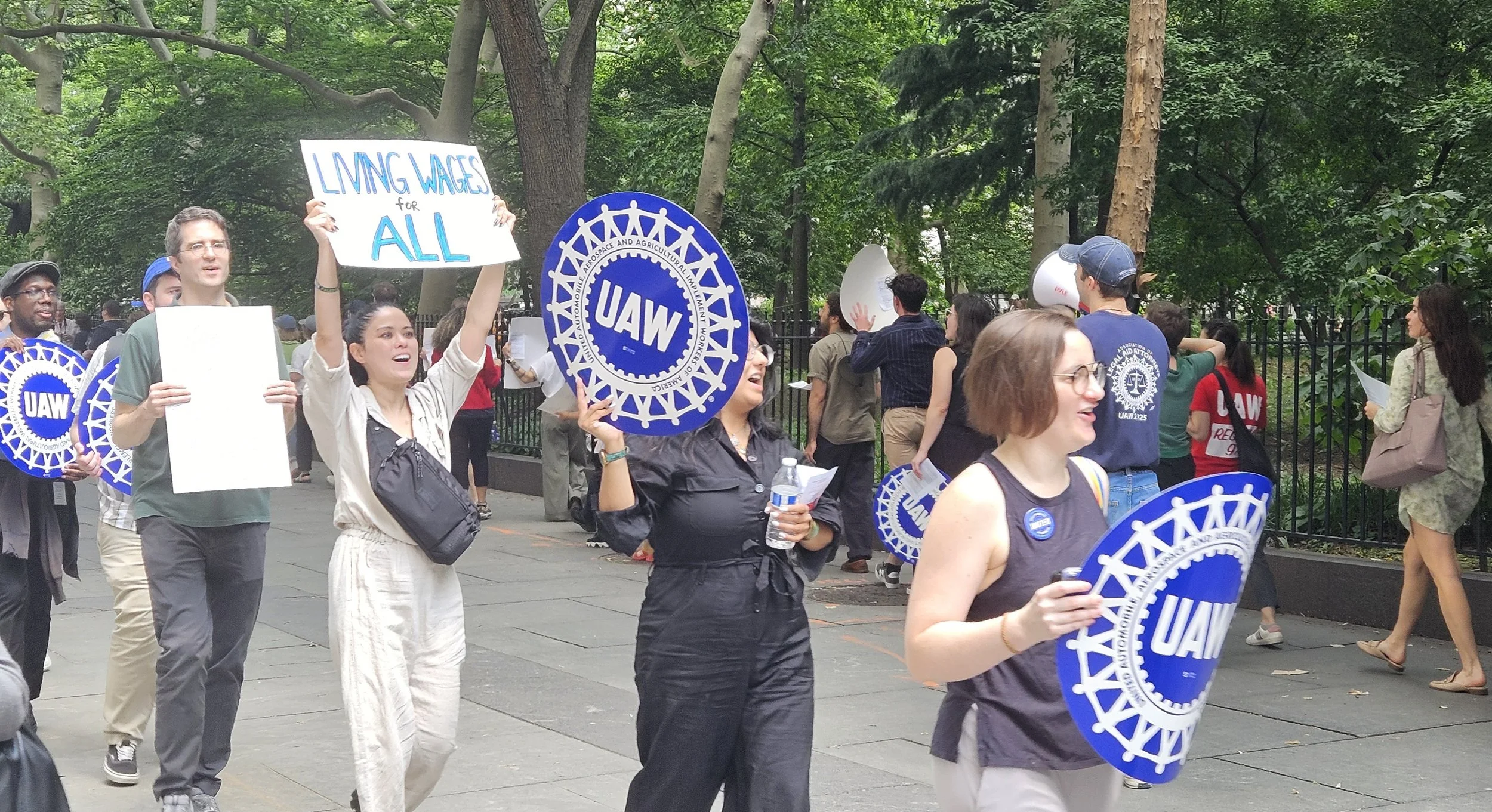
The Legal Aid Society union voted to ratify its labor contract on Friday, putting an end to the threat of a mass strike. Eagle file photo by Noah Powelson
By Noah Powelson
Over a thousand public defense attorneys ended a labor dispute with the city’s largest legal aid organization when they voted to ratify a new collective bargaining agreement on Thursday.
After two days of voting, attorneys at the Legal Aid Society ratified the agreement their union made with their employers last month, officially ending the risk of over 1,100 attorneys walking off the job, leaving the city’s court system in complete chaos.
But even with the new contract, tensions appear to remain. Union leadership and members say the salary component of the agreement fell short and that they plan on opening up negotiations a year from now. Less than 60 percent of union members voted in favor of ratifying the contract.
The three-year agreement includes 20 weeks of parental leave, new limits on caseloads, a student loan assistance fund and other factors. Notably, the new contract also included a reopener guarantee, meaning the union can start up salary negotiations again at any point before June of 2026.
“We are pleased ALAA attorneys have ratified the tentative agreement reached last week,” Twyla Carter, attorney-in-chief and chief executive officer of the Legal Aid Society, said in a statement. “While this is an important step forward, we recognize that our collective advocacy is far from over. We remain committed to partnering with ALAA – as a united front in Albany and at City Hall – to secure the resources that reflect the vital contributions of our staff and attorneys and support the long-term sustainability of a career at Legal Aid.”
According to Jane Fox, the chapter chair of Legal Aid Society Attorneys United, UAW 2325, the union made historic wins but fell far short in getting attorneys the increased wages at the forefront of their demands. While attorneys received pay raises – which vary greatly depending on the employee’s position, experience and other factors – they were nowhere near what members were demanding. Fox said their ambition was to bring their wages on par with federal public defenders.
"Last night, our members at Legal Aid Society Attorneys ratified a new contract after a historic contract campaign and our first strike authorization in thirty years,” Fox said in a statement. “While the power of our organizing won us many new provisions including retiree health benefits, workload protections, student loan assistance, and increased parental leave, the wages in this contract fell far short of what our members need to stay in their jobs for the long term."
Though the vote ratified the labor contract, the final results indicate some discontent with the final deal.
According to Fox, 90 percent of union members participated in the vote, and 59 percent voted to ratify the contract.
Representatives of Association of Legal Advocates and Attorneys, UAW Local 2325 – the union that represents public defenders at nearly two dozen legal services organizations across the city – blamed the lack of wage increases on Mayor Eric Adams rather than legal aid employers.
Since the threat of strike was brought forward, ALAA representatives have said the Adams administration has failed to provide sufficient funding for legal services organizations for years. While each union and their bargaining process is different, union representatives confirmed that Legal Aid Society employers said they did not have the funding necessary for needed pay increases.
Earlier this month union advocates and elected officials, including Attorney General Letita James, called on the mayor to tap into the city’s budget reserve to further fund legal aid organizations so they could meet union demands.
Adams did not use reserve funds, but did add $20 million for criminal legal service providers in the recently approved executive budget.
If ALAA does decide to reopen salary negotiations for the Legal Aid Society next year, they’d potentially be looking at a different bargaining landscape as New Yorkers vote for mayor in November, and current polling data shows Adams lagging behind his competitors.
Regardless, Fox said the union’s work isn’t done yet. With the milestone of contract ratification done, Fox said UAW, ALAA and other union partners are beginning work on a coordinated political campaign in the City Council for further legal aid funding.
"The fight to make legal services careers sustainable does not end here,” Fox said in a statement. “We need a mayor who will prioritize our work and the communities we serve. The UAW is building a new politics in this city, and that includes a strong legal services sector to fight for all working class New Yorkers. 2025 was just the beginning.”
Democratic mayoral nominee Zohran Mamdani, who was endorsed by UAW, was a vocal supporter of ALAA’s efforts during the negotiations. Fox said that if Mamdani wins the election this coming year, she hopes bargaining will be much different with a sympathetic mayor in office.
At a rally on July 15, when the first three legal aid unions issued their strike, Mamdani appeared and pledged his continued support for the unions’ members.
“We have to use every single tool at our disposal to protect this city, to protect its people,” Mamdani said at the time. “For too long we have asked people to engage in public service at the expense of themselves. We have asked ourselves questions that we all know the answers to. ‘Why are we struggling to attract new applications? Why are we struggling to retain the existing work force?’ Because this is not work that is paying people enough to stay in this city.”
If legal aid funding increases under a Mamdani administration, it may be an ideal time for ALAA to enact their reopener clause and start salary negotiations anew.
The Legal Aid Society wasn’t the only organization to ratify a labor contract last week.
The union representing Appellate Advocates, a nonprofit public defender organization that represents clients already convicted of a crime, passed a ratification vote for a new labor contract on Friday. AA never went on strike – they were the first legal aid organization to establish a tentative agreement the day before their strike deadline went through.
The details of AA’s new contract included a 3 percent cost-of-living adjustment, longevity bonuses, new workload quota policies and salary increases ranging from 3.65 percent to 16.36 percent.
According to the union, the contract was ratified with a 93 percent approval from union members.
“Today, our membership voted to ratify the contract our [bargaining committee] and management agreed upon,” the AA union announced on social media. “This was the result of so much hard work by our BC, CAT, and membership and wouldn’t have been possible without the solidarity of our shop, and support from our union siblings and community.”
As of reporting time, three legal aid unions remain on strike bringing with them roughly 130 workers to the picket line. Not including the Legal Aid Society, four other legal aid organizations reached tentative agreements with their unions and ratification votes are either ongoing or scheduled.
As for the shops with tentative agreements, sources familiar with the matter said all contracts were expected to be passed by the union shops.