Queens Defenders fraudster denied bail as scale of alleged theft grows
/
Rashad Ruhani, pictured here by law enforcement, has obstructed the federal investigation into allegations that he and his wife, Lori Zeno, stole hundreds of thousands of dollars from Queens Defenders, prosecutors said in a recent court filing. Photo via U.S. attorney’s office for the Eastern District of New York
By Jacob Kaye
The husband of former Queens Defenders boss Lori Zeno, who was arrested in June alongside his wife for stealing tens of thousands of dollars from the organization, hid his phone from law enforcement, has broken a number of rules during his ongoing jail stay and stole significantly more money from the Queens nonprofit than previously believed, federal prosecutors alleged in a new court filing earlier this month.
Federal prosecutors say that since being cuffed last month, Rashad Ruhani, a one-time senior legal advocate at the legal services nonprofit, has done little to prove that he should be allowed to bail out of the Metropolitan Detention Center in Brooklyn.
Since his June 10 arrest, Ruhani has allegedly violated a number of jail rules, like using a contraband cell phone behind bars, and communicating with Zeno, who was released on a $500,000 bond last month – both Ruhani and Zeno were barred by a judge from communicating with one another or with any other past or present Queens Defenders employees.
Federal prosecutors, who detailed Ruhani’s alleged wrongdoings in a June 11 memo urging a judge to keep him detained ahead of his trial, also said that the Queens man has continued to hide a phone he had on him during his arrest last month.
They also said Ruhani and Zeno’s fraud goes far deeper than the alleged crimes detailed in the original indictment.
While the pair were originally accused of stealing tens of thousands of dollars from the legal services provider by putting personal charges – including vacations and high-end restaurant bills – on the organization’s credit card, further scrutiny of Queens Defenders’ finances after their arrest revealed at least $300,000 in fraudulent charges, the feds said.
The massive increase in the alleged stolen cash could also result in an increase in Ruhani’s sentence. He now faces up to eight years in prison.
“Such a significant carceral sentence provides a powerful incentive for a defendant to flee,” prosecutors wrote in the sentencing memo.
Though Ruhani’s attorney proposed setting bail at $250,000, the judge in the case, Robert Levy, denied the bail application and sent Ruhani back to jail.
Ruhani has been held in federal prison since he and Zeno, Queens Defenders’ former executive director, were arraigned on fraud charges.
Prosecutors said the pair used a Queens Defender credit card to fund a luxury vacation to Bali, a teeth-whitening procedure, a night at a high-end steakhouse and other personal purchases.
They were also charged with making fraudulent reimbursement requests for the $6,000-a-month penthouse apartment in Astoria they shared. The couple, which was not legally married but instead wed in a religious ceremony, told the organization the apartment, as well as the purchase of an 85-inch smart television and utility bills at the home, were business expenses.
The arrests came several months after both Ruhani and Zeno were ousted from the legal services organization, which Zeno helped found around three decades ago. The couple were booted from Queens Defenders after the organization’s board received complaints about their conduct. Also fired were Teyana Reyes and Ureka Washington, Ruhani’s legal wife. Both Reyes and Washington were allegedly hired by Zeno and Ruhani to work no-show jobs where their main responsibility would be to write fraudulent expense reports on behalf of the couple, according to the charges.
After Zeno and Ruhani’s firings and subsequent arrests, the city cut a $32 million contract with Queens Defenders. The contract for criminal defense work for low-income New Yorkers was transferred over to Brooklyn Defender Services, which has since absorbed a large majority of the Queens organizations attorneys, staff and office space.
The full extent of the couple’s alleged fraud and its fallout may yet to be uncovered.
In their memo, prosecutors said that the pair used the Queens Defenders credit card for personal purchases far more often than what was detailed in the original complaint. However, prosecutors did not describe exactly what was bought with funds.
The feds also say they have been unable to look through Ruhani’s phone because they’ve been unable to find it.
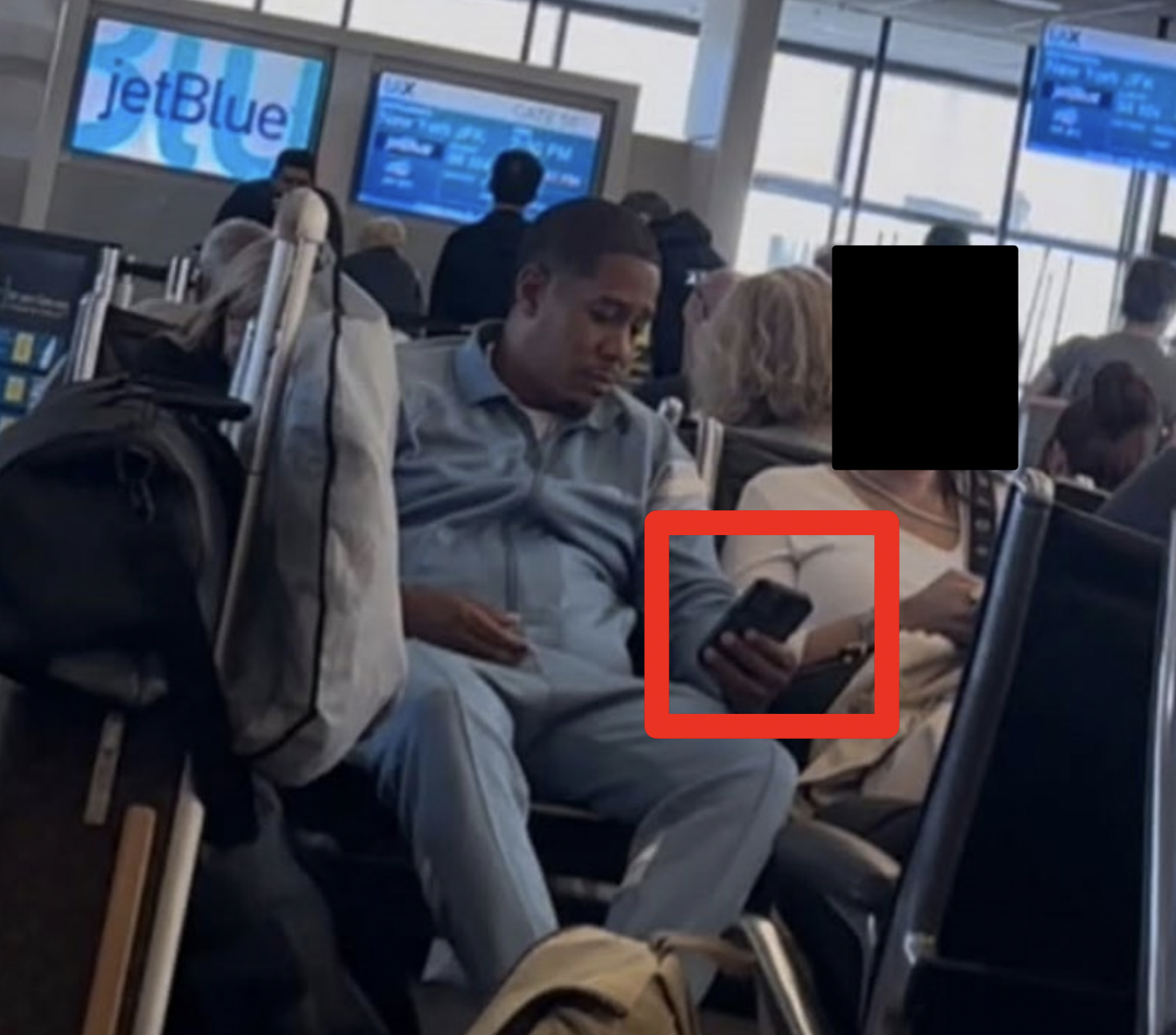
Just before he got onto a flight from Los Angeles to New York with an unnamed person – referred to in the filing as Individual-1 – on the day of his arrest, Ruhani allegedly got a call and was told that officers had begun searching the homes of other people involved in the investigation.
Though they tracked his phone from LA to John F. Kennedy International Airport, FBI agents said they couldn’t find it when they arrested Ruhani – the former Queens Defenders employee had no electronic devices on him but was carrying two iPhone chargers, proscutors said.
The officers allegedly went looking for the person he was traveling with, who had stayed behind on the flight after Ruhani got off.
Prosecutors say the person “lied to the FBI agent,” claiming that they were traveling alone and that the only electronic devices they had were their own.
But the feds say that their ongoing “investigation of the defendant’s efforts to obstruct justice has revealed that, while subsequently incarcerated at the MDC, [Ruhani] engaged in numerous phone calls with Individual-1 at a phone number that he registered in Individual-1’s name as required under MDC policy. The calls were recorded per MDC rules, and a review of the calls makes it apparent that Individual-1 did in fact have the defendant’s [phone], and was actively using the [phone] at the defendant’s direction.”
“Based on the investigation, it is apparent that the defendant provided his electronic devices, including the [phone], to Individual-1 prior to exiting the…flight in order to prevent law enforcement authorities from seizing those devices, that Individual-1 exited separately from the defendant in order to distance herself from potential scrutiny by law enforcement, and that the defendant and Individual-1 continued to coordinate and use the concealed [phone] while the defendant was incarcerated at the MDC,” the filing read.
Both Ruhani and Zeno are next scheduled to appear in court on Sept. 10.