Judge details sweeping powers of receiver set to run Rikers
/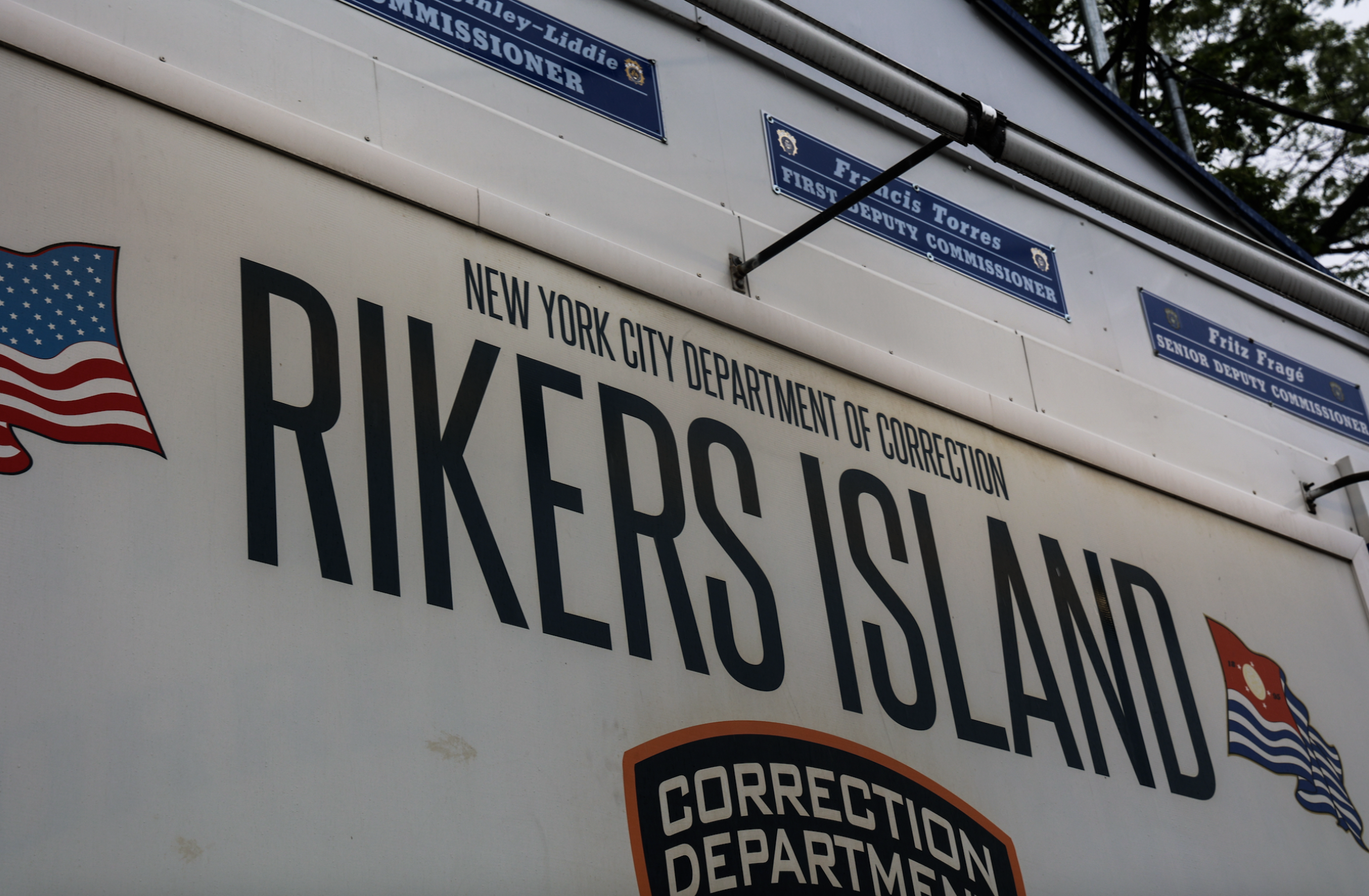
A federal judge defined the broad powers the incoming federal receiver will have over the city’s jail system. Eagle file photo by Ryan Schwach
By Jacob Kaye
A federal judge last week rejected dozens of objections to her May ruling outlining the broad powers of the incoming Rikers Island receiver, a third-party official who will soon assume day-to-day control over much of the city’s jail system.
After generally outlining the position in May, Judge Laura Swain, who serves as the chief judge of the United States District Court for the Southern District of New York, specified the full powers of the receiver – which she’s dubbed the “remediation manager” – in a ruling issued Thursday afternoon.
The order outlines an expansive role that would effectively displace the authority of both the mayor and the Department of Correction commissioner over the jails for the better part of the next decade.
While Swain has yet to appoint the receiver, she received a short list of candidates in the fall after nearly 30 people applied for the position over the summer.
In her ruling issued on Thursday, the judge said that now that the details of the position have been worked out, she’ll turn her attention toward picking someone for the job, though she didn’t say exactly when she plans to name someone to the role.
Whoever is appointed to the position will assume major control over Rikers Island and the city’s jail system – Rikers Island is supposed to be replaced by four borough-based jails in 2027 but the city is at least five years behind its legally mandated deadline – for at least the next seven years.
The remediation manager will have “the authority to exercise all powers vested by law in the commissioner…with the goal of developing and implementing a sustainable system that protects the constitutional rights of persons in custody.”
Swain first ordered the receiver after finding in November 2024 that the city had violated over a dozen provisions of a settlement reached in the detainee rights case known as Nunez v. the City of New York, which was first brought because of alleged abuses committed by correction officers against detainees but later blossomed into a broader suit about a range of poor conditions and dangers in the jails. The judge said that because of turnover at the top of the Department of Correction and in the mayor’s office, the city had failed over the past decade to make any meaningful progress toward reducing violence in the jails. Only a receiver answerable exclusively to a judge would have the power to cut through the dysfunction that has come to define Rikers Island, Swain said in an earlier ruling.
The Legal Aid Society and Emery Celli Brinckerhoff Abady Ward & Maazel LLP, which together represent detainees in the class action case, celebrated Swain’s ruling on Thursday, calling it “a historic step toward correcting the egregious constitutional violations that incarcerated New Yorkers continue to suffer each day in New York City jails.”
“This decision represents a genuine opportunity to address dangerous problems that the city has failed to cure across multiple administrations, multiple commissioners, and multiple court orders,” the firms said in a statement.
The law firms also called on Mayor-elect Zohran Mamdani, who has said he generally supports the appointment of a receiver, to “embrace this moment and work collaboratively with all parties to finally deliver the meaningful improvements New Yorkers need and deserve.”
A spokesperson for Mamdani did not respond to a request for comment on Friday.
The receiver’s powers
After being appointed, the receiver will immediately begin meeting with the city, attorneys for the detainees and the federal monitoring team, which Swain has employed to track conditions in the jails for the past decade.
The receiver will then create the first of several remediation action plans, which will include “specific and concrete steps and milestones designed cumulatively to achieve compliance” with the settlement. The first plan will be due to the judge 90 days after the receiver officially takes office.
The remediation manager, who will work full time either from Rikers Island or within DOC headquarters, will have administrative, financial, contracting, legal, operational and other powers over the city’s jail system.
They’ll have the power to hire, train, promote, demote, transfer, investigate, evaluate and fire anyone currently working for the DOC except the commissioner. The receiver will also be granted “the authority to enact or change DOC policies, procedures, protocols, systems, and practices.”
Swain also gave the receiver “unlimited access to all records and files maintained by the DOC” and “unlimited access to all DOC facilities, persons in custody, and DOC staff.” They will also be allowed to confidentially interview staff and detainees.
While the exact cost of the remediation manager’s work has not yet been determined, the city will be responsible for paying for it. Each month, the receiver will invoice the city for their team’s work, which must be paid within 60 days, according to Swain’s ruling.
If at any point the receiver feels they need more money, they will tell the commissioner to notify the City Council and the mayor of the funds needed and the reasons why. If the city doesn’t pay up, the remediation manager can request a hearing before the judge.
While there’s no determined timeline for the receiver’s work, Swain suggested the city could begin to work itself out of the constraint in around seven years, granted they meet the goals set out by the receiver.
According to the order, the city will regain its powers over the jail gradually. Should it come into compliance with a specific action item over two consecutive six-month periods, the receiver will have 60 days to turn the responsibility back over to the city. However, should the city ever fall out of compliance with that action item again, it would go back into the receiver’s portfolio.
Some similar receiverships across the country have lasted anywhere from a couple of years to more than a decade.