Queens’ coastal communities flooded again as officials call for action
/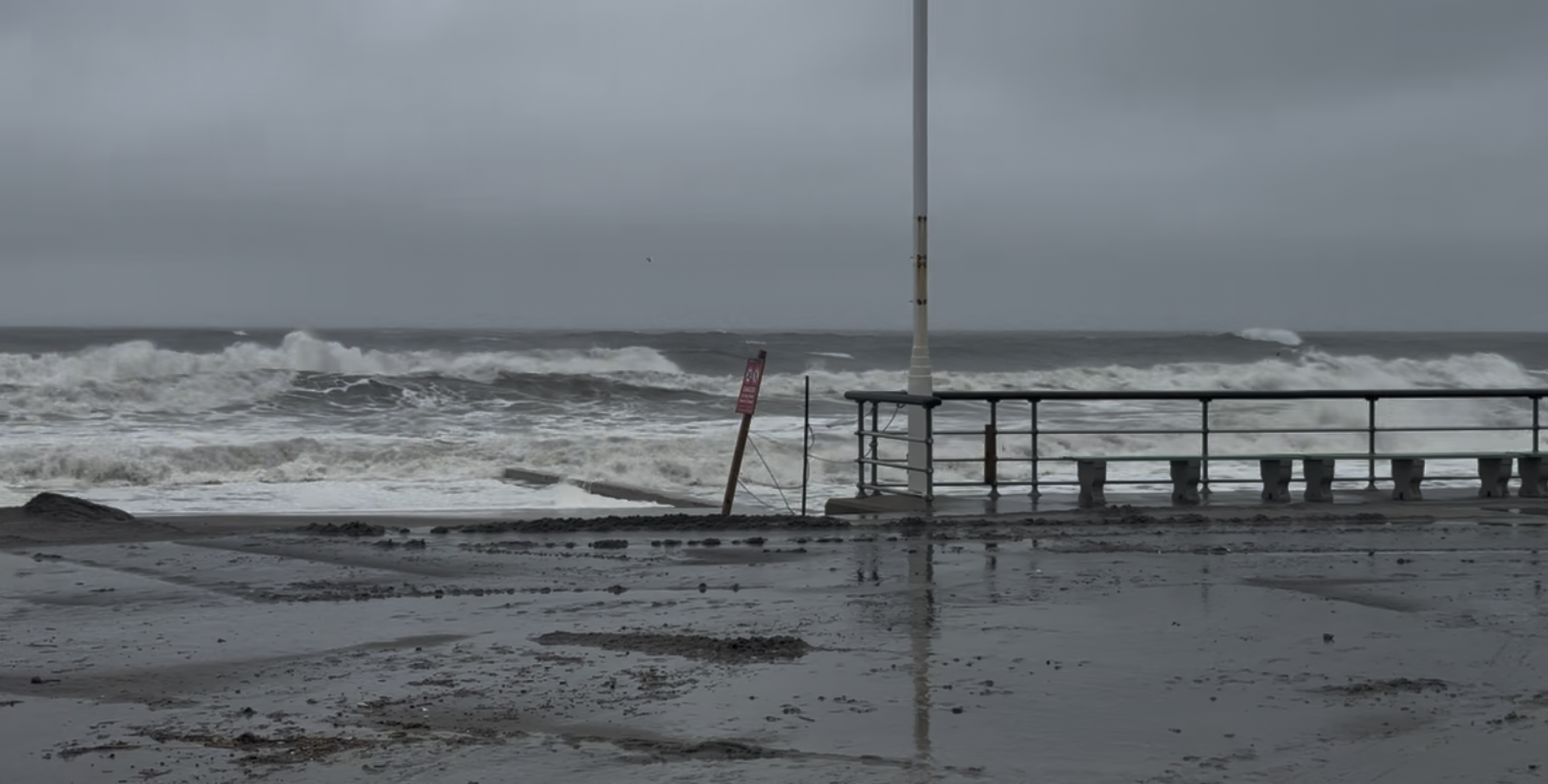
High floodwater inundated portions of Southeast Queens over the weekend during a nor’easter. Eagle photo by Thomas Atehortua
By Ryan Schwach
Streets, sidewalks and subway stations across Southeast Queens were inundated with several inches of floodwater as a September nor’easter bore down on the East Coast over the weekend.
Floodwater deluged some residential blocks in Howard Beach, Broad Channel and Far Rockaway, damaging streets and homes. While the borough was spared the worst of the storm, which remained mostly offshore, its consequences were still felt in Queens’ coastal communities.
Cars and firetrucks pushed through flooded streets, and one video of some creative Howard Beach residents using kayaks to paddle out to the Howard Beach-JFK subway stop went viral.
“It's some of the worst flooding we’ve seen in a couple of years,” said Roger Gendron of the Hamilton Beach Civic Association, which represents one of Queens’ lowest-lying coastal communities. “The one thing about coastal flooding is it's predictable. It's unlike flash flooding that happens in other parts of the city, but it's something that we wish would go away. It was substantial enough where some of the roadways remained flooded for hours.”
Gendron said during Saturday morning’s high tide, water came more than nine feet above sea level.
The flooding was more sporadic, and not extensive across the neighborhood, but it was enough to cause troubles for many local residents.
“Some got it in their basement, some got it in the living area, but it wasn't as widespread as it could have been,” he said.
Other parts of Southeast Queens also saw several inches of water, including Hollis and Far Rockaway.
“This weekend’s nor’easter was another stark reminder of just how vulnerable many of our communities remain to flooding and severe weather,” said Councilmember Selvena Brooks-Powers. “Unfortunately, I have heard from a few residents in my district who lost nearly everything.”
Brooks-Powers, who represents Far Rockaway and other Southeast Queens neighborhoods like Hollis that also saw flooded streets, wants to see the city take more long-term steps to address flooding in the borough.
“While I appreciate the administration’s proactive efforts ahead of the storm, including outreach to vulnerable residents and steps to prepare our infrastructure, preparedness alone cannot be our long-term strategy,” she said. “As extreme weather events increasingly test our city, we have to be just as focused on resilience: how and where we build, whether our sewer and drainage systems can support additional development, and how quickly we deliver the infrastructure projects our communities have been promised.”
Queens Borough President Donovan Richards toured some of the flooding, including outside Gendron’s home in Hamilton Beach.
“It’s been a rough weekend in Queens,” the BP said on social media. “From Howard Beach to Rockaway and beyond, our roads became rivers and our basements became pools. Nor’easters are facts of life. But our families being constantly flooded out like this — by rain or surge — in every storm is a policy choice.”
“All levels of government can and must do more,” he added.
Flooding has become a regular occurrence in the World’s Borough. This weekend’s storm was the fourth major flooding event in which Queens has borne the brunt so far this year.
The impacts of the storm were felt more acutely by low-lying coastal communities, with water from the high tide exacerbated by the nor’easter’s winds. But in other parts of Queens, flooding issues stem from heavy rain that the borough’s outdated infrastructure fails to keep up with.
“When I wake up in the morning, I don't know where to look,” Richards said after another storm earlier this summer. “Before, it was just automatically Rosedale, it was automatically Far Rockaway. You're not really seeing those issues there anymore. Now I have Queens Center Mall to contend with.”
Coastal flooding has been a lifelong fight for Gendron and his neighbors.
The Queens local said that he has a “laundry list” of things government could do to help protect low-lying areas like Hamilton Beach, but said buyouts for residents are becoming a common pitch.
“Protection is on the back burner until they get more funds to do that,” Gendron said. “The only thing they can look at is buyouts.”
“The last thing I want to see is them take out a row of houses up the block from me, then sell it to a developer to come in and build on it, because that's a slap in the face to the person who lived there, it's a slap in the face to us who stayed,” he added. “At the end of the day, my neighborhood is still going to be inaccessible because of the locations that do flood. The only way to stop that is to stop the water, and if you stop the water, you don't need a buyout program.”