City’s public defender strike ends after Bronx Defenders reach tentative deal
/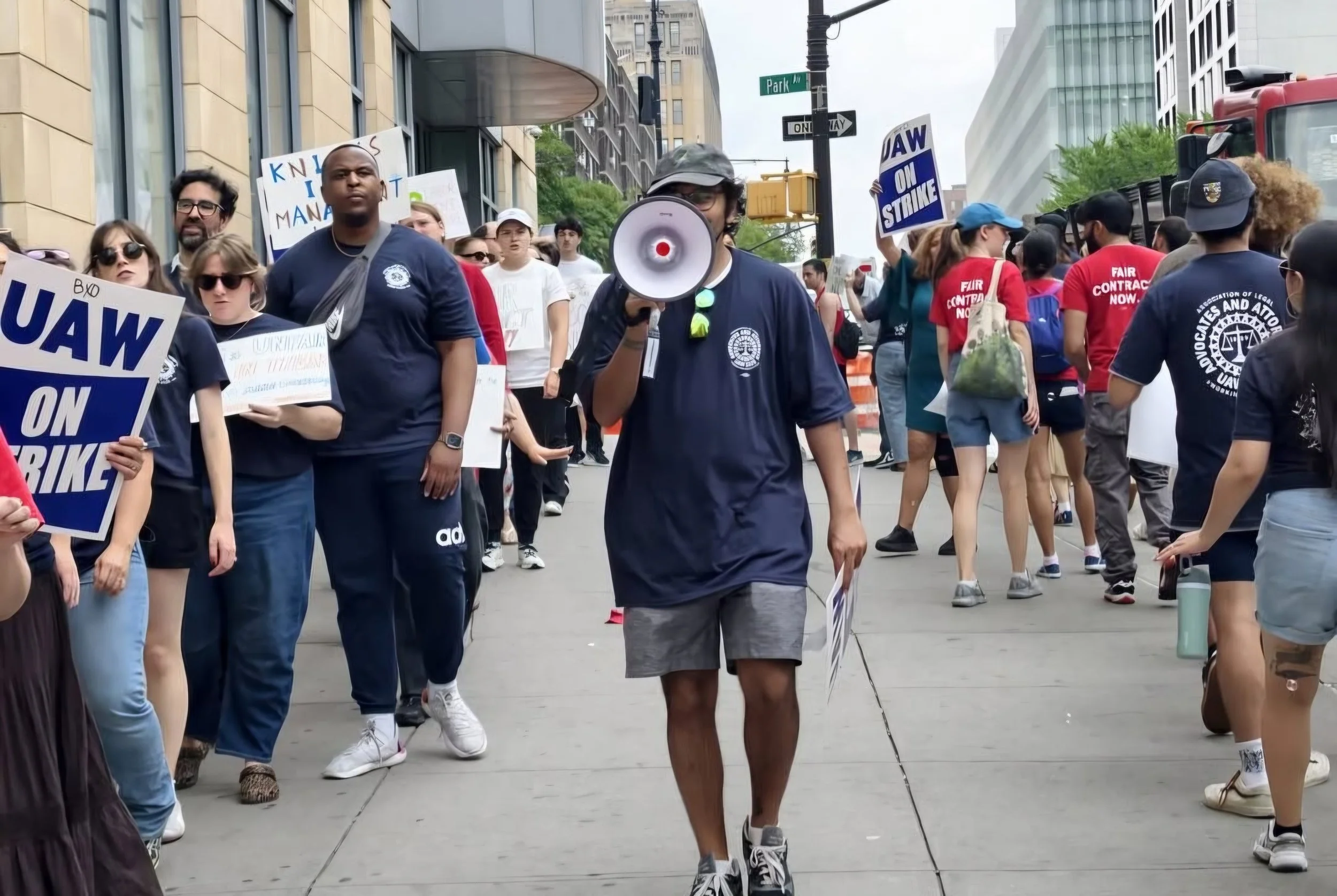
Union members at Bronx Defenders returned to work after a tentative agreement for a new labor contract was made with their management. Screenshot via BxD Union/Instagram
By Noah Powelson
The city’s public defender strike officially ended last week after the final striking legal aid union reached a tentative agreement over a new contract with their employer, ending a labor struggle that saw over 1,000 union members strike at various points throughout the past month.
Bronx Defenders and their Association of Legal Advocates and Attorneys – UAW Local 2325 union reached a tentative agreement for a new labor contract late Thursday night. With the final deal made, the city once again narrowly avoided a mass public defender strike that could have caused major disruption in the courts.
Union workers at BxD were on strike for nearly two weeks after disagreements between the bargaining committee and management of the nonprofit over the pay disparity between attorneys and social workers.
Most details of the agreement aren’t currently public, but BxD said the new contract includes pay raises for all staff, a three percent cost-of-living adjustment and expanded retirement and student loan benefits.
The tentative agreement will now need to be voted on and ratified by union members before it can go into effect.
“I am thrilled that we have found a path forward. As I had made clear from the beginning, we needed a contract that would raise compensation across every staff role and strengthen our ability to recruit and retain excellent attorneys, social workers, investigators, advocates, and support staff,” Juval O. Scott, executive director of The Bronx Defenders, said in a statement. “This contract does just that. These investments will strengthen the shared purpose that brought us all to The Bronx Defenders: standing beside individuals and families across the Bronx when they need us most.”
This was the second year in a row BxD staff went on strike – their last contract included language to renegotiate after a year.
The newly agreed-upon contract will last for three years, if ratified, according to BxD.
The end of a tense bargaining season
While a mass public defender strike never dragged the city’s courthouses to a halt, four boroughs saw hundreds of attorneys, paralegals, social workers and other staff walk off the job, leaving thousands of cases in the hands of the few remaining working lawyers at each organization.
In total, five public defender unions across four boroughs saw their labor contracts expire at the end of June.
Alongside BxD, union shops at Brooklyn Defender Services, Neighborhood Defender Services, Catholic Migration Services and Center for Family Representation staged various picket demonstrations as they demanded higher wages and improved benefits for workers.
Bargaining stalled for months before the contracts expired on June 30, in no small part because of long delays to the passage of the state’s budget. The five public defender organizations rely on city contracts and funds from the state to pay their employees, and uncertain funding futures reportedly added to the difficulty of negotiating new salaries.
After the state’s budget was passed and significant investments were made into the city’s legal aid funds, management at all five unions quickly offered pay increases during bargaining.
The first group to see their staff walk off the job was Brooklyn Defender Services, which represents low-income clients in Queens and Brooklyn. Tensions between BDS management and union leadership had been escalating for months before their contract expired after BDS’ founder and executive director, Lisa Schreibersdorf, was accused of illegally attempting to bust the union.
The BDS union demanded higher pay for all staff, as well as reimplementing remote work options and having a role in picking the next executive director for BDS after Schreibersdorf retires at the end of the year.
Unionized BDS staff went on strike on July 16, and held daily demonstrations in both boroughs before reaching a deal on July 21. The BDS union was the largest of the five union shops, bringing over 500 union members to the picket line.
Union members at Neighborhood Defender Services of Harlem were the next to go on strike, and also had an increasingly tense relationship with their management after alleging that they illegally tempted workers to cross the picket line.
On July 29, the union accused NDS’ management of offering striking union members a $500 daily bonus to return to work. NDS management also allegedly changed requirements for staff to receive sick time without consulting the union, which the union claimed violated federal labor laws.
In response, the union filed unfair labor practice charges with the National Labor Relations Board, accusing management of attempting to illegally disrupt and prolong the strike.
NDS union members went on strike on July 24 before reaching a deal on Aug. 3.
More than 140 members went on strike in New York City, as well as nearly 100 additional members in the organization’s offices in Texas and Michigan.
NDS union members reportedly held a ratification vote for their tentative agreement on Friday, and members nearly unanimously passed it, according to an ALAA spokesperson.
BxD was the last of three city public defender organizations whose union called a strike. It was the second-largest of the striking unions, with over 300 members hitting the picket line.
Between the three organizations, roughly 1,000 attorneys and staff refused to work at various points in July and August, though not at the same time.
BDS, NDS and BxD’s new contracts would each be in effect for three years, if ratified by members.
The other two organizations, Catholic Migration Services and Center for Family Representation, also had their contracts expire at the end of June but did not go on strike.
The union that represents Center for Family Representation workers announced that it had come to a deal with management on July 4, avoiding a strike altogether. In addition to demanding higher pay, the CFR union also made lower caseloads for attorneys and staff a central demand for their new contracts.
Catholic Migration Services, the smallest of the five organizations with 30 union members, has not come to an agreement as of reporting time and staff are still working on an expired contract.
The labor struggle mirrors a similar battle that unfolded last year, when nine ALAA-backed legal aid organizations let their contracts expire at the same time. The largest of those groups was the Legal Aid Society, the city’s largest public defender organization. The chapter boasts more than 1,000 union members.
The Legal Aid Society never ended up going on strike – it reached a deal before a strike could take place – but over 400 staff members at various organizations did.