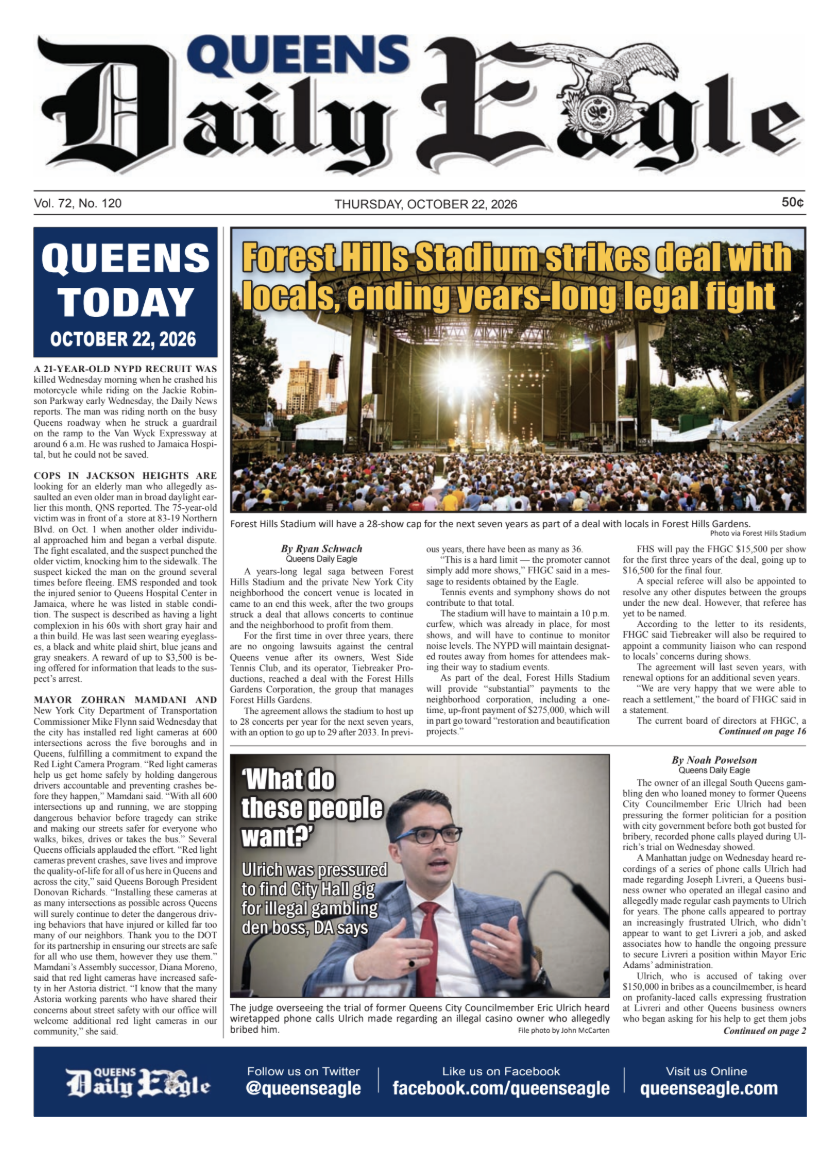
Court dismisses one Forest Hills stadium suit, keeps another alive
/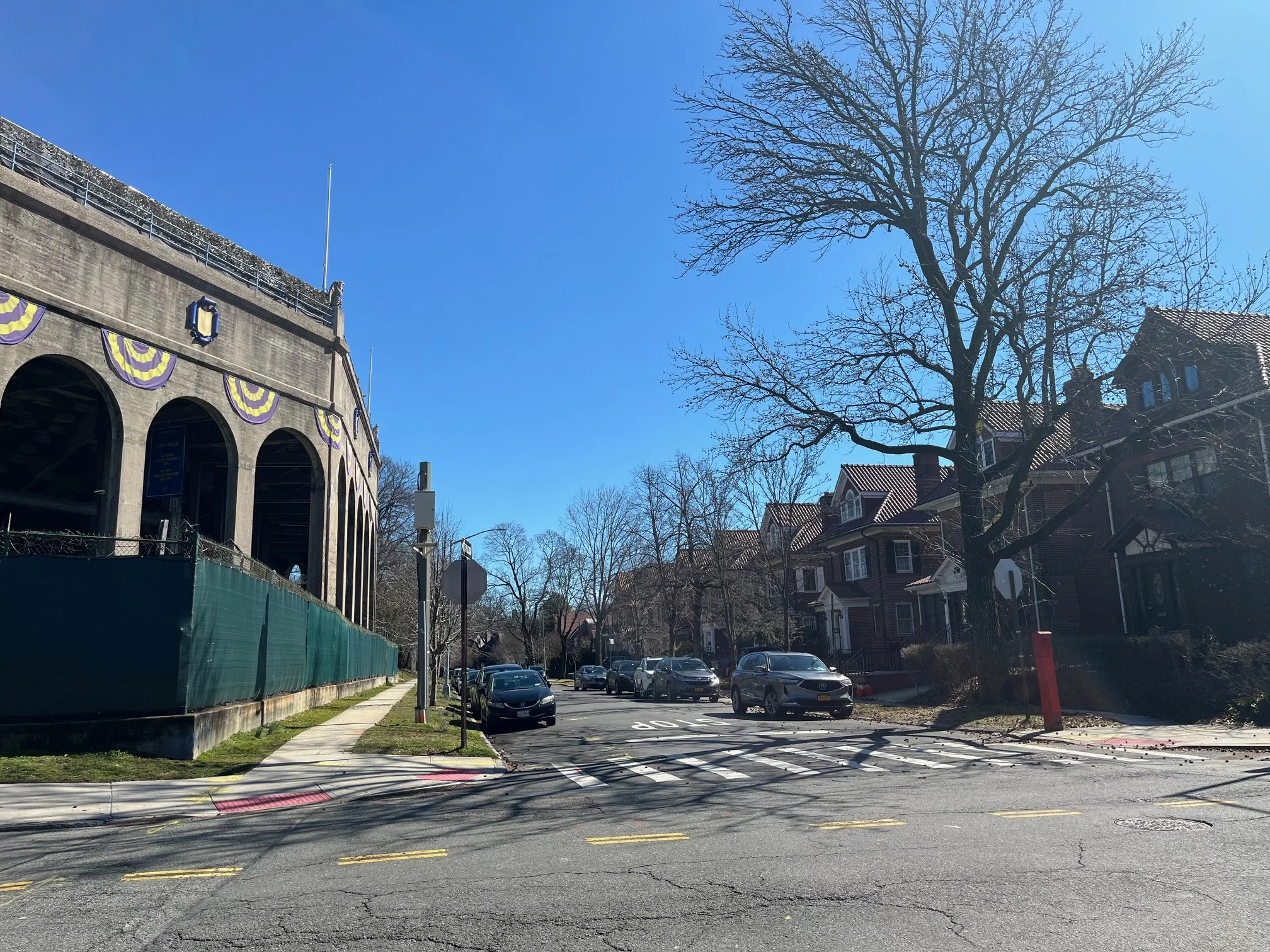
Judges in the Appellate Division, Second Department fully supported lower court rulings that dismissed one case against Forest Hills Stadium, while overturned another, keeping one suit against the stadium alive. Eagle file photo by Ryan Schwach
By Ryan Schwach
Judges in a state appellate court issued rulings in two separate lawsuits against Forest Hills Stadium last week, sending one back to a Queens court for further proceedings while dismissing another.
The Appellate Division, Second Judicial Department dismissed a case from the independent “concerned citizens” in Forest Hills against the stadium but the court separately ruled that the Forest Hills Gardens Corporation, which owns the land where the stadium sits, appropriately pleaded their case against the venue despite a Queens judge’s ruling rejecting their suit.
The split decisions were both handed down on June 17.
In the case brought by the Concerned Citizens, a coalition of stadium-adjacent neighbors, the appellate court upheld a Supreme Court decision last year to dismiss the suit. The case argued that the noise from concerts – which have steadily increased in recent years – constituted a nuisance to the community.
For years, Forest Hills Gardens locals have said the stadium routinely defied city noise ordinances, and that music from the concert reverberated so strongly throughout the private community that it shook windows and interfered with residents’ quality of life.
But the appeals judges determined that the group “failed to plead a special injury that was different in kind than suffered by the community at large.”
Concerned Citizens said that they would continue to explore future legal actions despite the dismissal.
“The New York Appellate Court found that our organization has standing to fight for the community,” the group said in a statement. “We believe we still have many options going forward.”
Members of the Concerned Citizens group have continued to argue that despite previous arrangements with the stadium to control its noise level, the problems have persisted.
The city’s Department of Environmental Protection confirmed that last year they issued noise code violations to the stadium 12 out of the 14 times they took readings inside nearby homes, on par with the 11 out of 13 times the year prior.
With the Concerned Citizens suit dismissed, and FHGC’s federal case over the NYPD’s policing of the private local streets settled to the tune of $150,000 earlier this year, only FHGC’s state case remains against the stadium.
The Appellate Division last week ruled that FHGC’s case against the stadium regarding the venue’s use of private streets owned by the corporation should be heard in the lower court, reversing a Queens judge’s ruling.
While the court agreed with the lower court in dismissing claims from FHGC regarding zoning laws, it sided with them regarding trespassing and “public and private nuisance” claims stemming from the large crowds that descend on the stadium for events.
While the court ruled in FHGC’s favor, it’s unclear where the suit will go.
Last year, the group elected a new board, which ran on the promise to end the costly lawsuits against the stadium.
All of the members of the newly elected board the Eagle reached out to declined to comment on the recent ruling.
The stadium, already in the thick of their summer concert season, is considering both appellate rulings to be a win. The venue is celebrating the dismissal, and sees the other ruling as enough legal support for them to continue holding concerts.
“We were thrilled to receive two significant wins from the appellate court yesterday,” a spokesperson said. “One decision ends the so-called “concerned citizens” group’s ceaseless, underhanded attempts to shut down the Forest Hills Stadium, while the other affirms the West Side Tennis Club's legal right to use the stadium to put on concerts.”
“We look forward to thoroughly refuting the minor remaining claims at the appropriate time,” the spokesperson added.