State budget boosts funds for legal services
/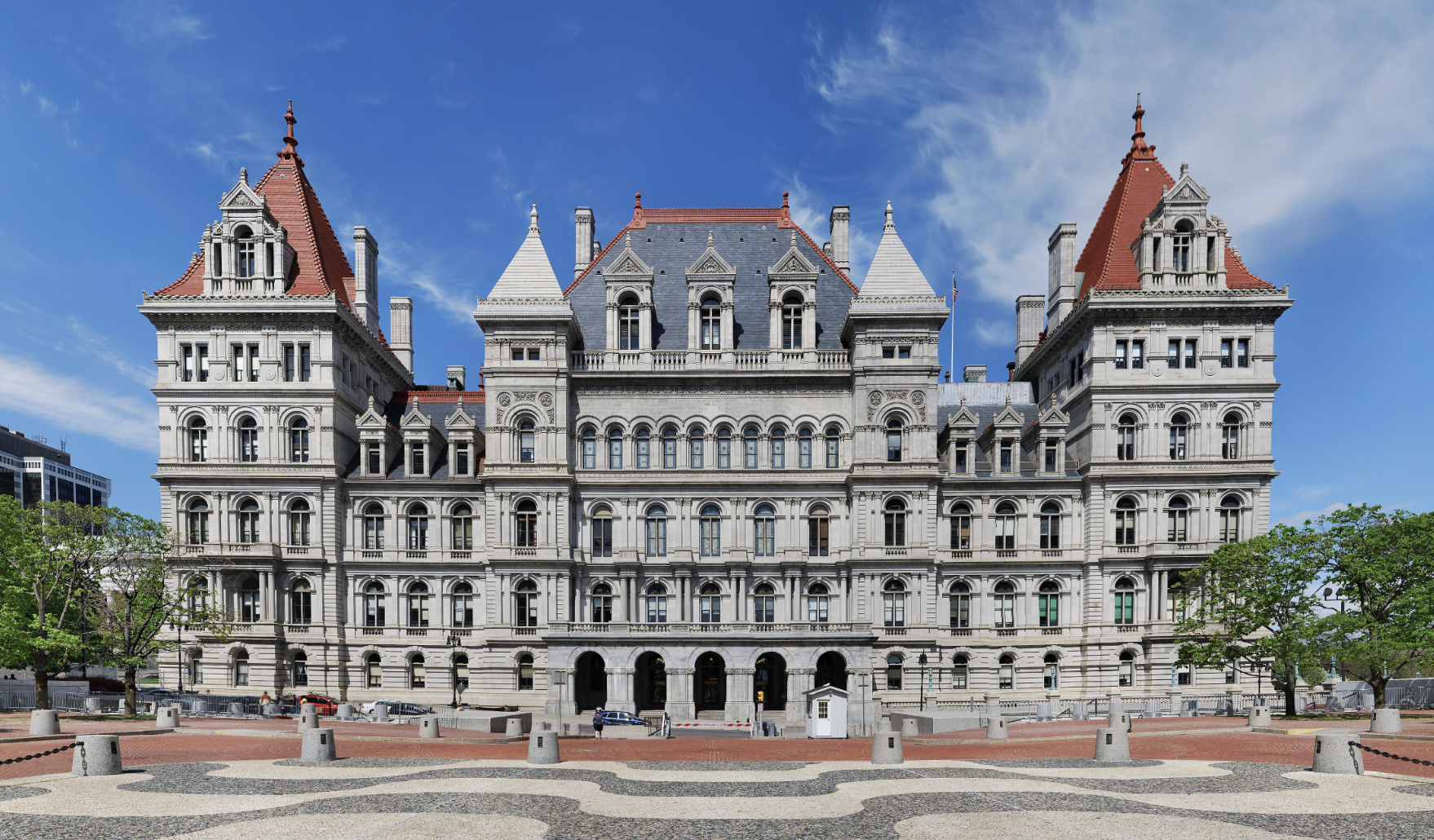
The new state budget includes increases to a number of legal services programs, but some advocates criticized the agreement for not doing enough to fund legal services for immigrants. File photo by Matt H. Wade/Wikimedia Commons
By Ryan Schwach and Jacob Kaye
Passing around two months after it was due, New York State’s $268 billion budget mostly fulfills the wishes of New York’s legal community, which was previously concerned about proposed cuts to a number of legal services for low income New Yorkers.
The state’s Fiscal Year 2027 budget, which was passed by the State Senate and Assembly just before midnight on Wednesday, includes increases to a number of legal services programs that advocates, attorneys and court officials have said are vital to keeping New York’s court system functioning. The budget also preserves funding to several state offices that manage legal services that Governor Kathy Hochul proposed stripping back during the prolonged negotiation process.
Legal services providers were relatively unified in their reaction to the tardy spending plan, celebrating steady funding for the Interest on Lawyer Account and the Office of Indigent Legal Services, both of which were threatened with cuts.
However, advocates for immigrant legal services decried the budget, arguing it failed to meet the demand created by heightened immigration enforcement under the Trump administration.
The approximately $77.5 million in funding for IOLA, which is generated from interest on attorney escrow accounts and used to pay civil legal services providers throughout the state, was unchanged in this year’s budget when compared to last year.
The budget keeps funding proposed by both the State Senate and Assembly, which each included $102.5 million in spending authority for IOLA. The amount matched what attorneys and civil legal services groups said was the bare minimum needed to meet demand for legal aid in New York.
Legal services providers celebrated the sustained funding as a win after the governor earlier this year floated allocating $77.5 million in IOLA spending authority, far lower than the $102.5 million advocates called for.
“We applaud the governor and legislature for their leadership in securing stable and sustained funding for civil legal services in the final budget, reinforcing New York’s commitment to access to justice for all,” said New York Legal Services Coalition President Kristin Brown in a statement. “The restoration of full IOLA spending authority to $102.5 million is essential to maintaining a consistent and reliable foundation for civil legal services statewide. IOLA is a critical, non-taxpayer resource for supporting low-income New Yorkers. Full spending authority ensures that IOLA can fulfill its multi-year commitments and that providers have the certainty they need to deliver uninterrupted, life-saving services.”
The Legal Aid Society also applauded the preservation of funding.
“We welcome the inclusion of funding in the budget that preserves the New York State Interest on Lawyer Account Fund to ensure that low-income New Yorkers have access to critical legal services, as well as funding for public defense,” the public defense organization said in a statement.
While IOLA’s funds were kept steady, funding for the Office of Indigent Legal Services increased slightly from last year, up from $8.5 million to $8.94 million in the new state budget.
The small increase came after the governor pitched taking over $120 million in funding from the office. Advocates had warned the funding sweep, or an effort to take the funds from one office and move them to another government office, would have had a dire impact on low-income New Yorkers’ ability to access free legal services – as part of its duties, ILS doles out money to legal service providers.
“The work we are doing is vitally important and the ILS Fund is fully needed to continue to support this work,” Director of the Office of Indigent Legal Services Patricia Warth said in February.
“Everything we do is built on trust,” she said. “Trust that they will be reimbursed. And I think continuing to have authorization to sweep funds from the ILS Fund undermines the trust that the counties have in the state's commitment to improving quality public defense.”
The Office of Indigent Legal Services did not respond to requests for comment on Thursday.
While many in New York’s legal community celebrated the outcomes in the state’s significantly late budget, others took major issue with funding for immigrant legal defense programs.
Although funding increased by $10 million for immigrant legal defense and support programs, bringing the total funding to $74.2 million, advocates said the boost isn’t nearly enough to cover the increase in need for defense attorneys amid a federal immigration enforcement crackdown.
“This investment ultimately falls dangerously short of what this moment demands,” the Vera Institute of Justice said in a statement. “New York is facing an escalating immigration emergency, with the administration's weaponization of immigration courts, surging detentions in cruel conditions, and extreme aggression.”
“The consequences of this budget will be enormous – the sheer scale of unmet need means that too many families will not be able to access the legal services they need as attacks on immigrant New Yorkers further intensify,” the institute added.
The New York Civil Liberties Union called the allocation “devestating.”
“As federal immigration authorities aggressively ramp up arrests to meet cruel immigration quotas, it’s devastating that Albany denied immigrant communities appropriate funding for legal counsel,” said Zach Ahmad, NYCLU senior policy counsel.
Immigration groups also criticized the funding.
“While this will mean more people can be helped, it does not meet the need, given the scale of the attacks our communities are facing from the federal government,” said Natalia Aristizabal, the co-executive director of Make the Road New York.
The state court system and related offices also saw either consistent or increased funding.
The Commission on Judicial Conduct’s allocation of $9.33 million was unchanged from last year’s funding. The commission, which has seen an increasing number of complaints submitted to its office over the past decade, didn’t ask the state for increased funding this year.
The Unified Court System received the budget it asked for – a $3.2 billion allocation.
Included in the court system’s spending plan was an appropriation of $179.5 million for civil legal services – a $25 million increase.
Court leaders initially asked for $50 million in additional funding for civil legal services, which Chief Judge Rowan Wilson has pushed for a more robust civil legal service ecosystem as the leader of the UCS.
“There is a tremendous amount of work still to do in both the state and the nation to close the gap in access to civil justice,” Wilson said in January.