Queens atty who was wrongfully arrested on Rikers sues city, officers’ union
/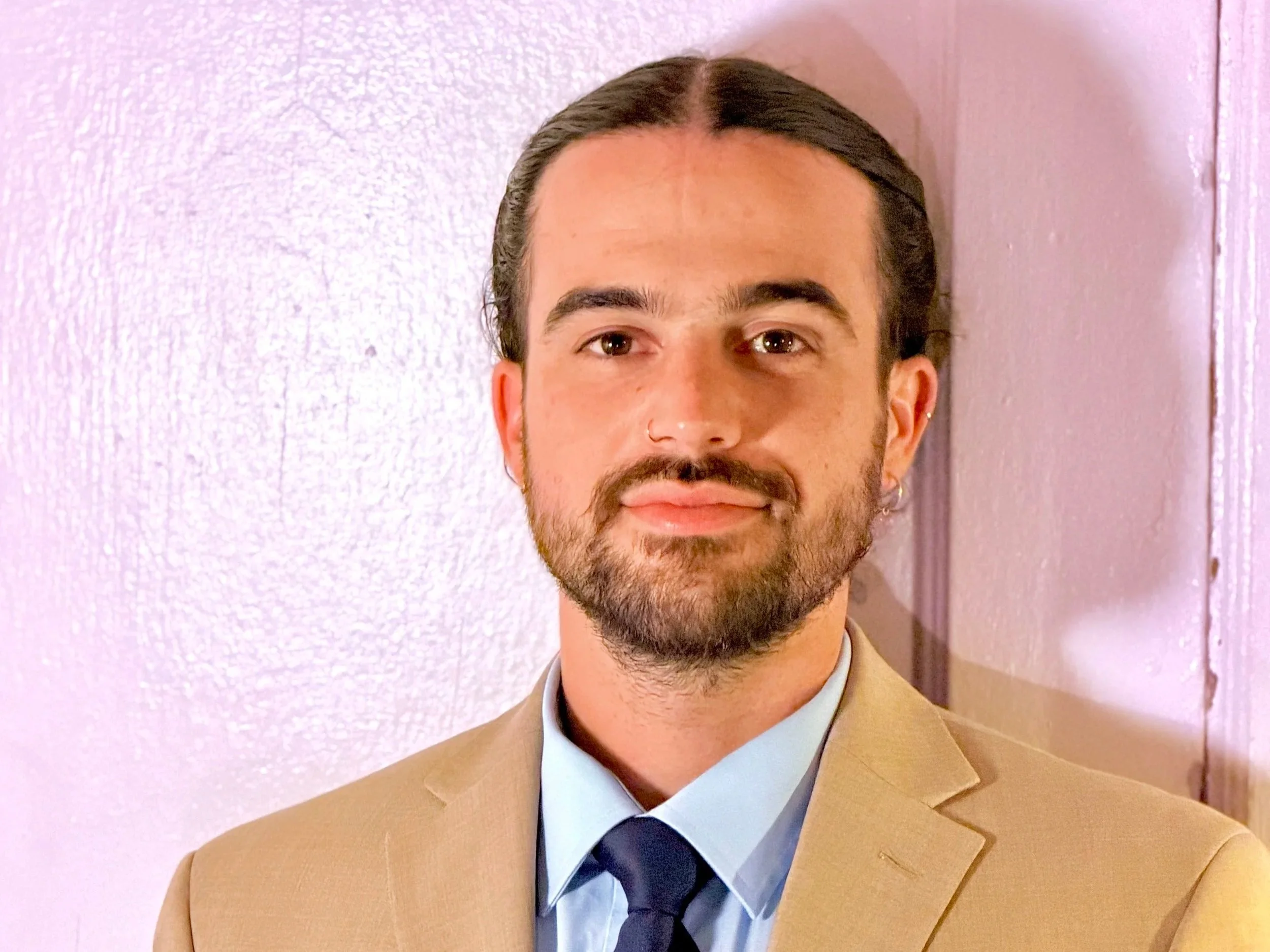
Attorney Bernardo Caceres filed a civil rights lawsuit against the city after he was accused and arrested of smuggling drugs into Rikers Island, charges that were later dropped. Photo courtesy of Bernardo Caceres
By Noah Powelson
A former Queens Defenders attorney who was wrongfully accused of smuggling drugs into Rikers Island is suing the city and the correctional officers’ union who levied the accusations against him, alleging he was unlawfully detained and defamed so the union could score political points.
A new federal civil rights lawsuit was filed on Wednesday on behalf of former Queens Defenders attorney Bernardo Caceres, 31, who was arrested in June 2025 for allegedly attempting to smuggle drugs through court documents brought for his client on Rikers Island.
The charges against Caceres were dropped after the Bronx District Attorney found no evidence of drugs in the documents, but that was weeks after photos of Caceres in handcuffs were splashed across news articles.
Caceres and his attorneys say Rikers correctional officers used an unreliable field test to detect narcotics, and they wrongfully detained him without verifying the test in a proper laboratory, as they are required to. The lawsuit also alleges that correctional officers were fully aware of the unreliability of the test, but still carried out the arrest and labeled Caceres a “drug peddler” and used his case as evidence for a broader campaign to ban visitors from bringing documents to Department of Correction facilities.
News of Caceres’ arrest made headlines at some of the city’s largest publications, including the New York Times and the New York Post. The Eagle also reported Caceres’ arrest, at the time.
Caceres said that even though the charges were dropped, the media campaign against him has done lasting damage to his career. As well as the city and DOC, Caceres is also suing the correctional officers who arrested him and their union president, Benny Boscio, who circulated photos of him.
“For years, I have stood beside people whose lives were upended by unproven accusations,” Caceres said in a statement. “When I was arrested and publicly labeled a ‘drug peddling attorney,’ I trusted that the truth would eventually come out. Laboratory testing later found no narcotics and the charges were dropped, but the damage to my reputation and career did not simply disappear.”
“This lawsuit is about accountability and ensuring that others are not subjected to the same treatment,” Caceres added.
According to the lawsuit, Caceres arrived on Rikers Island on June 11, 2025, to meet with a client of his, Luis DeJesus, who was charged with second degree robbery. The case was about to head into trial, and Caceres was meeting with his client to hand over more than 100 pages of documents obtained in discovery, as well as provide DeJesus with clothes for court.
Caceres arrived on Rikers Island along with his co-counsel, and the two proceeded through security. Once there, Caceres told correctional officers he was going to give his client documents, according to the lawsuit, which he carried in a separate bag. Before meeting with his client, he handed the documents over to correctional officers for screening.
Caceres met with DeJesus inside an interview room inside the Otis Bantum Correctional Center for about an hour, at one point stopping the meeting to retrieve the documents from a correctional officer. Caceres handed over both the discovery documents and clothes during the meeting.
After the meeting, Caceres and his co-counsel left the room only to be stopped by seven correctional officers, some of whom were armed, in the main OBCC waiting area.
One of the officers told the two attorneys they were not allowed to leave, and said “there was an alert from our K9 unit on [Caceres’] stuff.” Caceres and his co-counsel were then put in a waiting room, where they said they were kept for two hours and barred from contacting their bosses.
Eventually, a correctional officer told Caceres that the discovery documents he brought had tested positive for trace amounts of tetrahydrocannabinol, commonly known as THC, and that he was under arrest.
Caceres’ attorneys say that the drug test was performed using a MobileDetect field test manufactured by DetectaChem, a test known to produce false negatives and inaccurate results. Correctional officers are meant to verify field tests with a proper laboratory test before making an arrest, which Caceres said the DOC officers didn’t do when they arrested him.
Caceres was handcuffed and led out of OBCC through a gathering of officers who were jeering and taunting Caceres, the lawsuit alleges. One officer was taking pictures of Caceres as he was handcuffed and being escorted, which would later be sent to news outlets.
Caceres’ co-counsel was released without facing charges.
Caceres was held on Rikers Island for several hours, and was released around 7:55 p.m. after being told he was charged with promoting prison contraband. He was given a court date in Bronx Criminal Court, scheduled for July 1, 2025.
But he didn’t need to go to court, however, after a laboratory test of the discovery documents confirmed there was no THC trace or any other illicit narcotics on them.
Though he is free of criminal prosecution, Caceres said the incident has had a lasting impact on his career and reputation, especially since the president of the correctional officer union publicly denounced him.
In a 2025 press release that is still on the Correction Officers Benevolent Association website as of Thursday, June 11, Caceres was referred to as a “drug peddling attorney,” and published photos of Caceres in handcuffs being escorted by a DOC officer remain online.
COBA President Boscio at the time said Caceres should be prosecuted to the full extent of the law, and used the incident as an example for why paper documents should be banned from Rikers.
“The fact that this attorney would brazenly attempt to smuggle in a large quantity of THC into one of our biggest jails is further proof of why paper documents brought by visitors should be scanned and downloaded electronically onto tablets before entering our facilities,” Boscio said in the 2025 statement. “Allowing paper documents to continue to enter our facility only compromises the safety of everyone in our jails.”
COBA and Boscio did not respond to an Eagle inquiry for this story.
Earl Ward, a partner at the Emery Celli Brinckerhoff Abady Ward & Maazel LLP, the law firm that’s representing Caceres, alleged that Boscio’s statements were false and defamatory.
“Given the widely known unreliability of the field tests, the corrections officers should have known better, the City should have known better, and Benny Boscio should have kept his mouth shut,” Ward said. “Instead, they intentionally and recklessly tarnished the reputation of a bright young lawyer.”