Labor tensions escalate at Brooklyn Defender Services amid stalled contract talks
/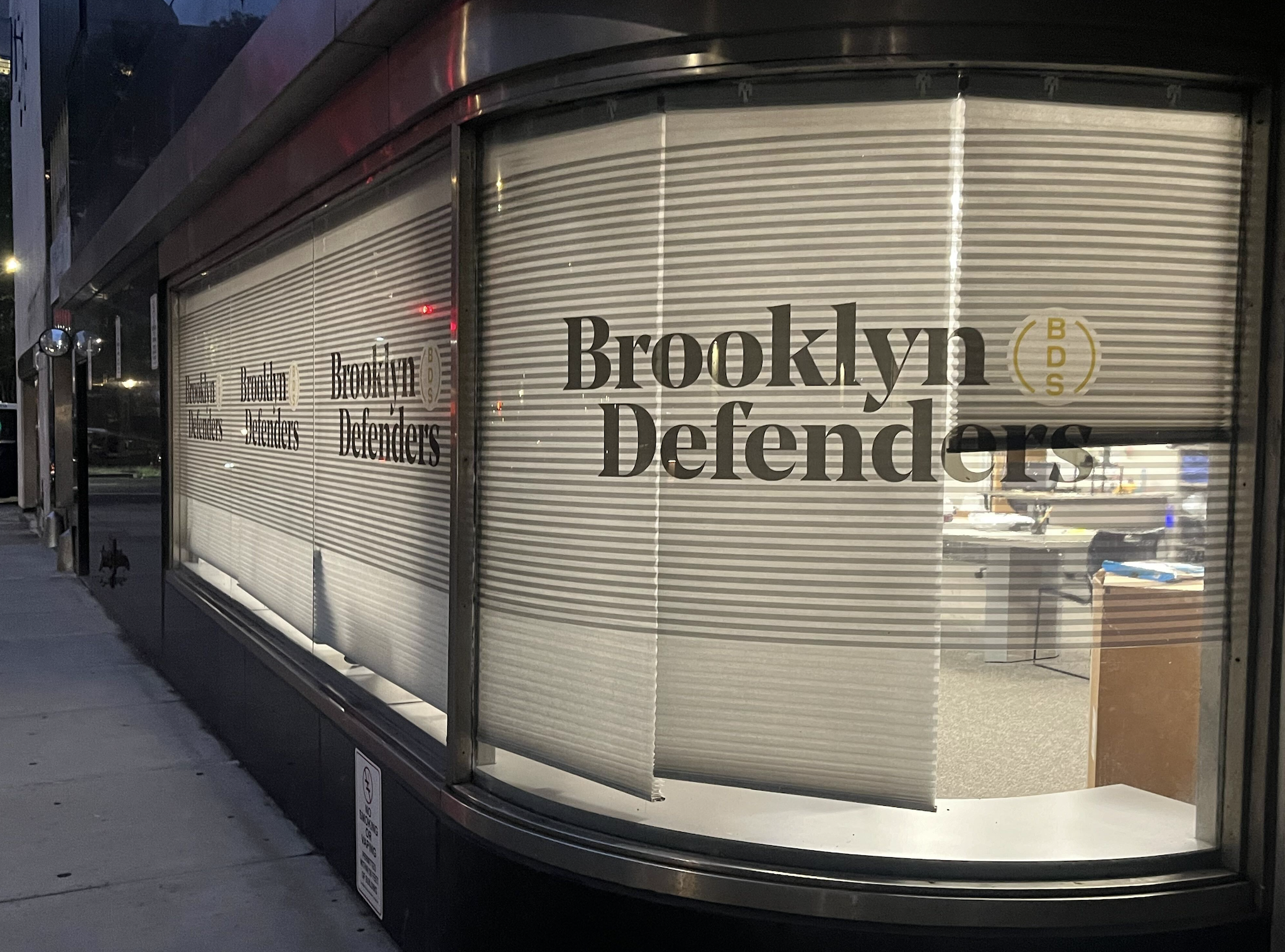
Union representatives at Brooklyn Defender Services demanded management respond to their current labor contract proposal as the deadline for a deal approaches. Eagle file photo by Ryan Schwach
By Noah Powelson
With just over a month until their contract expires, labor talks at Brooklyn Defender Services, the city’s second-largest public defense organization, have stalled, prompting union attorneys to accuse management of bad-faith bargaining and raise the possibility of a strike.
Union representatives for attorneys at Brooklyn Defender Services, which absorbed a large number of Queens Defenders employees last year after the Queens organization’s executive director was arrested on fraud charges, sent an open letter to management on Monday, May 18, demanding they either accept or give a counter-proposal to the union’s proposed labor contract, which they sent to the organization nearly two months ago.
In the letter, the union accused the nonprofit of refusing to meaningfully negotiate a new labor agreement ahead of the June 30 expiration of their current contract.
“We call on management to promptly come to the bargaining table with good-faith, reasonable proposals regarding core economic issues for the new bargaining agreement,” the union said in the letter.
The proposed contract includes increases to salaries and provisions regarding “remote work, free speech, and workload limits,” according to the union.
The contract negotiations come at a fraught time for Brooklyn Defender Services and its chapter of the Association of Legal Advocates and Attorneys, which have sparred over labor disagreements several times over the past year. The strained relationship between ALAA and BDS’ executive director, Lisa Schreibersdorf, reached a boiling point last year when attorneys accused Schreibersdorf of illegally attempting to dissolve their union by promising an attorney financial rewards for starting a competing one.
The negotiations also come as BDS faces an uncertain economic future. With the state’s budget over seven weeks late and the city’s budget still unclear, public defender organizations, which receive most of their operating funds from taxpayers, are left without a clear picture of how much money they’ll have to pay their employees.
In response to the letter, Schreibersdorf told the Eagle that the organization has continued to work with the union on finding a deal, but that bargaining has reached an impasse until the city and state agree on final budgets.
During a March City Council meeting, officials with BDS, The Legal Aid Society, New York County Defender Services and the Bronx Defenders said they need an additional $100 million to $150 million in the coming year to recruit and retain their public defense attorneys.
“The issue is that New York City has not provided the funding we need to give staff the salaries we feel they deserve,” Schreibersdorf said in a statement. “We appreciate that the city is listening to our request, but they have yet to provide any additional funding or clarity regarding their intentions in this budget.”
“Given that we are approaching the June 30 contract deadline, we have now indicated we will make a salary offer to the union despite the difficulty of uncertain funding,” Schreibersdorf added.
The two sides have held several bargaining sessions ahead of the contract’s expiration.
BDS’ bargaining committee, which includes attorneys working in the organization’s Queens office, has made several major demands in their current contract proposal, including a $75,000 wage floor with a completely restructured wage step system they say will help employees keep up the rising cost of living. The union is also demanding better health and retirement benefits, as well as changes to the company’s return-to-office and workload limit policies.
BDS’ union contract is also set to expire at the same time as unionized attorneys working at The Bronx Defenders, Neighborhood Defender Services of Harlem, Catholic Migration Services and the Center for Family Representation. Over 1,000 attorneys at the Legal Aid Society will also begin negotiating their salaries around the same time, though their contract does not expire this year.
In all, over 2,000 attorneys and legal aid staffers will be negotiating new salaries throughout the end of June.
If the public defender organizations fail to agree on a new contract by the end of June, the city could see a repeat of the threat of a mass legal aid strike that occurred last year.
In 2025, roughly 750 legal services workers across seven organizations went on strike as their collective bargaining contracts all expired at the same time.
The labor action had the potential to be the largest mass public defender strike in over 30 years, as attorneys at the Legal Aid Society – the city’s largest public defender organization – threatened to join the picket line. Hundreds of workers continued to strike for months, but deals between various legal aid organizations and their unions were made before a mass strike truly gridlocked the city’s courts.
While this year’s potential strike may not pose the same citywide risk, it could have a major impact on Queens. BDS’ absorbed the criminal defense practice of Queens Defenders last year after the ouster of Lori Zeno, Queens Defenders’ founder and former executive director. The city cut their contract with QD just before federal prosecutors accused Zeno and her husband, Rashad Ruhani, of syphoning off funds from the nonprofit. Many of the attorneys working at QD were hired by BDS to continue their work in the World’s Borough. The Brooklyn organization also took over one of QD’s offices in Queens.
There are over 570 members in BDS’ bargaining unit, over 120 of which are former Queens Defenders employees, according to the union.
Forrest Stakelum, a member of the BDS union bargaining committee and staff attorney in the organization’s Queens criminal defense practice, said a strike is still a potential possibility.
“While we hope that management ceases their stalling tactics and provides us with serious counters, nothing is off the table,” Stakelum said. “Management and the city can not be allowed to continue taking advantage of our workers and their dedication to the people of this city, especially as the cost of living rises exponentially from month to month.”
Escalating labor fights at Brooklyn Defender Services
Issues between BDS and their union ignited in August 2025, not long after the nonprofit took on Queen Defenders’ criminal defense contract.
At the time, BDS management ended their work from home policy and required staff to come into the office five days a week. To enforce the new policy, BDS staff were required to install an application that used geo-location data to verify where they were to clock in and out of work.
The policy change sparked outrage from union leaders, who said BDS leadership had made the change without first discussing the policy with the union.
The union picketed BDS’ office Downtown Brooklyn several times in August and September. They also filed grievances with the National Labor Relations Board, but the policy changes went through, nonetheless.
Also last year, the union cried foul when former Queens Defenders staff, all of whom were put on six-month probationary periods regardless of how long they had been working at QD, were being subject to different rules and policies than their Brooklyn peers.
Then, in September 2025, a BDS union delegate came forward and claimed that Schreibersdorf offered them a suite of benefits in exchange for starting and running a rival, company-backed union. The whistleblower, an elected union representative who requested anonymity, told union leaders and the Eagle that Schreibersdorf offered them lower caseloads and better pay as long as the whistleblower succeeded in decertifying the ALAA-backed union.
The whistleblower said that Schreibersdorf also gave them a list of names of BDS workers who she believed would be sympathetic, as well as the contact information for attorneys who could help with the union creation process.
BDS union members headed back to the picket line in response, this time accompanied by several elected officials, who called on Schreibersdorf to resign.
“What I know from being in government is that we rely on our legal services partners all the time,” Queens Assemblymember Claire Valdez said at the time. “And if Lisa can’t step up, it sounds like she needs to step down.”
Soon after, union members voted on whether to formally call on Schreibersdorf to resign. Around 85 percent of the 348 BDS union members participated in the vote — including former Queens Defenders employees — and ultimately approved the resolution. Unfair labor practice charges against BDS and Schreibersdorf were also filed with the National Labor Relations Board in September.
When asked about the vote at the time, the BDS board of directors said they would cooperate in any NLRB investigation, but that Schreibersdorf would not step down or be put on leave.