‘We were being punished’: Former Queens Defenders staff say forced transition has been difficult
/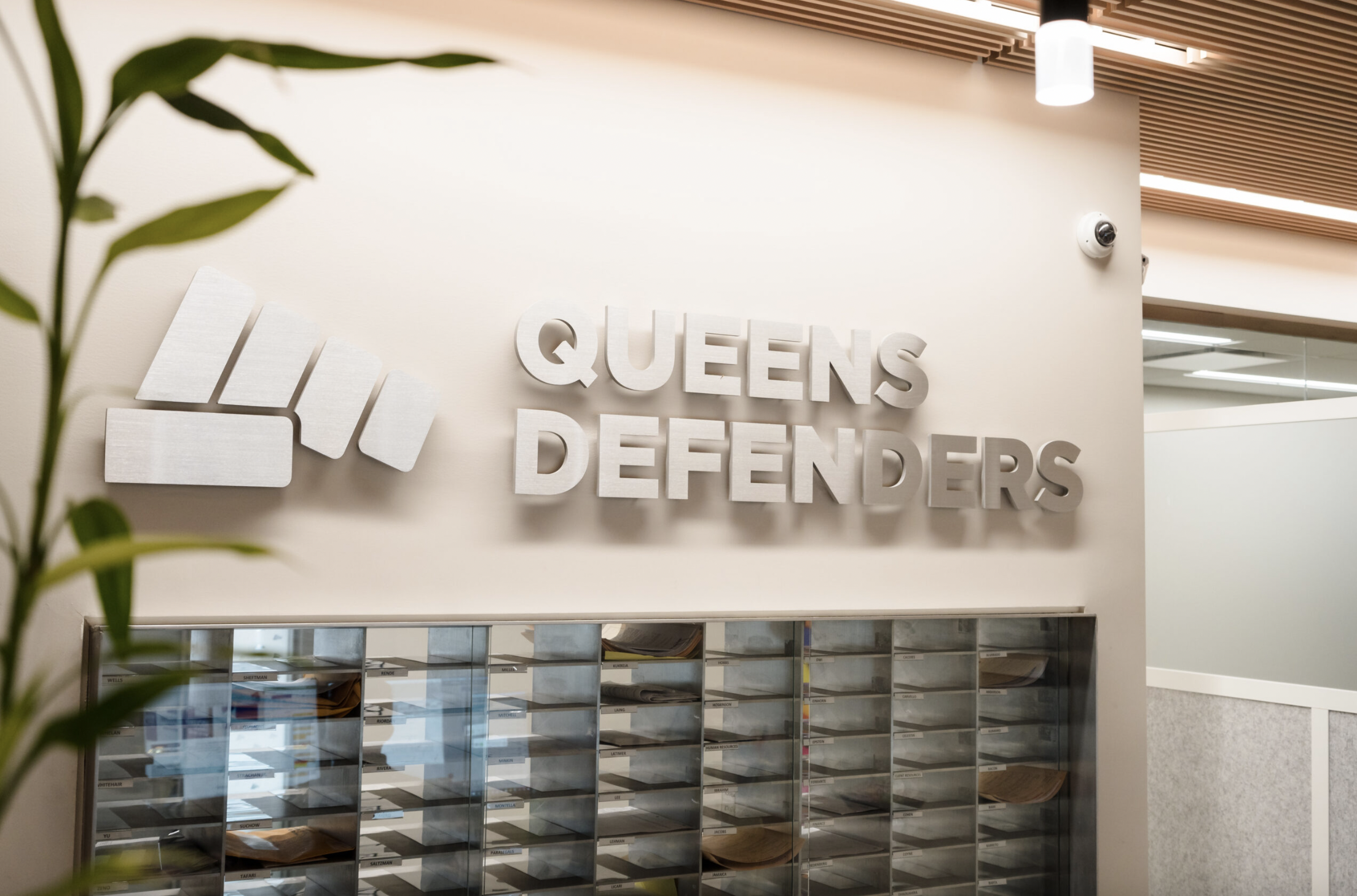
Former Queens Defenders attorneys say their transition to Brooklyn Defender Services, which was forced by the city, has been difficult. Photo via Queens Defenders
By Noah Powelson
In the immediate weeks following the forced departure of Queens Defenders’ controversial executive director, Lori Zeno, the atmosphere inside the legal services nonprofit felt noticeably lighter.
Attorneys said hope and optimism had overcome the staff, and that there was a general feeling that Zeno’s ouster was a major step that would bring the organization to a better and fairer place.
But two months after the Queens nonprofit had its city contract to offer criminal defense to low income New Yorkers taken over by Brooklyn Defender Services, attorneys say new problems have emerged.
Longtime attorneys were put on probation by the new employer, some saw a reduction in their salaries and changes to their labor agreement with the legal services provider have left many frustrated, they said.
When BDS took on Queens Defender’s contract with the city, nearly all former criminal defense attorneys and staff with Queens Defenders were rehired by BDS under a new labor agreement, and significant differences between the new and old contract became immediately apparent.
While a few former Queens Defenders staff saw a pay raise under BDS, many saw noticeable pay cuts as they were put on different salary tracks and with higher healthcare premiums, according to sources. Work-from-home policies also changed, requiring most staff to work in the office more frequently, which meant new costs for transportation and childcare they didn’t have to consider before.
One of the most controversial changes surrounded private cases. Queens Defenders somewhat uniquely permitted attorneys to maintain a private practice under Zeno’s rule. But when former Queens Defender attorneys were taken in by BDS, they were no longer allowed that benefit, cutting back on a significant source of income and an incentive for new applicants, attorneys said.
One former Queens Defender attorney who was granted anonymity by the Eagle said the changes have resulted in major cuts in income and significant increases in expenses that has made them seek other employment options.
The attorney said that of all the consequences ousting Zeno from Queens Defenders would bring, they didn’t think a job search would be one of them.
"It felt like somebody just pulled a rug from underneath our feet,” the attorney told the Eagle. “We honestly didn't think this was a possibility.”
The attorney, who worked at Queens Defenders for around two decades, said the decision by the city to transfer Queens Defenders’ contracts felt unfair to the vast majority of staff uninvolved in Zeno’s controversies.
Zeno, who helped found Queens Defenders in the 1990s, and her husband, who also worked at QD, were arrested in June after they allegedly stole at least $300,000 from the organization to fund international vacations, penthouse apartment rental payments and expensive dinners.
The accusations against Zeno were first made by a group of attorneys who worked for her and came months before federal prosecutors indicted her.
The fraud spooked the city, which transferred its taxpayer funded contract to BDS in full shortly after Zeno’s arrest.
As former Queens Defender staff essentially became new hires at BDS, they were put on a six-month probation period as required by the union’s contract, according to the Brooklyn organization.
While BDS leadership called the probation period a technicality required by their labor contract, the attorney said it still felt insulting to employees who had worked at the Queens organization for decades. It’s made staff nervous about their job security and hesitant to voice concerns to management until the probation period ends, the attorney claimed.
"None of us thought this was a fair outcome," the attorney told the Eagle. “We were talking to the authorities, we were the whistleblowers, we did everything right…It felt like we were being punished."
The attorney said that they are now applying for work elsewhere and that they fully intend to leave as soon as an option is made available.
In response to an Eagle inquiry, the Mayor's Office of Criminal Justice said the decision to end Queens Defenders’ contract was made to ensure effective legal coverage in the World’s Borough.
“When the Mayor's Office of Criminal Justice learned of alleged improprieties at Queens Defenders, we quickly moved to mitigate potential taxpayer waste and potential disruptions to New Yorkers who rely on public defenders' essential services,” a spokesperson for the Mayor’s Office of Criminal Justice told the Eagle in a statement. “Given the now-public allegations against former executives at Queens Defenders, the best way for us to achieve these priorities, ensure proper oversight, and ensure stability of services was to reassign the contract to Brooklyn Defenders Services.”
“While the organization goes through a transition period, we're thankful to both BDS and the Queens attorneys for their commitment to ensuring justice,” the spokesperson added.
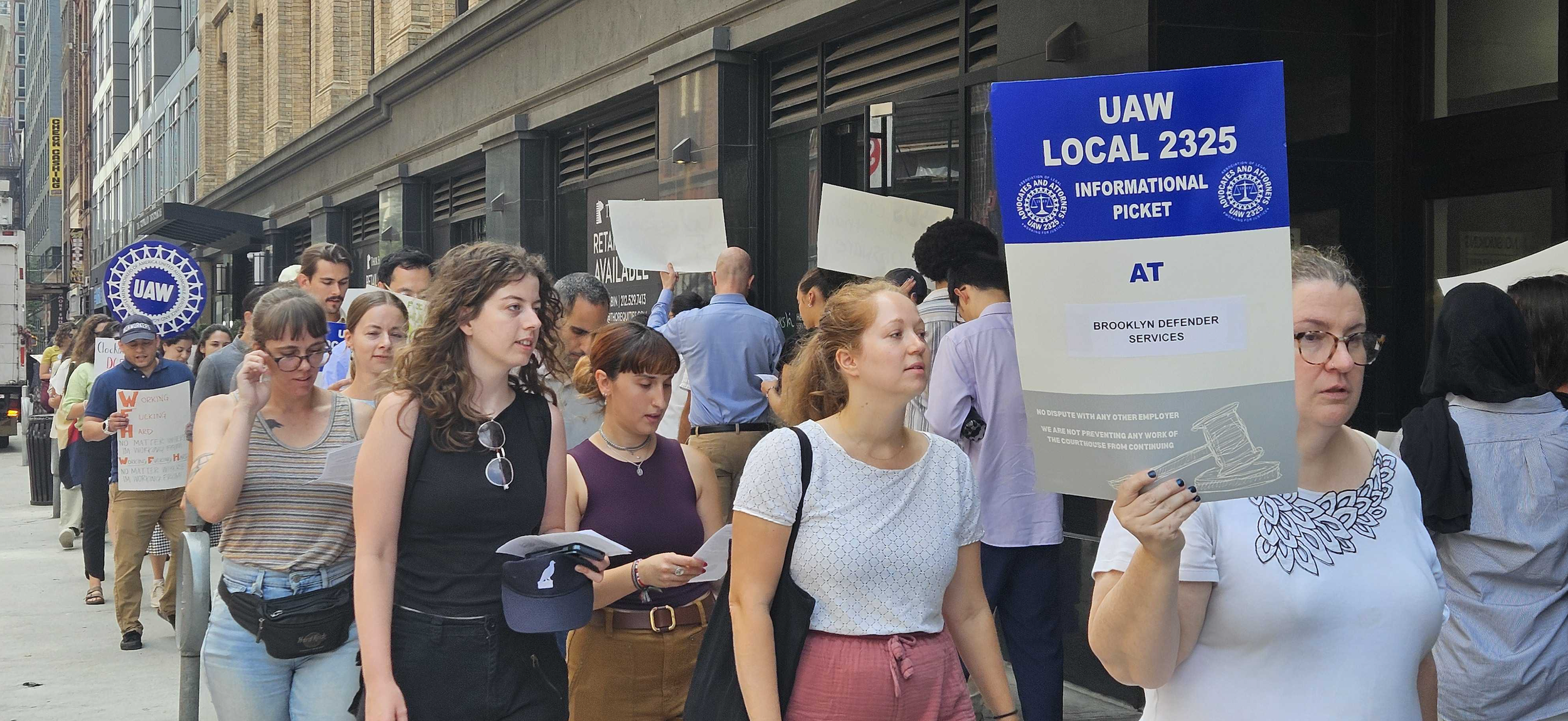
Labor issues have fizzled up at Brooklyn Defender Services after the organization took on a city contract for criminal defense once held by Queens Defenders. Eagle file photo by Noah Powelson
In an interview with the Eagle, BDS Executive Director Lisa Schreibersdorf said she was sympathetic to the situation former Queens Defender staff find themselves in.
When asked about the probation period, Schreibersdorf said she was open to waiving the probation period, but that she couldn’t act until an agreement was reached with the BDS union. Sources familiar with the matter have offered contradicting reasons why the probation period hasn’t been waived, but regardless, Schreibersdorf promised no former Queens Defender staff were at risk of being fired.
"I don't fire people on probation, I don't hire people to fire them," Schreibersdorf told the Eagle. "There is not one person at risk of being fired because they are on probation."
But even with that assurance, former Queens Defender staff entered BDS right as a new labor dispute escalated. On Aug. 22, the BDS union filed grievances against the company after new company policies that changed work-from-home requirements were announced.
Starting on Sept. 2, all BDS workers – including those in its newly acquired Queens office – will be required to work in the office five days a week. Some staff may be able to work on a four-day office schedule depending on their position and seniority. Previously, staff could work at home two days a week with flexible scheduling.
BDS staff will also be required to install an application on their devices they use to clock in and out of work, which accesses the device’s location and requires workers to be physically present in the office to clock out. BDS employees were reportedly informed of the policy changes last June.
The BDS union argued the organization did not have the legal ability to implement the policy change without consulting the union. The issue was made more complicated by the fact that employees at BDS’ Queens office had already been required to return to the office months before the policy was supposed to go into effect, which union representatives have said is in violation of their contract.
Schreibersdorf said that the fact that the policy was implemented in the Queens office first was an “oversight” and that it is not currently being enforced after the organization began hearing concerns. Schreibersdorf also disagreed with the union and said she had the power to enforce the policy without union approval.
When asked about Queens employees who have left or are considering leaving BDS as a result of the transition, Schreibersdorf said she was aware of attorneys who had left for higher paying positions or for personal reasons. She also reiterated that public defenders are some of the most underpaid attorneys in the country, and that she would continue to advocate for more funding from the city for better pay for the lawyers.
"I hope that over time, some of the difficulties from the past will dissipate and our organizations will blend completely," Schreibersdorf said. "I genuinely try to make things as fair and equal as I can."