
Rockefeller Drug Law reforms drove problem-solving court enrollment, new report finds
/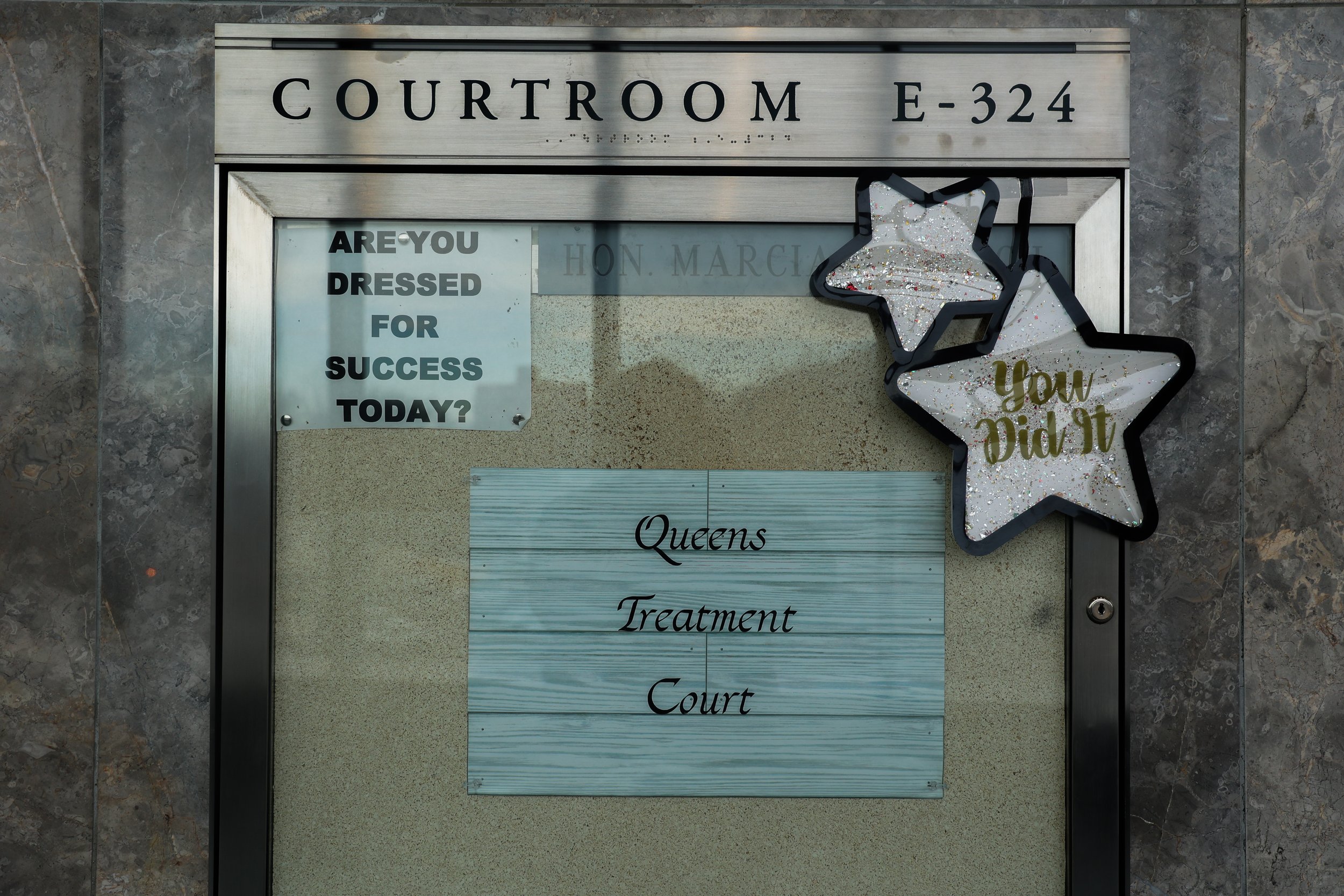
A new report from Data Collaborative for Justice and the Center for Justice Innovation showed a 2009 drug reform law led to a massive increase in treatment court enrollment. Eagle file photo by Ryan Schwach
By Noah Powelson
New York’s problem-solving courts have seen massive increases in enrollment in the more than 15 years since the state implemented major drug sentencing reforms, according to a new report.
Data Collaborative for Justice and the Center for Justice Innovation released a new report on Monday examining the impact of the 2009 Rockefeller Drug Law reforms. The report made two key findings – the Rockefeller reforms did not significantly impact the number of drug-related arrests made in the state, but did fuel significant problem-solving court enrollment through the establishment of judicial diversion.
“We found little evidence linking the reform to changes in arrests, conviction rates, or sentences in any region of the State,” the report reads. “Instead, more gradual reductions in these metrics took place both before and after Rockefeller reform went into effect. These results suggest that Rockefeller reform aligned with, but did not necessarily cause, a broader shift in culture and practice in the New York State courts toward shrinking system involvement for people charged with nonviolent felonies.”
Enrollment in problem-solving courts among people charged with diversion-eligible felonies rose immediately after the reforms took effect. The statewide share of eligible cases diverted to treatment increased from 9 percent in 2008 to 13 percent in 2010.
As a result, the report found that annual enrollment in drug, mental health, veterans and opioid intervention courts more than tripled from 2000 to 2010.
Total enrollment has declined since, down 23 percent from 2010 to 2023, which the report attributes to the overall reduction in arrests and level of drug enforcement seen in the years since. Problem-solving court enrollment in 2023 was still more than double what it was in 2000.
At the same time, prosecuted drug arrests fell by 80 percent statewide from 2000 to 2023. New York City saw an even larger decline of 89 percent during this time.
But despite the decline, the report’s authors said they found no link between Rockefeller Drug Law reforms and arrest, conviction or sentencing anywhere in the state.
"It was blatantly apparent there was nothing there," Michael Rempel, the executive director of the Data Collaborative for Justice, told the Eagle. "The trend lines made crystal clear there was a gradual but substantial reduction in drug arrests...not something we could attribute to Rockefeller reforms."
Racial disparities in drug arrests, however, noticeably widened. In 2010, the last year before the reform went into place, New York City saw a felony drug arrest rate 7 times higher for Black people than white people. In 2023, the felony drug arrest rate for Black people was 11 times higher than for white people.
“This report highlights New York’s dramatically shrinking drug enforcement since 2000, alongside a shift in the culture toward greater acceptance of drug treatment in lieu of incarceration for those cases that reach the courts,” Rempel said in an additional statement. “At the same time, the report’s warning signs include the continued stigmatizing and exclusion from treatment of people charged with violence, widening racial disparities in New York City and its suburbs on several key measures, and incomplete data for assessing the nature and quality of the treatment being delivered.”
In a response to an Eagle inquiry, Office of Court Administration spokesperson Al Baker said, “The UCS is reviewing the report.”
The original Rockefeller Drug Law passed the state legislature in 1973, and created mandatory prison sentences for felony drug convictions. State prison populations exploded in the following years, growing from 1,500 in 1973 to over 23,000 by 1994.
In 2009, the state legislature eliminated these mandatory minimums in what became known as the Rockefeller Drug Law reforms. The reforms also gave judges the ability to divert people to drug treatment for most drug felony charges or a nonviolent property-related felony, a practice known as judicial diversion.
The establishment of judicial diversion alongside the growing number of drug courts and other problem-solving courts resulted in significant increases in program enrollment.
The authors of the report recommend the state continue to expand access to problem solving courts, as well as improve data collection to better track the types of treatment programs people are assigned to in greater detail.
"Despite a coinciding decline in drug felony arrests, the Rockefeller reform law did not result in a significant change in outcomes for certain defendants in New York State, particularly those in the Black community,” Dana Kralstein, former senior research fellow at the Center for Justice Innovation, said in a statement. “Expanding access to treatment through the criminal justice system should continue to be a priority, particularly in upstate communities with limited resources."
Problem-solving courts have been of particular focus of New York’s judiciary leadership since Chief Judge Rowan Wilson took office in 2023. The courts have seen significant increase in funding since Wilson took the helm as head judge, including millions of dollars toward state mental health and problem-solving courts.
“We should cease thinking about courts as places where a judge merely decides which party is right and which is wrong,” Wilson said during his 2024 State of the Judiciary address. “Instead, we should think of the courts as similar to our other branches of government – institutions that attempt to make decisions that will improve the lives of those we serve.”