Queens DA asks for $12.5M budget increase
/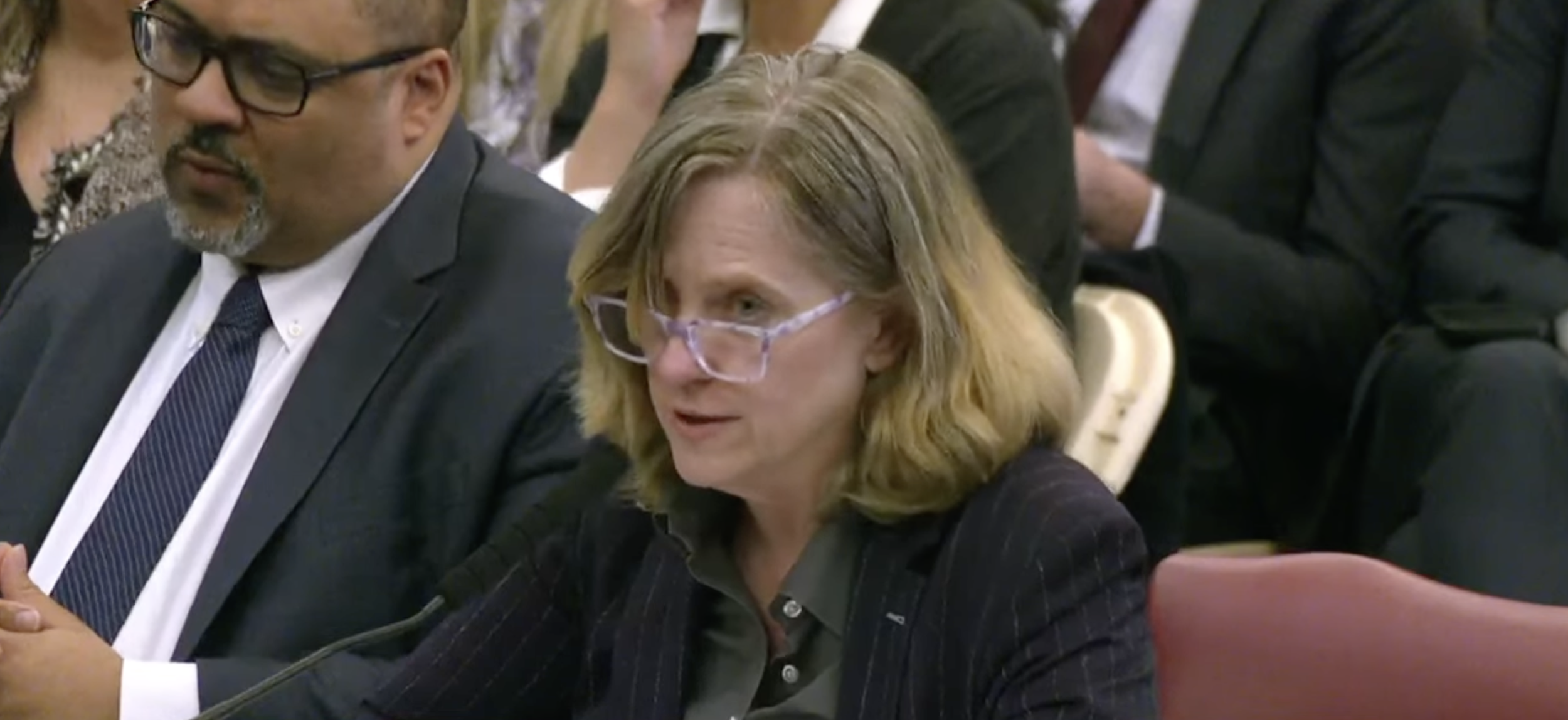
Queens District Attorney Melinda Katz testified before the City Council on Wednesday and asked for an additional $12.5 million in funding for her office. Screenshot via New York City Council/Youtube
By Ryan Schwach
Queens District Attorney Melinda Katz told lawmakers on Wednesday that her office needs an additional $12.5 million in this year's budget after the mayor’s preliminary spending plan proposed keeping her funding nearly flat.
Addressing members of the City Council during a budget hearing, Katz said she wants $12.5 million added to last year’s funding to cover a series of new costs, totalling up to $120.6 million for the Queens DA’s office. Mayor Zohran Mamdani’s preliminary budget only has an increase of $89,000 planned for the DA.
Katz, who recently began her sixth year as the borough’s top prosecutor, said that her office historically operates with less funding than needed.
“Those that are members [from] Queens know that historically, we have been underfunded in a lot of the issues,” said Katz, a former borough president and councilmember. “It's not just criminal justice, a lot of its cultural affairs, a lot of its different subjects that have come up through the years.”
Mamdani’s Fiscal Year 2027 preliminary budget proposed an allocation of $108.2 million for the Queens DA, a small $89,000 increase from last year.
That funding does not include any increases to address the office’s needs or Katz’s requests.
“Queens County DA…received no funding increases in this plan, despite having submitted multiple funding requests for programing and personal service expenses,” the City Council’s report on the preliminary budget read.
Speaking in the Council chambers, Katz asked members for the $12.5 million in extra cash, which she said is needed to fund office services.
Katz said the money would go to the DA’s Rehabilitation and Restoration Services Bureau, the bureau for human trafficking cases and crime victim advocacy.
“I can only say that we try to do justice at every level with any amount of money we have,” Katz said. “It would certainly be a better thing for our office if we were able to spend the money, not only on prosecution, but also on making sure we keep people out of the criminal justice system.”
“We do believe that we are owed,” she added. “We owe our constituents that.”
Katz also highlighted the need for more interpreter staff, a consistent concern in a borough known for its diversity.
“We need more people that speak different languages,” she said. “We are 190 countries and almost 300 languages in the borough of Queens County. I need to be able to service my witnesses and my victims when they come in for help, and the defendants when they come in for help, to make sure that people understand and that there's someone that is accessible.”
An interpreter shortage is not a new issue in Queens’ courthouses.
According to Office of Court Administration data, Queens’ courts have lost a third of their court interpreter staff over the past five years, the Eagle reported in August. In 2019, there were 61 court interpreters assigned to Queens courts. In 2025, there were 41 interpreters.
With the exception of a minor increase in 2023, Queens’ court interpreter staff numbers have steadily declined with no upward trends dating back to 2019.
Katz, along with the other four borough DAs, were questioned by councilmembers about their efforts to get in line with changes in the state’s discovery laws, which were implemented last year, and getting new tech up and running to facilitate the changes and the sharing of information with defense counsel.
When the laws were rolled back last year in order to help expedite case load, the state included $135 million in their budget for DAs to help manage the change.
On Wednesday, Katz said that Queens purchased a new case management system, and hopes to be up and running with the new system by early 2027.
“We are building it out,” she said, adding that the $9 million that trickled to her office to facilitate the discovery system changes was crucial. “I don't know what we would have done without that funding, because the new discovery obligations were such that without that funding, it would have been very difficult. But we're all building out our systems, and it's getting much better.”
In her testimony, Katz also outlined efforts out of her office in the last year.
She said that 60,000 arrests were handled in 2025, along with 45,000 case arraignments, 44,000 of which were resolved.
Katz also spoke about community outreach, the expansion of deed theft enforcement and gun buyback programs.
However, she made it clear to councilmembers that adequate funding for Queens is needed to complete the office’s work.
“All of this is done with less money per individual, per resident, per arrest,” she said.