Courts dismiss mandatory judicial retirement lawsuit
/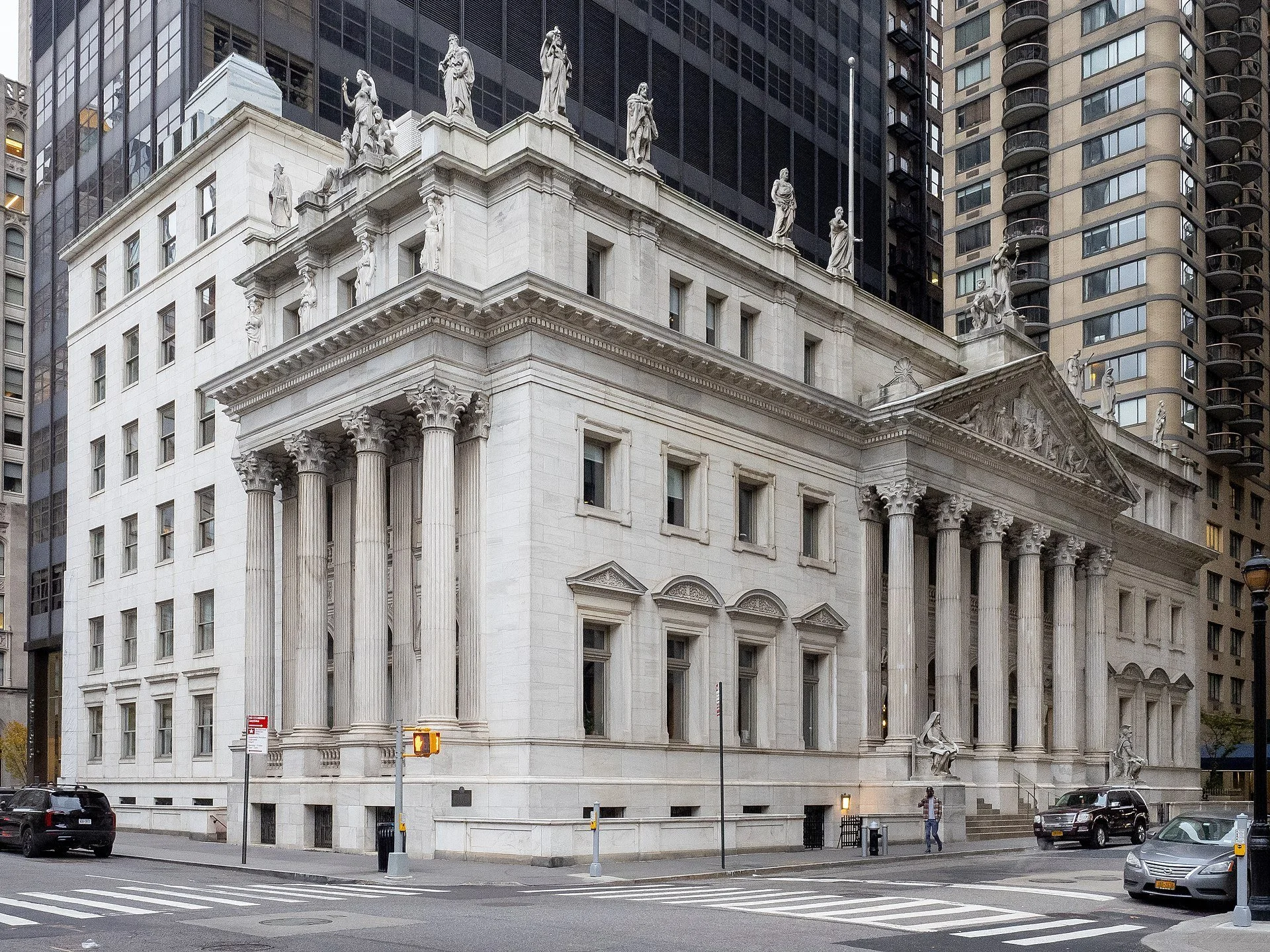
The Appellate Division, First Department upheld the Supreme Court’s decision to dismiss a lawsuit arguing the state’s current mandatory retirement ages for judges was unconstitutional. Photo by ajay_suresh/Wikimedia Commons
By Noah Powelson
A lawsuit claiming the state’s mandatory judicial retirement age law is unconstitutional was thrown out by a state appellate court on Thursday.
An Appellate Division, First Department judicial panel upheld Manhattan Supreme Court Justice Lyle Frank’s decision to dismiss the lawsuit brought by soon-to-be retiring Justices Robert J. Miller, 76, Richard J. Montelione, 70, and Orlando Marazzo, 75.
The panel ruled against the three judges’ lawsuit argument that the state’s mandatory retirement age of 70 conflicted with the state’s recently passed Equal Rights Amendment.
Currently, the state’s constitution sets the mandatory judicial retirement age at 70, and allows for justices to apply for recertification every two years until they reach the age of 76.
The ERA, which was passed by voters in 2024, enshrined anti-discrimination protections to a multitude of categories, including age. The three judges argued back in October when the lawsuit was first filed – and again after the state requested the courts to dismiss the suit in November – that the judicial age limit was discriminatory and unconstitutional under the ERA.
However, the panel sided with the state and the Office of Court Administration, ruling the ERA did not imply the judicial age limit should be repealed nor that there was any evidence the ERA was introduced in the legislature with that intent in mind.
“The plain language of the ERA does not support petitioners’ contention that…the mandatory judicial retirement provision, has been implicitly repealed, as the ERA contains no reference to article VI [the judiciary age limit law], the eligibility of persons to serve as judges or justices, or the judicial retirement age.” the panel’s decision reads.

Manhattan Borough Brad Hoylman-Sigal introduced a bill when he was a state senator that would increase the judicial age limit from 70 to 76. AP file photo by Hans Pennink
The panel not only ruled that the three judges’ arguments around the ERA didn’t hold water, but said it was clear the state legislature never intended to affect judicial age limits when crafting the original bill.
The decision notes that, in 2013, a proposed amendment that would have increased the mandatory judicial retirement age to 80 failed to pass the general election. When the ERA was introduced and passed in 2024, it did not include language of the 2013 amendment, instead focusing on enshrining discrimination protections based on sexual orientation, gender identity and gender expression.
Additionally, the panel’s ruling said, former State Senator Brad Hoylman-Sigal introduced a similarly worded bill in 2025 that would increase the judicial mandatory retirement age. The appellate judge went on to say these two facts suggest the ERA drafters intended to address the judicial age limit issue in separate legislation, and not through the amendment.
“Because there is no support for petitioners’ position within the ERA’s legislative history, their cause of action asserting an implicit repeal necessarily fails,” the decision reads. “It follows that petitioners cannot demonstrate beyond a reasonable doubt that [the judiciary age limit restriction law] are unconstitutional.”
Morrison Cohen LLP, the law firm representing the three judges, did not respond to a request for comment.
Judges and legislators have fought over the judiciary age limit for years, especially as the overwhelming case backlog brought on by the COVID-19 pandemic made it critically important to fill as many judicial seats as possible.
In 2020, OCA denied recertification to nearly every judge over the age of 70, including six in Queens, as a cost-saving measure. Forty-six judges were kicked from the bench then, most of whom had passed their required health and cognition exams, and 36 returned to the bench after the legislature allocated more court funding.
But even with court funding increasing in recent years and judicial hiring steadily rising, the courts are still racing to hire judges faster than they retire.
In Queens, several long-time judges are required to retire at the end of this year due to age as well, including Justice Ira Margulis in Queens Supreme Court, Criminal Term, and Justice Joseph Esposito in Queens Supreme Court, Civil Term.
Chief Administrative Judge Joseph Zayas said repeatedly in the first months of 2026 that staffing levels – both judicial and nonjudicial – continue to be the courts’ greatest obstacle.
But while the lawsuit failed to get through the Appellate Division, First Department, the fight over judicial age limits may not be over as the three judges can still bring their case to the Court of Appeals.
Additionally, there currently sits a piece of legislation that would address the judges’ demands.
Hoylman-Sigal’s bill, which was introduced before he was elected Manhattan borough president in 2025, would increase the mandatory retirement ages for judges from 70 to 76. If this law were to pass, Montelione and Marazzo would be able to stay on the bench for at least another year, and Miller would be able to apply for recertification again.
The bill was unanimously passed by the Senate Judiciary Committee last year, and is currently waiting to be brought to the Senate floor. When introducing the bill, Hoylman-Sigal echoed many of the sentiments expressed by the judges facing mandatory retirement, including that the current law is outdated for the state’s needs.
“New York State has not updated the mandatory retirement age for our judges in over 125 years,” Hoylman-Sigal told the Eagle in a statement at the time. “The truth is that these days people live, and remain mentally competent, for far longer than they did at the turn of the 20th century and our state constitution should reflect that.”
If Hoylman-Sigal’s bill passes the legislature, it would apply to justices of the Supreme Court, as well as judges of the Court of Appeals, Court of Claims, County Court, Surrogate's Court, Family Court, Court for the City of New York and District Court. Judges who reach the new mandatory retirement age under the bill can apply for recertification until they turn 80 years old.