Top administrative judge says judge shortage remains biggest challenge for NYC courts
/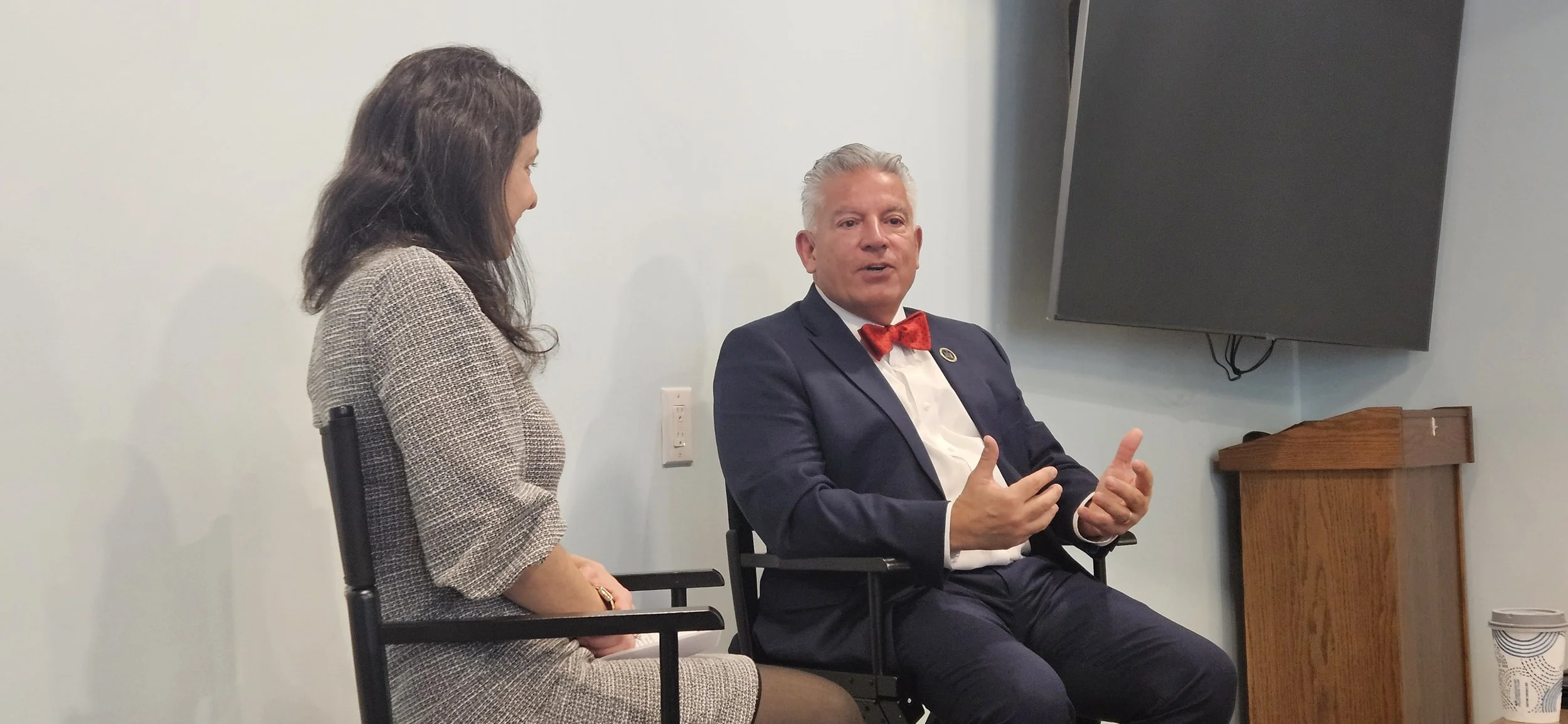
Administrative Judge Joseph Zayas speaks with Queens County Bar Association President Kristen Dubowski-Barba about the need to hire more judges in the state. Eagle photo by Noah Powelson
By Noah Powelson
As court leaders prepare to seek a budget increase in Albany, Chief Administrative Judge Joseph Zayas said Thursday that a persistent shortage of judges continues to strain New York City’s courts.
At an event hosted by the Queens County Bar Association on Thursday, Zayas said the state’s court system – and New York City in particular – still lacks the necessary number of judges to meet caseload demands.
The typical pending caseload for a New York City judge can be anywhere from 900 to 1,300 cases, the former Queens administrative judge said at the QCBA event.
“The biggest challenge has been increasing the number of judges in New York City,” Zayas said. “It’s something I've been trying to deal with from day one.”
Zayas’ call for more judges comes two weeks before he and Chief Judge Rowan Wilson will go before the state legislature in Albany and make their case for why the Unified Court System needs a 6.7 percent increase in spending for the courts’ 2027 budget.
While more judges are needed in courtrooms across the state, Zayas said that the volume of cases in the city is particularly high, as the average city judge manages hundreds more cases than their upstate colleagues.
Zayas also warned that with a new mayor in office, judicial appointments for the city bench could slow as the recently reappointed Mayor’s Advisory Committee on the Judiciary will take time to make recommendations.
Until either the city or state makes those appointments, city judges will continue racing to catch up on their case backlog, the chief administrative judge said.
But getting Albany to sign off on hiring those judges is always a challenge, Zayas said, especially as upstate legislators often advocate for their districts to get their fair share of judicial appointments.
Last month, UCS leadership unveiled their requested $3.2 billion budget for the coming fiscal year.
“The FY 2027 budget submission supports the actions of the past two years in base funding and seeks to address only the most critical new initiatives that will improve the fair and timely delivery of justice and provide equal access to justice to all New Yorkers,” the budget document reads.
Most of the requested budget increase would go toward existing operations and ongoing programs, including a two percent salary increase for all judges and justices. The budget proposal also calls for nearly $50 million in new spending, nearly half of which would be used to expand the state’s struggling civil legal services programs.
The current funding civil legal services ask is still less than 20 percent of what is necessary, according to a recent study by the Permanent Commission on Access to Justice cited in the budget document.
UCS’s efforts to secure funding increases from the state Legislature have at times been contentious. The previous court administration, led by former Chief Judge Janet DiFiore, maintained a much more antagonistic relationship with the legislature, and the courts’ budget remained relatively stagnant each year with small increases of only one or two percent.
The relationship between UCS and the legislature noticeably changed, however, when Wilson and Zayas took over. In 2025, the UCS budget saw a five percent increase from the previous year, rising to roughly $2.7 billion. In 2026, the budget was brought up to $3 billion.
Zayas said he’s hoping to continue that trend by requesting an additional $200 million in the coming fiscal year, a six percent increase.
“It’s such a cordial, different type of relationship,” Zayas said on Thursday. “We’re getting along, but more importantly, we’re bringing back money into our budget.”
Both Wilson and Zayas will appear before the state legislature on Feb. 12 as part of a joint hearing on the budget, where they will attempt to once again justify asking for the largest court budget the state has seen for the third year in a row.
Funding wasn’t the only issue Zayas said prevented more judges from joining the bench. The administrative judge also advocated for the Uncap Justice Act, a state constitutional amendment that would remove the population calculation that requires one Supreme Court judicial seat for every 50,000 people living in a district.
The bill has received wide support from Wilson, Governor Kathy Hochul, Attorney General Letitia James, and many others.
The population limit, Zayas said, prevents more judges from being appointed in city counties that are in desperate need of more jurists.
“For example, Manhattan and the Bronx right now, we can't give them any more Supreme Court judges,” Zayas said. “The only way to do it is by making acting Supreme Court judges and sending them to those counties.”
“But if you lift the cap, it helps us to get the judges that we need in the city,” he added.