Councilmembers demand DA drop charges against Queens man shot by police during mental health crisis
/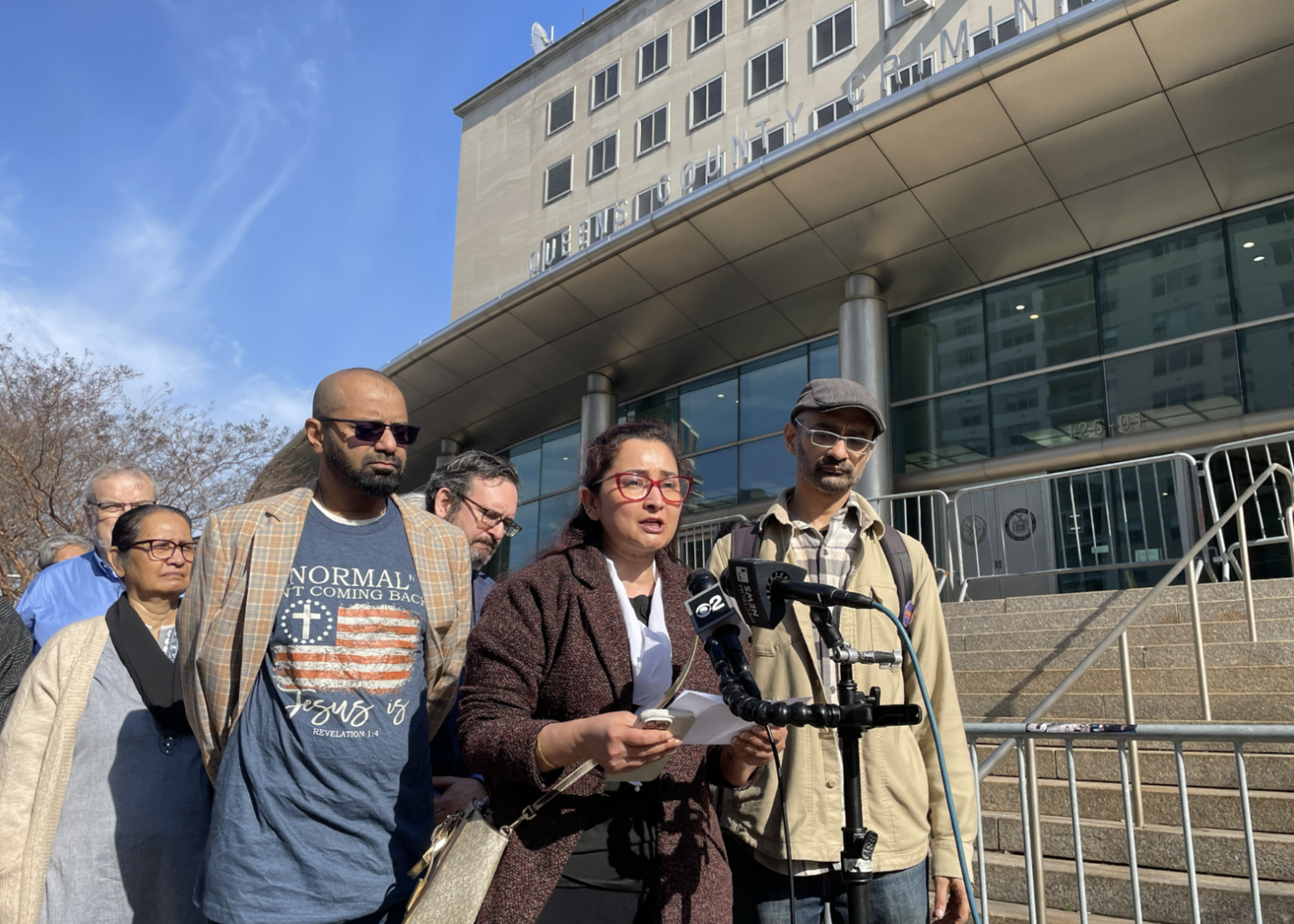
Jabez Chakraborty’s parents outside of Queens Criminal Court. This week, a group of city councilmembers called on District Attorney Melinda Katz to drop the felony attempted assault charges against the 22-year-old who was shot by police while experiencing a mental health crisis in January. Eagle File photo by Jacob Kaye
By Jacob Kaye
Over a dozen city councilmembers this week called on Queens District Attorney Melinda Katz to drop the felony charges her office has brought against Jabez Chakraborty, the 22-year-old who was shot by police in his family’s home while experiencing a mental health crisis in January.
In an open letter to the DA, the lawmakers, most of whom are members of the Council’s Progressive Caucus, demanded Katz abandon her prosecution of Chakraborty, who remains hospitalized with a bullet lodged near his heart after being shot by police around 10 months ago.
Chakraborty was in the throes of an escalating mental health crisis when his family called 911 in the hopes that medics would come to their Briarwood home and involuntarily remove him for treatment. Instead, two police officers showed up and were met by Chakraborty, who was wielding a knife and moving toward them. Almost immediately after arriving, police officer Tyree White fired his gun, hitting Chakraborty four times.
Though advocates and elected officials, including Mayor Zohran Mamdani, called on Katz not to prosecute Chakraborty, who was diagnosed with schizophrenia three years ago and who was scheduled to begin increasing his treatment at a Queens psychiatric hospital the day after the shooting, the DA hit the 22-year-old with attempted assault and criminal possession of a weapon charges in February.
In their letter, the councilmembers – including Queens City Councilmembers Shekar Krishnan, Tiffany Cabán and Shanel Thomas-Henry – said that they were “outrage[d]” that Chakraborty’s case was continuing in the courts, arguing that the city failed to properly respond to the young man’s need for mental health care.
“[W]e call on you, DA Katz, to pursue fairness and justice as is your elected duty and recognize that a call for help during a mental health crisis should never result in a near-fatal shooting and should never then be prosecuted as a felony charged against the person who was in crisis and almost killed,” the councilmembers said.
“We call on you to immediately dismiss all charges against Mr. Chakraborty and allow his family to continue to engage in the care he needs while beginning to heal from the traumatic shooting in their home and senseless prosecution of their son and brother,” they added.
The lawmakers' public pressure campaign came as Chakraborty’s case was heard by a judge on Wednesday.
During the court appearance, Chakraborty’s defense attorneys with the Legal Aid Society said the DA’s office had thus far refused to budge on the charges.
“They informed us that dismissal would never be on the table,” Shanaz Chowdhury, one of Chakraborty’s attorneys, said.
The prosecutor on the case, Assistant District Attorney Hugh McCann, later told a judge during the hearing that the order to continue to pursue the felony charges against Chakraborty came directly from Katz.
The DA’s office did not respond to a request for comment about the councilmembers’ letter on Wednesday.
The district attorney in February held a rare press conference to explain why she had brought the charges, claiming that she was “duty bound to follow the facts, evidence and circumstances where they lead us.”
The district attorney said that bringing the charges also would be the first step toward forcing Chakraborty into a mental health treatment program through the courts. While she didn’t commit to seeking a mental health disposition, she noted that bringing the criminal case wouldn’t “preclude” the alternative path.
But such a solution has yet to materialize.
In court on Wednesday, McCann said his office wouldn’t begin to have conversations about helping Chakraborty seek treatment until his attorneys turned over 11,000 pages of medical records, most of which are related to his physical health following the shooting and not his mental health, which also includes records related to a recent autism diagnosis.
Queens Supreme Court Justice Toni Cimino, who is overseeing the case, appeared dubious about the prosecutor's claim that the DA's office needed to wait for the records before they could discuss a solution to the case.
“I don’t think that a review of the [11,000] pages or so is necessary to have a meeting, to start a conversation,” Cimino said during the hearing. “I don’t think that’s appropriate here.”
The judge told Chakraborty’s attorneys to send over the records they had to the DA’s office by the end of the week, and ordered them to return to court on Dec. 16.
‘What is the purpose?’
Outside the courthouse after the hearing, Juli Chakraborty, the 22-year-old’s mother, said through tears that she remained confused about why Katz wasn’t willing to drop the charges.
“Instead of being able to focus on his health and focus on our son, we are dragged [to court] seven times,” she said. “What is the purpose? I still don't understand.”
Chakraborty’s family was accompanied to court on Wednesday by dozens of advocates with Desis Rising Up & Moving, a South Asian and Indo-Caribbean social justice organization based in Queens. The nonprofit’s executive director, Fahd Ahmed, called the DA’s prosecution of Chakraborty “cruel” and blamed the city for failing to treat the Queens man before the incident that led to the shooting.
“Our systems are not suited to allow people to get the support that they need, and instead we have police responses and police violence, and then on top of that, police prosecution,” Ahmed said. “But what people need is support. What they need is treatment.”
Chakraborty’s shooting unfolded less than a year after and around four miles from where police fatally shot 19-year-old Win Rozario in 2024. Like Chakraborty, Rozario was in the throes of a mental health crisis when police showed up to his family’s home – unlike Chakraborty, Rozario called 911 himself in the hopes of receiving treatment. Rozario grabbed a pair of scissors and began to walk toward the two officers, who then fired at least four shots, killing the teen.
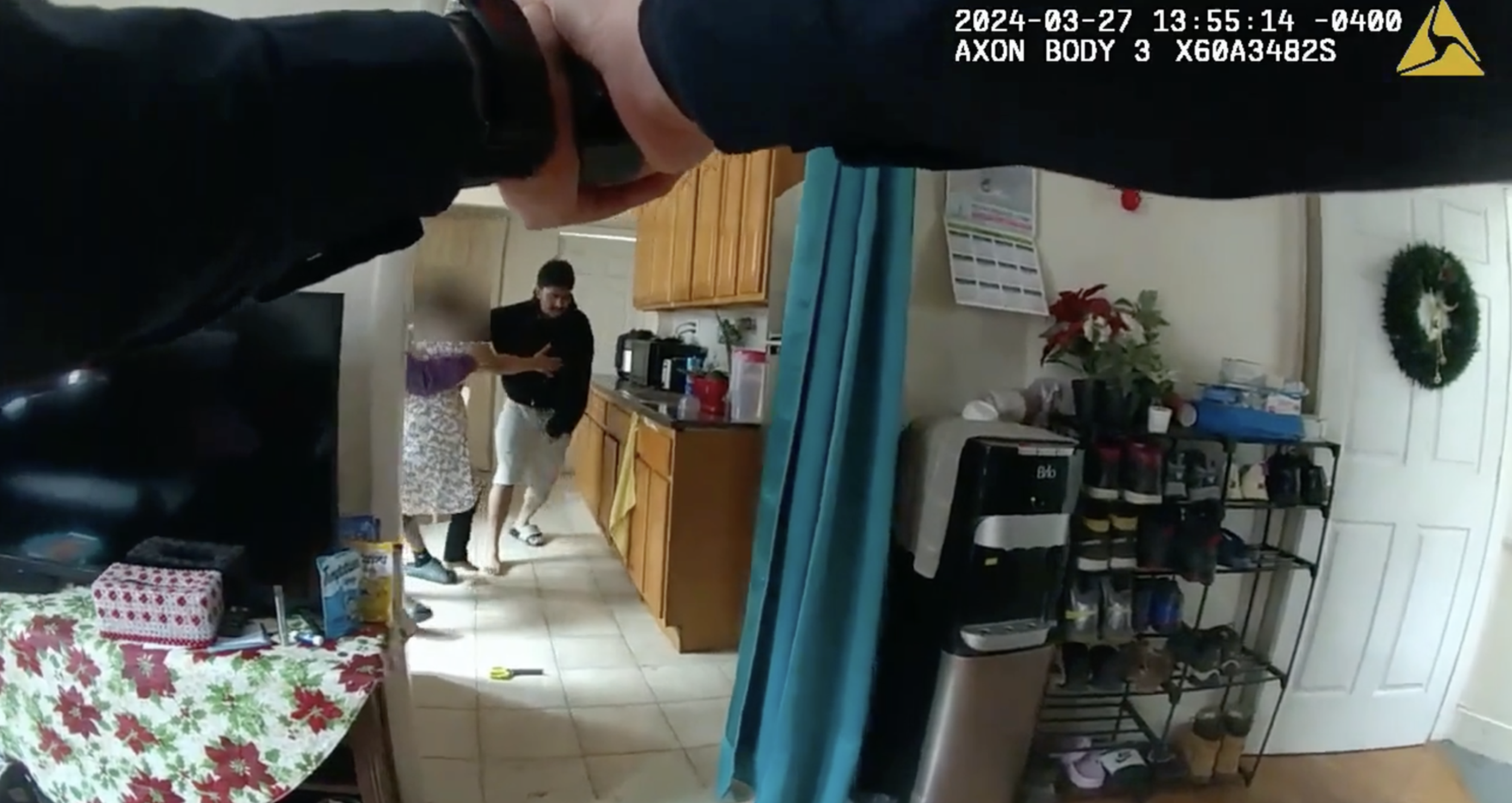
Like Jabez Chakraborty, Win Rozario was shot by police in his family’s home while experiencing a mental health crisis. Screenshot via NY AG’s office
In their letter, the councilmembers pointed to both cases as evidence of the city’s “failure…to provide robust mental health care and to end the practice of police response to calls for help in a situation of mental distress.”
“These failures of care are grossly exacerbated by a police force trained to shoot, not respond with care, and by your own insistence on prosecuting the victim of this police shooting,” the letter read.
The letter also comes as elected members of the Democratic Socialists of America have reportedly begun urging the mayor to enact the many police reforms he vowed to implement while on the campaign trail.
In October, Mamdani announced a series of NYPD accountability measures after one of the officers who shot Rozario was improperly allowed to retire with a full pension despite being under investigation for the shooting and facing potential punishment.
In an interview with the Eagle on Wednesday, Cabán said that she’s seen a “genuine interest and intention” from the Mamdani administration to enact police reforms and to strengthen the city’s response to mental health crises, including by improving B-HEARD, a program that sends social workers to respond to non-violent mental health calls.
“I think there's an effort being had there,” she said. “And I think that we have a ways to go.”
Sam Raskin, a spokesperson for the mayor, touted the Mamdani administration’s plans to change the way the city deals with mental health issues.
“As the mayor has said, Jabez Chakraborty needs treatment, not criminal prosecution,” Raskin said. “This case underscored the urgent need to improve how New York City responds to mental health crises by building a system rooted in prevention and effective crisis response that keeps New Yorkers and first responders safe. That’s why the Mamdani administration’s Office of Community Safety is working to strengthen and expand B-HEARD, improve how mental health emergency calls are identified and dispatched and is exploring additional response models to ensure New Yorkers receive the right care and support when they need it.”
Outside the courthouse, Ahmed said that while DRUM had hoped that more of Mamdani’s reforms would have been implemented by now, he also felt he should cut the first-year mayor some slack.
“There's some frustration with the pace of things, which is tempered by the fact that we know things take time,” Ahmed said. “But right now, I would say the vast majority of the frustration is toward the DA and not really towards the mayor.”
Cabán, who came within 55 votes of defeating Katz in the Democratic primary for district attorney in 2018, also said her frustration lies with the DA, who will be up for reelection next year.
Cabán declined to say whether she’d challenge Katz for the top cop post, but said that she believes Queens “deserves a district attorney that is going to decline to criminalize poverty, mental health, and substance use, and that is going to try to scale back some of the inherent racialized harms of our criminal legal system.”
“It is our job to push and create a political environment that, no matter who is in that role, those are the results that we get delivered,” she said.
Update: This story was updated at 2:33 p.m. on Wednesday, Nov. 4, 2026 with a comment from the mayor’s office.