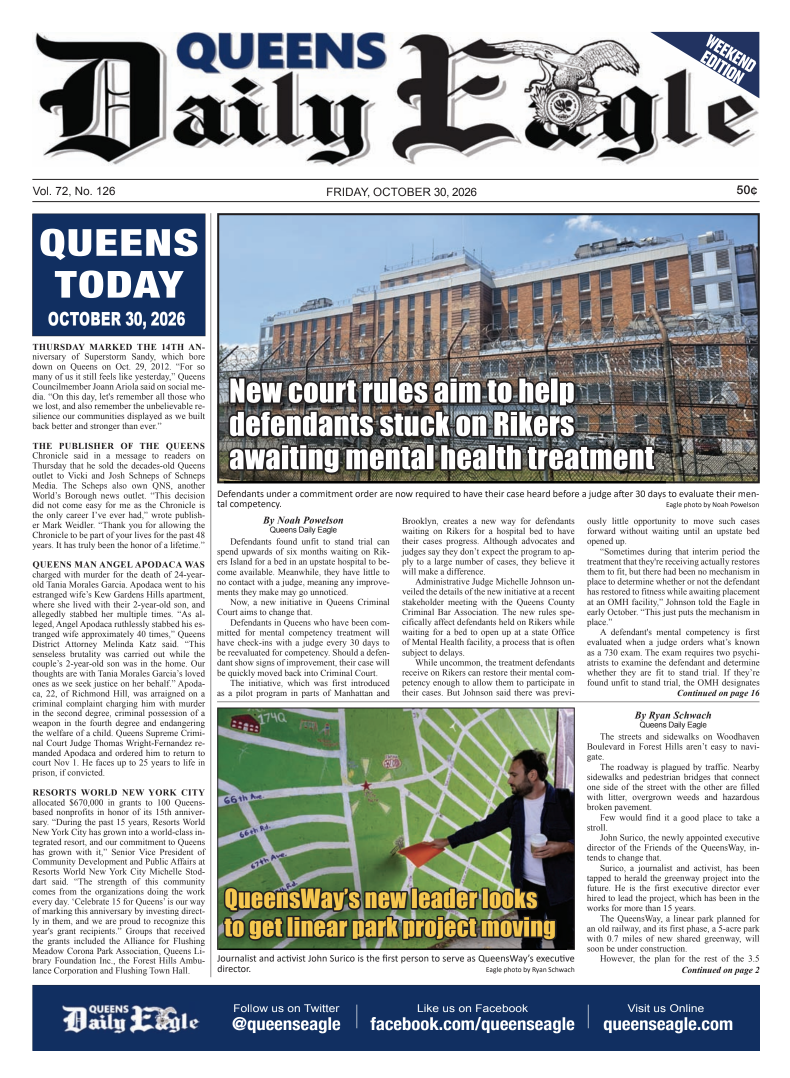
New court rules aim to help defendants stuck on Rikers awaiting mental health treatment
/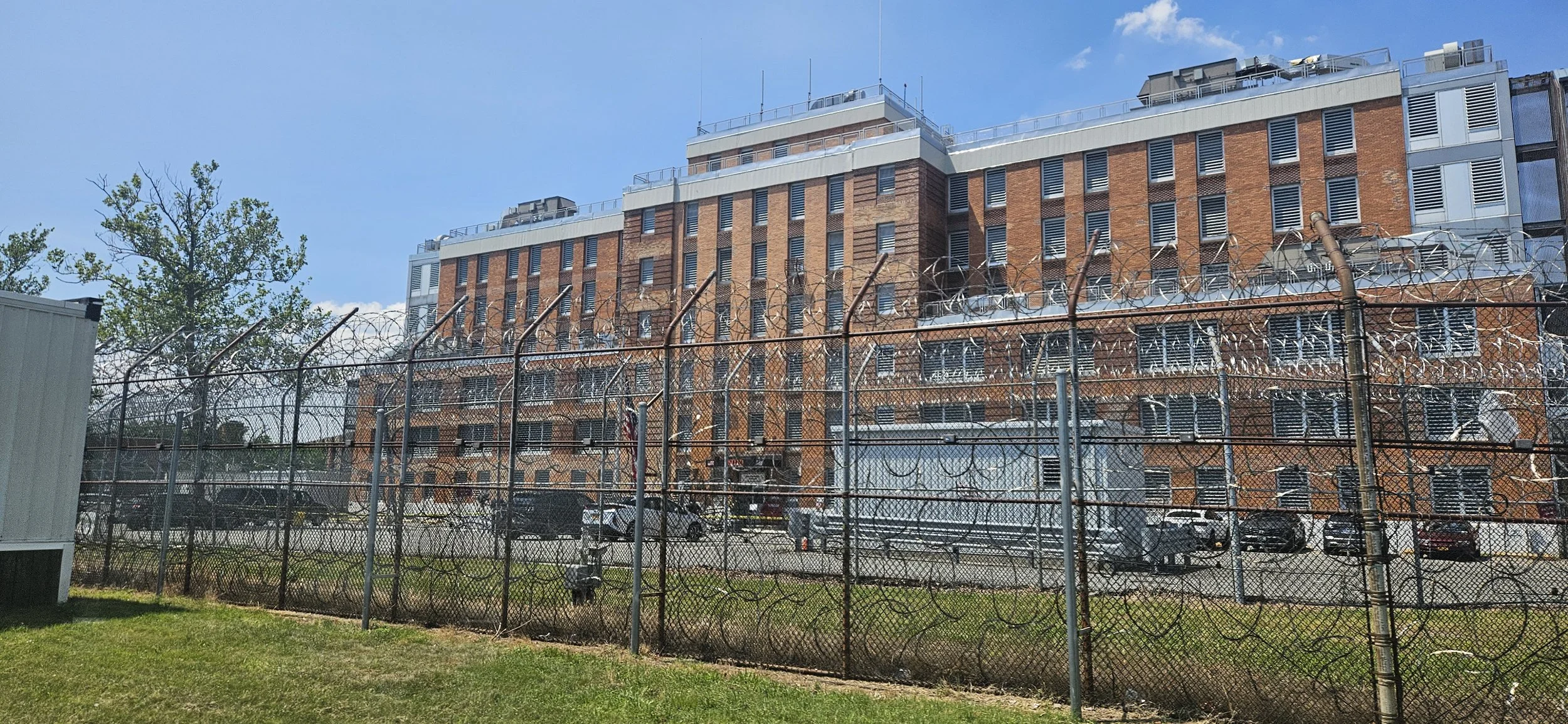
Defendants under a commitment order are now required to have their case heard before a judge after 30 days to evaluate their mental competency. Eagle photo by Noah Powelson
By Noah Powelson
Defendants found unfit to stand trial can spend upwards of six months waiting on Rikers Island for a bed in an upstate hospital to become available. Meanwhile, they have little to no contact with a judge, meaning any improvements they make may go unnoticed.
Now, a new initiative in Queens Criminal Court aims to change that.
Defendants in Queens who have been committed for mental competency treatment will have check-ins with a judge every 30 days to be reevaluated for competency. Should a defendant show signs of improvement, their case will be quickly moved back into Criminal Court.
The initiative, which was first introduced as a pilot program in parts of Manhattan and Brooklyn, creates a new way for defendants waiting on Rikers for a hospital bed to have their cases progress. Although advocates and judges say they don’t expect the program to apply to a large number of cases, they believe it will make a difference.
Administrative Judge Michelle Johnson unveiled the details of the new initiative at a recent stakeholder meeting with the Queens County Criminal Bar Association. The new rules specifically affect defendants held on Rikers while waiting for a bed to open up at a state Office of Mental Health facility, a process that is often subject to delays.
While uncommon, the treatment defendants receive on Rikers can restore their mental competency enough to allow them to participate in their cases. But Johnson said there was previously little opportunity to move such cases forward without waiting until an upstate bed opened up.
“Sometimes during that interim period the treatment that they're receiving actually restores them to fit, but there had been no mechanism in place to determine whether or not the defendant has restored to fitness while awaiting placement at an OMH facility,” Johnson told the Eagle in early October. “This just puts the mechanism in place.”
A defendant's mental competency is first evaluated when a judge orders what’s known as a 730 exam. The exam requires two psychiatrists to examine the defendant and determine whether they are fit to stand trial. If they’re found unfit to stand trial, the OMH designates a hospital where the person will be treated and puts them on a waitlist.
But defendants often find themselves waiting for months as hospitals struggle to find empty beds.
Even in the rare case when a defendant’s competency is restored on Rikers, many commitment orders lack protocols for reevaluation. It is often up to a defense attorney to argue that their client’s mental capabilities have improved.
Queens Supreme Court Justice Ira Margulis told the Eagle that discussions about the new initiative have been ongoing for some time. Margulis oversees many cases that involve 730 exams and said that, while rare, he had seen cases in which defendants had their competency restored while they waited on Rikers.
“In my opinion, I think is a good thing because I have had attorneys in the past come to me saying, ‘I think my client is better now, can we bring him in?’” Margulis told the Eagle. “Sometimes I will ask for a new examination from the doctors here, and it doesn't happen that often, but they do find them fit.”
Margulis also said he believed such instances were becoming more common in recent years.
The new rules come as criminal justice advocates have for years condemned the city and state for leaving hundreds of mentally ill defendants languishing on Rikers.
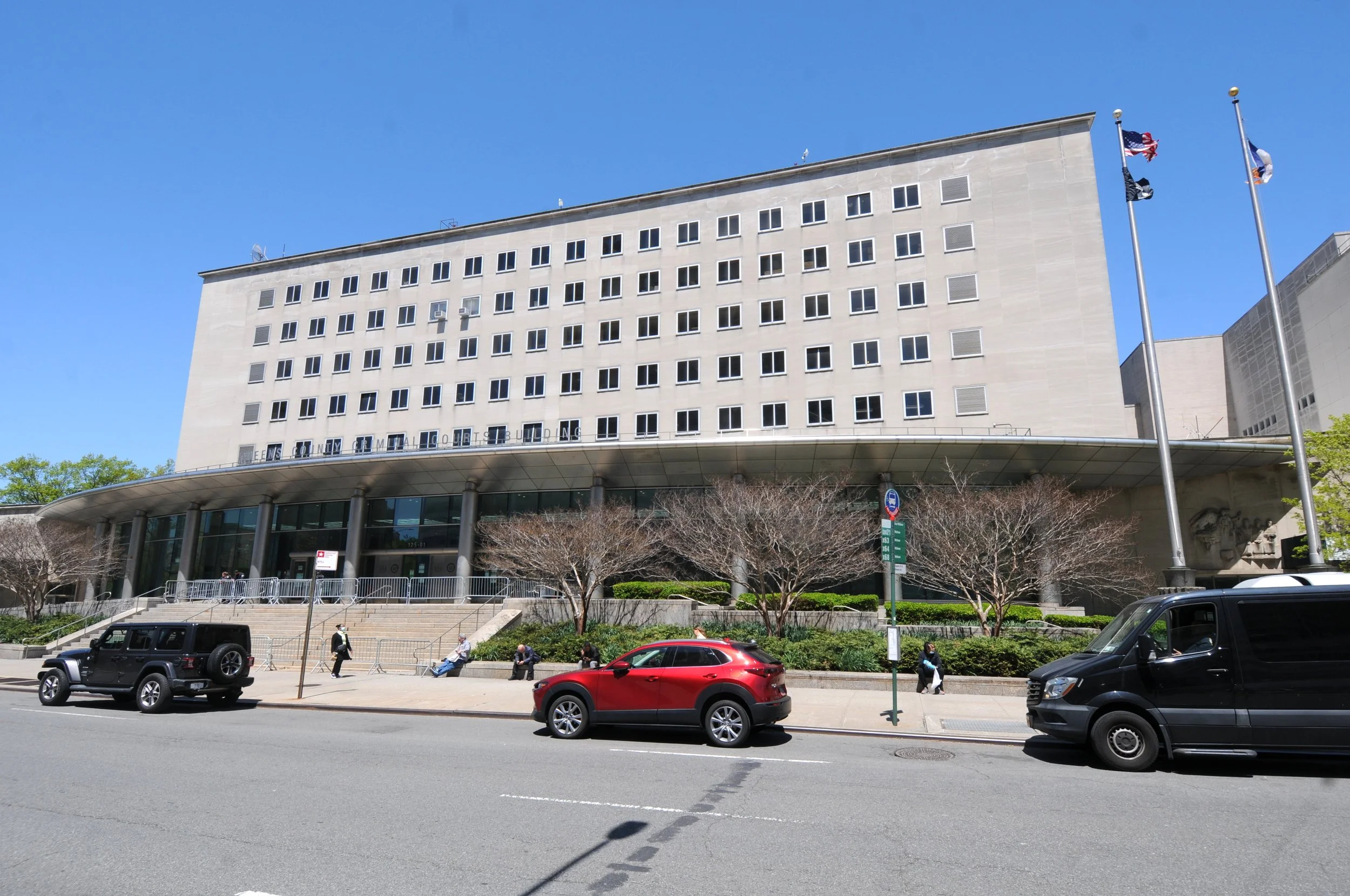
A new competency reevaluation initiative started in Queens Criminal Court in October. Eagle file photo by Walter Karling
In 2025, the Legal Aid Society brought a class action lawsuit accusing the city of violating detainees’ due process rights by failing to move them from Rikers Island to a psychiatric facility when ordered to do so by a judge.
The Legal Aid Society said the average wait time in 2024 was 81 days, but nearly a dozen people over the previous two years waited more than six months, including one person whose treatment was delayed for nine months.
In 2024, 130 New Yorkers waited more than 100 days on Rikers Island before being moved to a state facility for competency restoration.
Elena Landriscina, a supervising attorney with the Special Litigation Unit in the Legal Aid Society’s Criminal Law Reform team, told the Eagle that while the new competency reevaluation initiative could be a useful tool, it ultimately doesn’t address the systemic issues that leave mentally vulnerable defendants stuck on Rikers for months.
“We believe that our clients' rights are violated if they're not provided with timely restoration services, and timely in our view is within seven days,” Landriscina said. “When you compare seven days to five to six months, there's a huge gap there.”
The long waitlist not only delays cases but also puts incarcerated people with mental illness at risk of further harm and worsening symptoms, Landriscina said.
Of the people who have died in Department of Correction custody since 2021, about half had mental health needs, including five detainees who required competency restoration while behind bars.
In June, the state legislature passed a series of reforms creating new definitions and policies around restoration services for the courts to follow.
One such reform required psychiatric examiners to submit a report stating whether they believe restoration services have a strong probability of restoring the defendant’s competency to stand trial within a reasonable time. If that determination is made, the judge must issue an order committing the defendant to an appropriate facility for up to 90 days.
Landriscina said that while court initiatives can help somewhat, any real solutions will have to come from state investment in expanding mental health facilities and restoration services programs.
“The overwhelming majority of people still do require those services, and they require treatment in a therapeutic setting, which Rikers is not,” Landriscina said. “It's an initiative to maybe limit or reduce the waitlist, but in terms of the actual number of people affected by it, it's going to be very small in our experience.”