Half of Queens’ judicial candidates found to be ‘qualified’ for the bench
/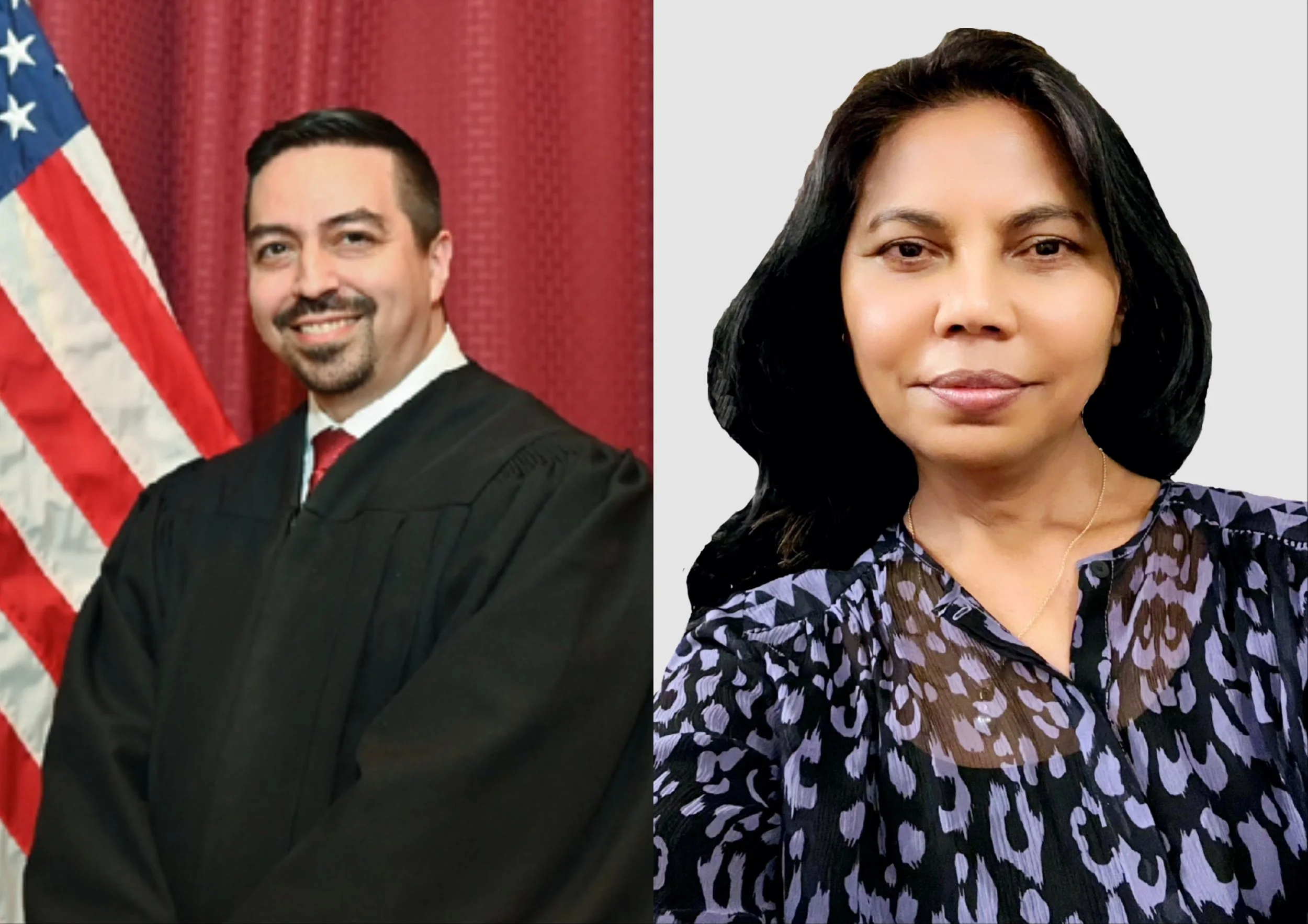
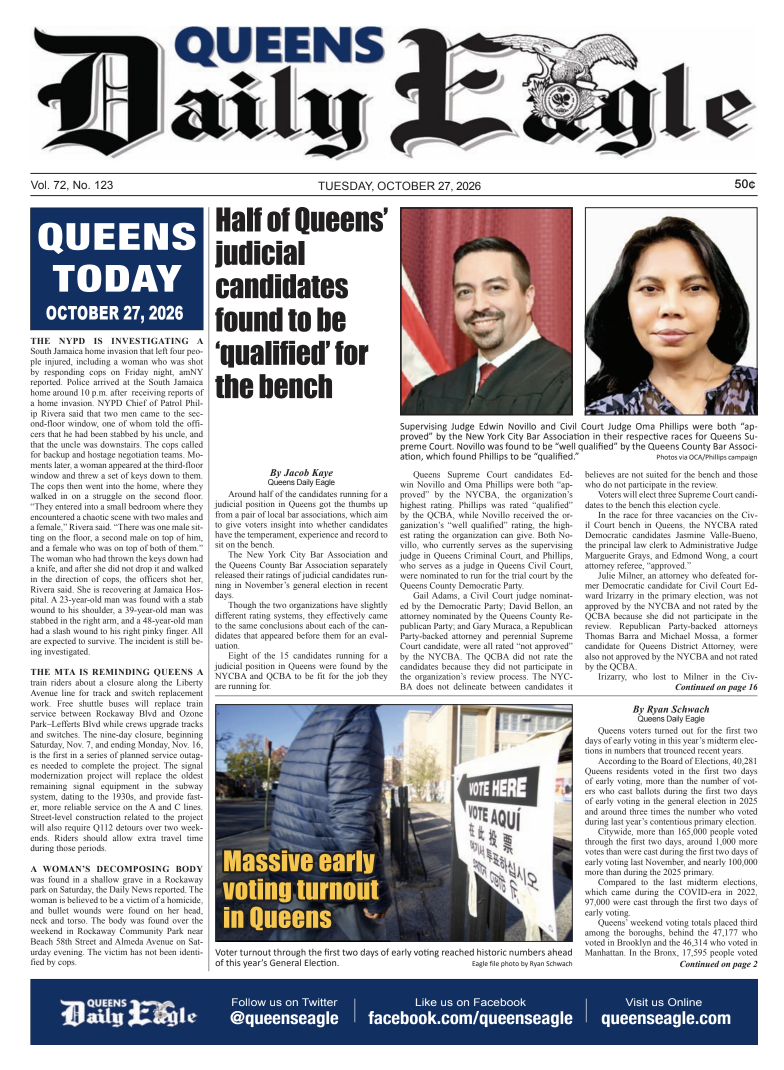
Supervising Judge Edwin Novillo and Civil Court Judge Oma Phillips were both “approved” by the New York City Bar Association in their respective races for Queens Supreme Court. Novillo was found to be “well qualified” by the Queens County Bar Association, which found Phillips to be “qualified.” Photos via OCA/Phillips campaign
By Jacob Kaye
Around half of the candidates running for a judicial position in Queens got the thumbs up from a pair of local bar associations, which aim to give voters insight into whether candidates have the temperament, experience and record to sit on the bench.
The New York City Bar Association and the Queens County Bar Association separately released their ratings of judicial candidates running in November’s general election in recent days.
Though the two organizations have slightly different rating systems, they effectively came to the same conclusions about each of the candidates that appeared before them for an evaluation.
Eight of the 15 candidates running for a judicial position in Queens were found by the NYCBA and QCBA to be fit for the job they are running for.
Queens Supreme Court candidates Edwin Novillo and Oma Phillips were both “approved” by the NYCBA, the organization’s highest rating. Phillips was rated “qualified” by the QCBA, while Novillo received the organization’s “well qualified” rating, the highest rating the organization can give. Both Novillo, who currently serves as the supervising judge in Queens Criminal Court, and Phillips, who serves as a judge in Queens Civil Court, were nominated to run for the trial court by the Queens County Democratic Party.
Gail Adams, a Civil Court judge nominated by the Democratic Party; David Bellon, an attorney nominated by the Queens County Republican Party; and Gary Muraca, a Republican Party-backed attorney and perennial Supreme Court candidate, were all rated “not approved” by the NYCBA. The QCBA did not rate the candidates because they did not participate in the organization’s review process. The NYCBA does not delineate between candidates it believes are not suited for the bench and those who do not participate in the review.
Voters will elect three Supreme Court candidates to the bench this election cycle.
In the race for three vacancies on the Civil Court bench in Queens, the NYCBA rated Democratic candidates Jasmine Valle-Bueno, the principal law clerk to Administrative Judge Marguerite Grays, and Edmond Wong, a court attorney referee, “approved.”
Julie Milner, an attorney who defeated former Democratic candidate for Civil Court Edward Irizarry in the primary election, was not approved by the NYCBA and not rated by the QCBA because she did not participate in the review. Republican Party-backed attorneys Thomas Barra and Michael Mossa, a former candidate for Queens District Attorney, were also not approved by the NYCBA and not rated by the QCBA.
Irizarry, who lost to Milner in the Civil Court primary, was later nominated by the Queens County Democratic Party to run for a vacancy in the Civil Court’s 4th Municipal District, which covers parts of Jamaica, Rochdale, Springfield Gardens, Cambria Heights, Hollis, Queens Village and Glen Oaks. He was found to be approved by the NYCBA and qualified by the QCBA.
The Democratic candidate in the race for a vacancy in the Civil Court’s 2nd Municipal Court District, Janet Ellen Keller, was approved by the NYCBA and found to be qualified by the QCBA. The Republican candidate, Stephen Dachtera, was not approved by the NYCBA and not rated by the QCBA. The district covers the neighborhoods of Elmhurst, East Elmhurst, Jackson Heights, Corona, Sunnyside, Woodside and parts of Forest Hills.
In the 3rd Municipal Court District, which includes Maspeth, Ridgewood, Glendale, Ozone Park, South Ozone Park and Howard Beach, the NYCBA found both the Democratic candidate, Michelle Ann McSweeny-Ortiz, and the Republican candidate, William Shanahan, to be approved. The QCBA similarly found both candidates to be qualified to sit on the bench.
Candidates who were approved by the NYCBA were found to “have affirmatively demonstrated qualifications necessary for the performance of the duties of the position for which they are being considered,” according to the bar association.
The QCBA has similar standards.
Candidates are found to be qualified if they have “satisfactory skill, experience, conduct and demeanor for the position being sought,” the bar association said. Well qualified candidates are those who have “exemplary skill, experience, conduct and demeanor.”
The ratings, which were released as early voting began in New York, are often the only tool voters have to gauge judicial candidates’ competency. Due to the nature of judicial positions, candidates are barred from speaking about overtly political issues on the campaign trail, mostly out of fear that they may one day be asked to make a ruling on such issues in court. Given that most judicial races are also often low-visibility races, voters often look to the ratings to inform their vote.
But what exactly goes into a candidate’s rating is mostly a secret.
Though both the NYCBA and QCBA publicly explain their multi-part review processes, information about how each candidate responds to those processes is confidential.
While the bar associations work together during the evaluation process, they each rate candidates independently. Neither group explains how it reached its conclusions about the candidates it rates.
Both the NYCBA and QCBA’s review processes include a questionnaire, which asks for information related to a candidate’s legal experience, educational background and employment history.
The bar associations also interview judges, attorneys and others who have worked with the candidate in an effort to understand how they behave in a courtroom. Candidates who are already judges and are looking to be elected to a higher court are asked to send the bar associations their recent decisions and the contact information for a number of lawyers who have appeared before them.
Candidates are also interviewed by the organizations.
The ratings are then voted on by the respective bar associations.
“These screening and reviews are among the most important tasks the association undertakes each year,” Leslie Nizin, the QCBA’s Judiciary Committee chair, said in a statement. “It helps ensure that the most qualified individuals are sitting on the bench and that the justice system operates smoothly and fairly for all litigants.”