Feasibility of ambitious QueensLink project to be studied
/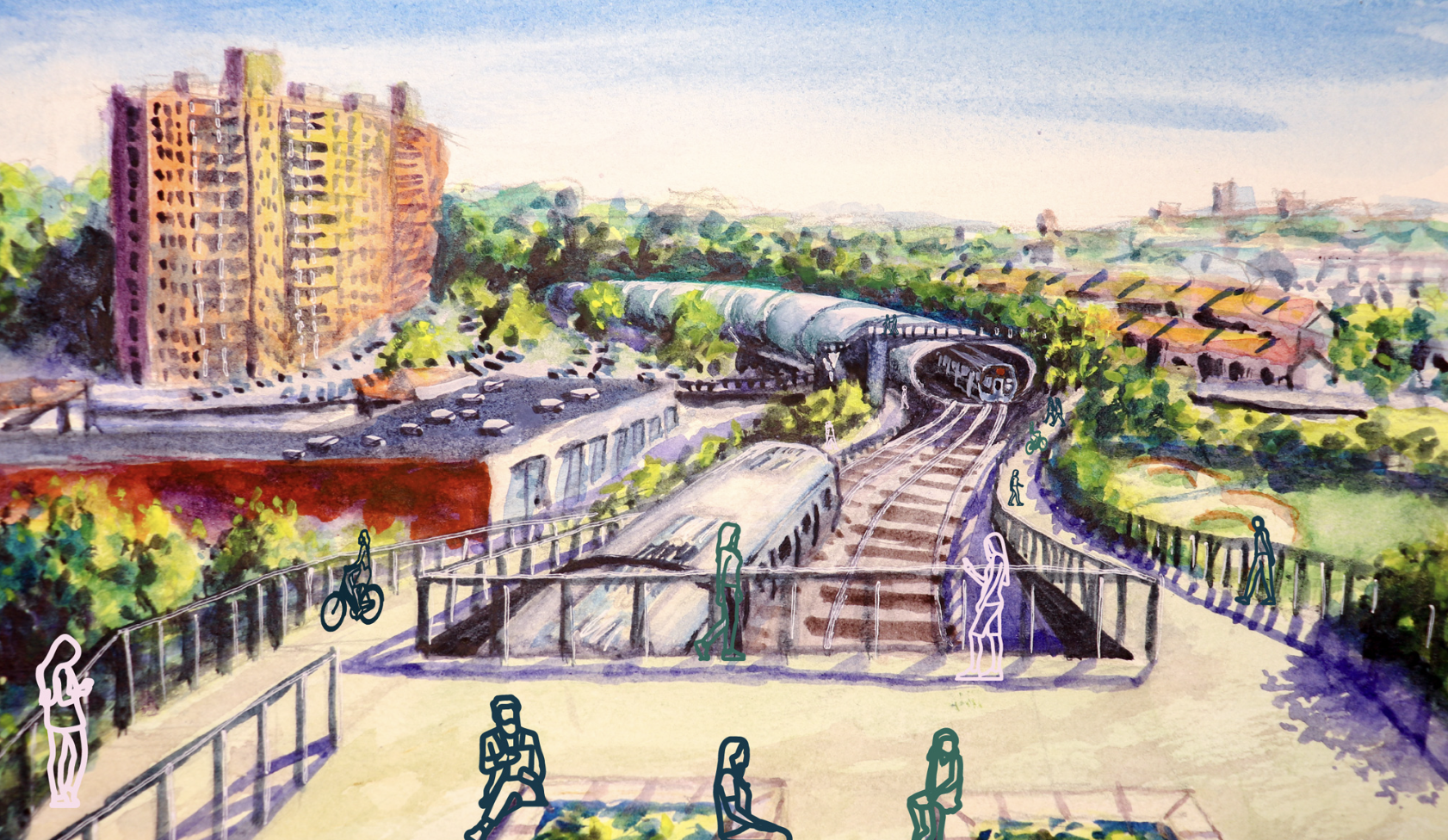
The QueensLink project is moving forward with three studies to gather more information regarding the feasibility of the ambitious transit project. Drawing via QueensLink
By Ryan Schwach
The group hoping to push along an ambitious plan to build a new train line in South Queens is moving forward with three studies it hopes will illuminate the potential benefits of the project.
Advocates behind the QueensLink said Wednesday that they are contracting three concurrent studies “designed to bring the project's economic, housing, and community engagement dimensions into sharper focus.”
Funding for the studies comes from a $500,000 grant from the federal government.
The hopes for the ambitious QueensLink have dwindled in recent months, as the MTA continues to leave the project off future plans and as the Mamdani administration pledges more funding to a greenway project known as the QueensWay that's planned for the same area as the transit proposal.
The studies will focus on the regional economic impact of the project, how it will affect local housing and community engagement.
“On behalf of Queens residents, we thank USDOT and New York State for funding these studies,” said Rick Horan, the executive director for QueensLink. “This new data will show how reconnecting Queens with rails and trails will benefit more than 75,000 commuters and makes the case to include QueenLink in MTA’s 2030-2034 Capital Plan.”
The Regional Economic Input/Output Analysis study will “measure the direct, indirect, and induced economic impacts of QueensLink's construction and operation on Eastern Queens and the surrounding region,” QueensLink said.
The housing study will look at local housing stock and assess demographic and market trends to investigate the risk of displacement longtime residents may face. The third component, the Community Engagement Plan and Program Delivery initiative, will take a different path. It will solicit and gather ideas from firms and individuals experienced in community engagement and advocacy work.
The three studies will run concurrently.
Although many local officials are beginning to focus on the potential of QueensWay, which is close to having shovels in the ground, some are still interested in what the QueensLink could bring should political will around it change.
“When it comes to speeding up commute times for Queens residents and expanding our city's public transportation network, we must leave no stone unturned in creating opportunities to do exactly that,” said Queens Borough President Donovan Richards, who recently included more funding for QueensWay out of his own budget. “For families in transit deserts across South Queens and Rockaway, that means identifying more options beyond just driving or riding the bus along Woodhaven and Cross Bay Boulevards. I look forward to reviewing the results of these studies, which will greatly inform how we move forward in making Queens a more navigable borough for all.”