City’s emergency response in isolated Queens communities criticized by Council
/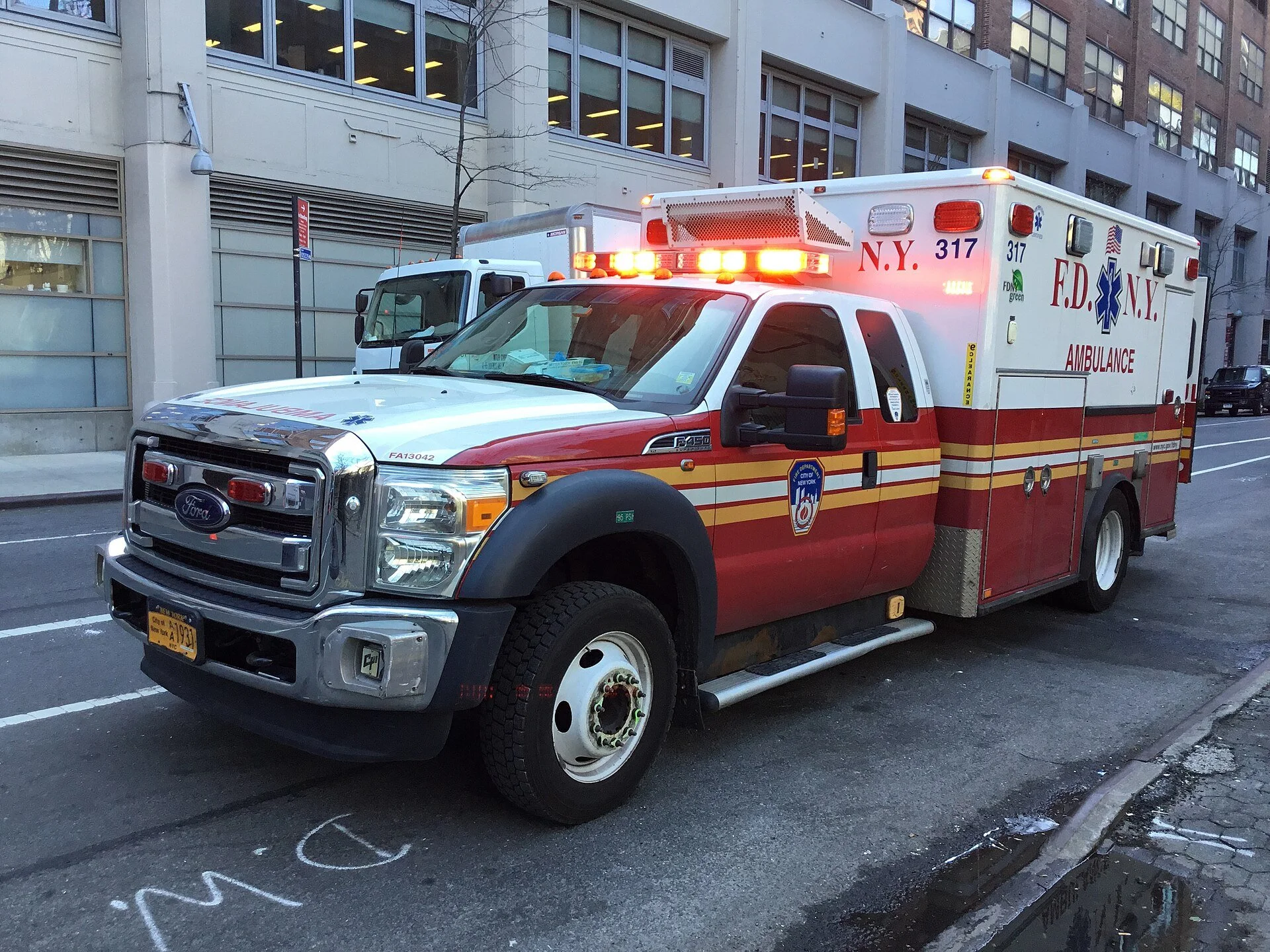
Local Queens officials want more available emergency resources, like EMS, in the far-flung areas of Queens, like the Rockaways. Wikimedia Commons photo by Kidfly182
By Ryan Schwach
Earlier this summer, a 33-year-old man who had allegedly just killed his mother and sister set off an explosion in his Queens home amid a violent standoff with police.
The July 25 incident, which resulted in the man being shot by cops, displaced more than two dozen residents on the isolated residential street of Ocean Crest Boulevard in Far Rockaway.
In the aftermath of the chaotic scene, local officials took issue with the city’s management of the chaos and the lack of assistance given to local victims.
“We had a number of families that were impacted, and the response felt very scattered, and the resources very bare,” said local Queens Councilmember Selvena Brooks-Powers on Wednesday. “On the ground we didn't feel the response. Obviously, FDNY and PD were there, but in terms of an effort to address the crisis at that moment on the ground, at the magnitude that was felt by the people impacted, that was not present.”
Brooks-Powers’ remarks came during a City Council hearing held Wednesday intended to gather more information about the city’s ability to respond to emergencies in its most isolated and far-flung communities, like the Rockaways in Southeast Queens.
She said the July incident is an example of the broader logistical problems that arise when the city attempts to respond to crises in an isolated and resource-strapped community.
“Our far-reaching neighborhoods of our outer boroughs can present challenges for first responders and other city entities that provide support services at the scene of emergencies,” said Rockaway’s other councilmember, Joann Ariola. “A central component to a well-functioning city is a local government that prioritizes the prompt, effective and efficient provision of emergency services to its residents.”
The incident in July served as evidence of that resource gap, the councilmembers said.
“It raised the concern once again, in terms of what type of resources exist for geographically isolated communities such as the Rockaways,” Brooks-Powers said. “We depend on mainland resources to be able to get to us.”
The Far Rockaway and Southeast Queens representative said that the chaos of the scene, which was simultaneously a shooting, a fire and a potential hostage situation, led to confusion between the various responding agencies.
One family, a mom and five children, who lived upstairs from the scene, said they felt like hostages and struggled to get the resources they needed once the dust of the scene settled.
“For a very long time, she and her kids were pretty much not permitted to leave their apartment upstairs, having to step over blood and dead bodies after,” she said. “To this day, that constituent has felt like there has not been enough done for her and her family in terms of dealing with the trauma or treating them as the victims of what transpired.”
During the hearing held by the Committee on Fire and Emergency Management on Wednesday, the city Office of Emergency Management and the FDNY defended the response, but admitted it was a complicated situation.
“It's my understanding that the Red Cross was dispatched earlier, since it was an active crime scene and there were other things going on,” said NYCEM Commissioner Christina Farrell. “They were not able to access the property earlier in the day.”
“We can always do a better job of communicating,” Farrell added.
The agencies also admitted that the isolated nature of the Rockaways and other communities in the city do present certain challenges.
“The isolation and limited access routes lead us to treat these areas as special cases to ensure residents remain safe, even if not directly impacted by a particular hazard,” said Farrell.
One of NYCEM’s citywide incident coordinators eventually arrived at the scene, but Farrell said that on a typical Saturday afternoon, for instance, only three might be working and helping to coordinate responses citywide.
“We have limited resources, just the nature of the way we're set up across the agency,” she said.
The city’s Fiscal Year 2027 budget includes funding for 10 additional citywide incident coordinators. Brooks-Powers suggested one should be specifically assigned to deal with emergencies in the Rockaways.
“It would be good to have one designated, even though you have one for the borough, because realistically, to get from Astoria to Rockaway takes an extremely long time,” she said.
Rockaway’s isolation from resources is most often tested during medical emergencies.
Around 60 percent of EMS agencies nationwide report insufficient staffing to meet local needs, according to the New York State Senate. The city is no exception, experts say.
“In New York, we do have an issue with retention,” said Chief of EMS Operations Paul Miano. “We are below headcount.”
In 2025, EMS’ average response times to the most serious, life-threatening medical emergencies increased by nearly two minutes compared to the year prior, according to the mayor’s management report.
While response times in the peninsula are lower than the citywide average, according to the department, the number of available ambulances can cause difficulties.
There isn’t a trauma center in the Rockaways, so if ambulances are busy taking a patient to mainland Queens, Brooklyn or Long Island, it could take longer for one to become available.
“There are moments where we don't have an ambulance on the peninsula because if there's a trauma incident, they have to go out to Cohen’s [Children’s Hospital] or to Jamaica Hospital and they get called in that area, it takes even longer to come back to the peninsula,” said Brooks-Powers.
To counter the delays, EMS said they use “redeployment,” which means if an ambulance leaves the Rockaways to bring a patient to a mainland hospital, it is deployed back to the peninsula rather than around the hospital where it delivered the patient.
Ariola, who chairs the committee, said the city needs to do more to pay and fund EMS.
“The need for this administration to really focus on EMS and on FDNY, but specifically EMS to make sure that they are getting a living wage, so that you can retain people in EMS and you can put more ambulances on the street,” she said. “Because without EMS workers there, are them leaving for better jobs, whether it's the fire department or the the sanitation or to the private sector, you can't put the ambulances out, and if the ambulances can't get out, they can't get to Arverne, and they're not getting to Breezy Point.”
Ariola currently has a bill in the Council that would help notify New Yorkers when ambulances are delayed or unavailable.
The Minutes Matter bill would require the city to send out a notification whenever FDNY and EMS are experiencing a backlog and don’t have enough ambulances to respond to emergency calls.
“If there are dozens of emergency calls sitting in a queue because there simply aren’t enough ambulances available to answer them, New Yorkers have a right to know,” Ariola said earlier this year. “We issue alerts for severe weather, air quality, flooding and other emergencies because information allows people to make better decisions. An EMS backlog should be no different.”