
After controversial cuts, nonprofits to return to Rikers Island
/
A number of social services programs provided by nonprofits will return to Rikers Island after being cut by Mayor Eric Adams in 2023. Photo via Petey Greene Program
By Jacob Kaye
More than two years after city jail officials cut off nonprofit-led social services at Rikers Island, several organizations are set to return this month to provide new programming inside the troubled jail complex.
The four nonprofits will offer educational, reentry, therapeutic, and substance misuse programming to the more than 6,800 detainees on Rikers Island. The programming is designed to reduce recidivism and slim the jail’s population, which is nearly 3,000 people too large for the borough-based jails expected to replace Rikers in the coming decade.
For the past several years, similar services have been facilitated by the Department of Correction, which took over programming duties after Mayor Eric Adams and his former DOC commissioner, Louis Molina, ended a $17 million contract with five social service nonprofits working in the jails in 2023. Though the DOC said the controversial switch would have no effect on detainees, data suggested otherwise. Program participation plummeted, and jail officials said that, a year after the cuts, they were unable to provide detainees with the legally required five hours of programming a day.
The new programming, created through a pitch-driven city contracting process, nearly restores the $17 million cut, which at the time accounted for less than one percent of the DOC’s $1 billion budget. Together, the new contracts, which were registered with the city in December, will cost the agency $42.29 million over three years, or around $14 million per year. Adams first announced the city would attempt to revive the programming in March 2024.
The nonprofits will resume their programming throughout February.
The programming will undoubtedly be welcomed by the new head of the DOC, Stanley Richards, who was appointed by Mayor Zohran Mamdani to serve as DOC commissioner on Saturday. Before taking the top DOC role, Richards worked as the president and CEO of The Fortune Society, one of the providers returning to Rikers.
Richards was critical of the cuts when they were made in 2023.
“Having an outside provider coming in to provide services is a way for people to stay connected to what happens in the outside world,” Richards told the Eagle at the time. “When they eliminated all of the nonprofit service providers, they eliminated that contact.”
“That cannot be replaced by DOC because [detainees] are going to see DOC as the people who are responsible for their detention,” he added. “And that's a problem.”
The nonprofits’ return was supported by Richards’ predecessor, former DOC Commissioner Lynelle Maginley-Liddie, who was appointed to the role by Adams in December 2023. Several months after Maginley-Liddie first began her work as commissioner, she urged several nonprofits to bring their programs back to Rikers – a request they obliged for free.
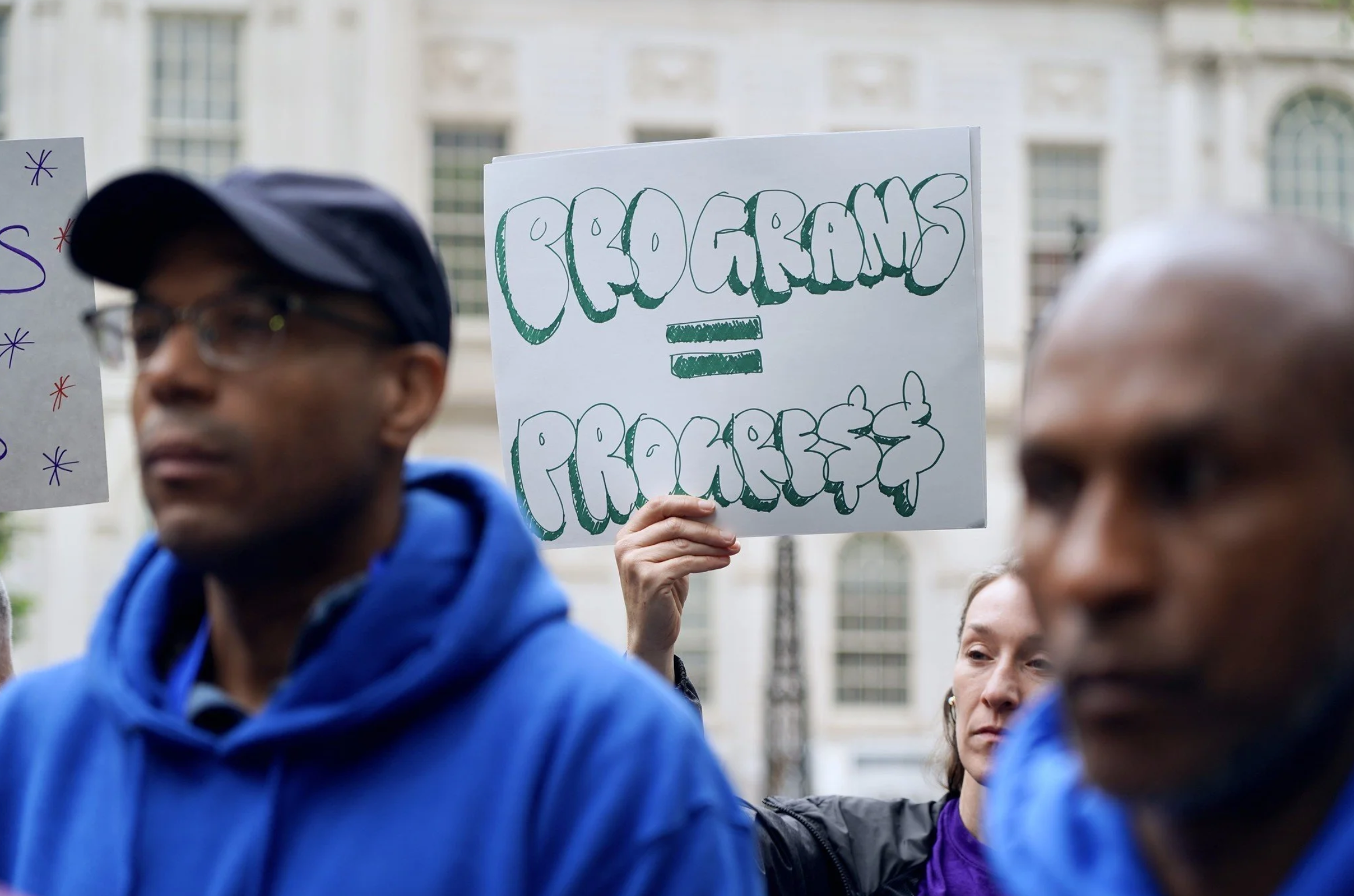
Advocates protested cuts made to nonprofit programming on Rikers Island in 2023. At the start of 2026, similar programs will return to the jails. File photo by Gerardo Romo/NYC Council Media Unit
The new programming was created and will be facilitated by The Fortune Society, The Osborne Association, FedCap and The Petey Greene Program.
The four nonprofits – three of which operated on Rikers Island under the previous $17 million city contract – won the current contracts through the relatively new Challenge-Based Procurement process, which was first rolled out in New York City in 2024.
Rather than putting out a bid for a specific type of program, the city called on applicants to propose plans for meeting some of the challenges incarcerated New Yorkers face.
The Petey Greene Program won the contract for its plan to provide supplemental education programming on Rikers. The nonprofit will prepare students to take the high school equivalency exam, help them earn college credits, and offer tutoring to the general population in the jails.
The Fortune Society won both the DOC’s substance misuse and transition planning contracts. It will offer group programming and wraparound services for detainees with substance misuse issues and open sober living communities inside several of the jails on Rikers Island.
The nonprofit will also be tasked with running reentry programming, helping detainees complete transition plans for when they depart the dangerous correctional facility. FedCap will offer similar services and also provide transportation to recently released detainees who need a way to get to community-based social services.
The Osborne Association was given the trauma-informed care contract and will facilitate group programming through a trauma-informed lens, according to the city. The agency will also train DOC staff in trauma-informed care.
“These contracts are vital to ensuring that people who are incarcerated have access to meaningful, evidence-based support as they prepare to return home,” Randi Rothschild, the chief program officer at The Fortune Society, said in a statement. “These programs save lives by addressing substance use, trauma, and reentry needs when they matter most.”