Board of Correction details lapses before Rikers deaths
/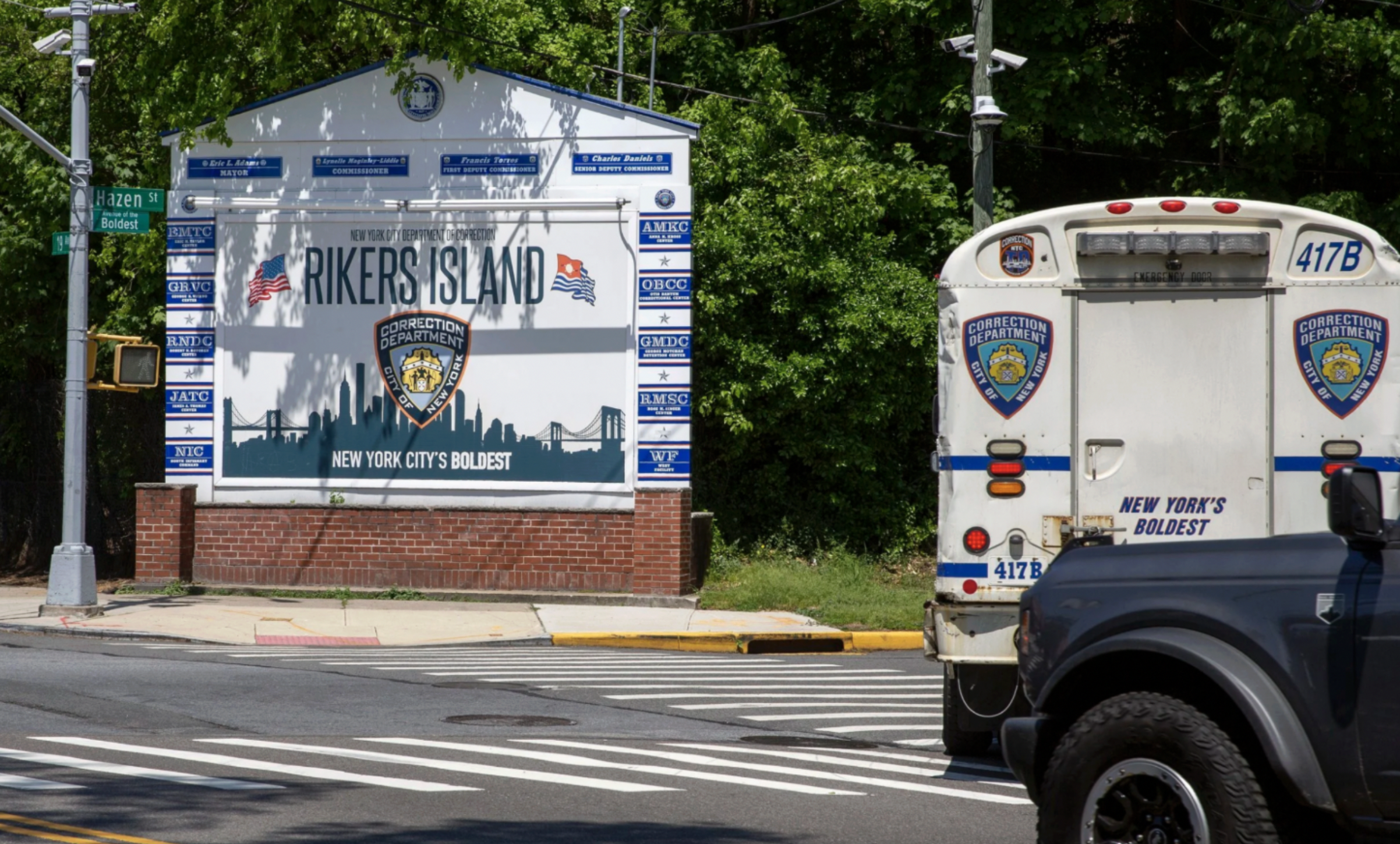
The Board of Correction issued a report this week on the findings of its investigations into seven of the 15 deaths in Department of Correction custody last year. AP file photo by Ted Shaffrey
By Jacob Kaye
Jail watchdogs found that correctional officers and medical staff on Rikers Island abandoned their posts and failed to check in on suicidal detainees in the lead up to a number of deaths in the dangerous jail complex last year.
Uniformed correctional officers left their assigned posts without notifying their supervisor before two of the seven detainee deaths detailed in a recent report from the city’s Board of Correction. The oversight board also found that officers failed to pass along information about suicidal detainees to medical staff and that the Department of Correction didn’t fully staff housing areas meant for those with serious mental illnesses.
The BOC report covers a little more than half of the deaths that occurred on Rikers Island last year.
In total, 15 people died in Department of Correction custody in 2025, the most since 2022, when 19 people died while under the DOC’s watch.
The breakdown of protocols and general dysfunction in the DOC that appeared to proceed many of the deaths are not new. The BOC issued a report on the first five deaths in DOC custody of 2025 in November, finding many of the same issues in the lead up to the fatal incidents.
Similar findings were reported by Steve J. Martin, the federal monitor appointed by a judge to track conditions on Rikers Island. Martin said in a report earlier this month that while “not every death in custody can be prevented, it appears that in at least 12 of the 15 deaths, poor operational and security practices were identified, including [detainee] access to illicit substances, inadequate supervision, and lapses in security and medical care.”
Of the seven detainee deaths investigated in the latest BOC report, three died by suicide and two died of an overdose. One man died of cancer and another’s cause of death has yet to be determined.
In each of the suicide cases, officers allegedly failed to adhere to the protocols that detail how officers are supposed to monitor and support detainees with mental illnesses.
Benjamin Kelly, a 37-year-old from Queens, died on Rikers on June 20, a little less than a month after he was brought to the jail.
Before his arrest, Kelly had been hospitalized for schizoaffective disorder and bipolar disorder 50 times. His longest stay at a hospital came to an end a week before his arrest.
He was placed in a mental observation housing area where he appeared to struggle. During his first week in jail, Kelly was seen banging his head against a wall and stretching his arms with an unknown object. He was then placed on suicide watch.
While in a de-escalation unit, Kelly allegedly continued to harm himself and, at one point, told a doctor that he planned to buy a gun and kill himself.
For the next several weeks, Kelly was shuffled in and out of mental health units. On June 20, he was moved to a new cell in the Eric M. Taylor Center on Rikers, where a suicide prevention aide was not on duty.
That afternoon, an officer required to conduct tours of the housing area walked by Kelly’s cell but did not look inside around 2 p.m., according to the report. An hour later, the officer walked by the cell again and noticed Kelly hanging by the neck from a linen sheet. The medical examiner later determined he died of suicide by hanging.
While no staff were disciplined in Kelly’s death, that wasn’t the case in the death of 33-year-old Edwin Quispe, who died on July 22.
Quispe was arrested on May 21, and told health staff when he arrived that “he heard and saw things that were not there,” according to the report. He was then placed into a general housing unit.
On July 14, Quispe allegedly slipped in a shower and hit his head on the ground. Though he filed a complaint and told officers about the incident, he was never brought to a doctor, according to the report.
On July 19, Quispe was placed into a different general housing area. Three days later, while Quispe was in his cell, the “A” post officer, who sits in a secure room inside the housing area, left their shift early without telling anyone. The “B” post officer, who is required to make rounds in a housing area, assumed the role of the “A” post officer, leaving the area without a “B” post officer, according to the report.
Shortly after the switch, Quispe got out of his bed and went into a bathroom. He allegedly spent the next three minutes near a shower, appearing to look up at something.
He then left the bathroom, went to his bed, pulled something out from underneath his pillow.
Quispe walked back to the bathroom and stepped beyond a shower curtain, taking him out of the view of a camera. About an hour later, a fellow detainee walked into the shower area and saw Quispe hanging from the shower bar.
He was pronounced dead shortly after.
The “A” officer who abandoned their post was suspended for 30 days for the incident.
Staff were disciplined in four of the seven deaths detailed in the BOC report this week, though all of the deaths remain under investigation by various oversight bodies and the DOC.
As a result of the ongoing investigations, the DOC declined to respond to specific details laid out in the report.