City’s Assigned Counsel Program in ‘state of crisis,’ new report claims
/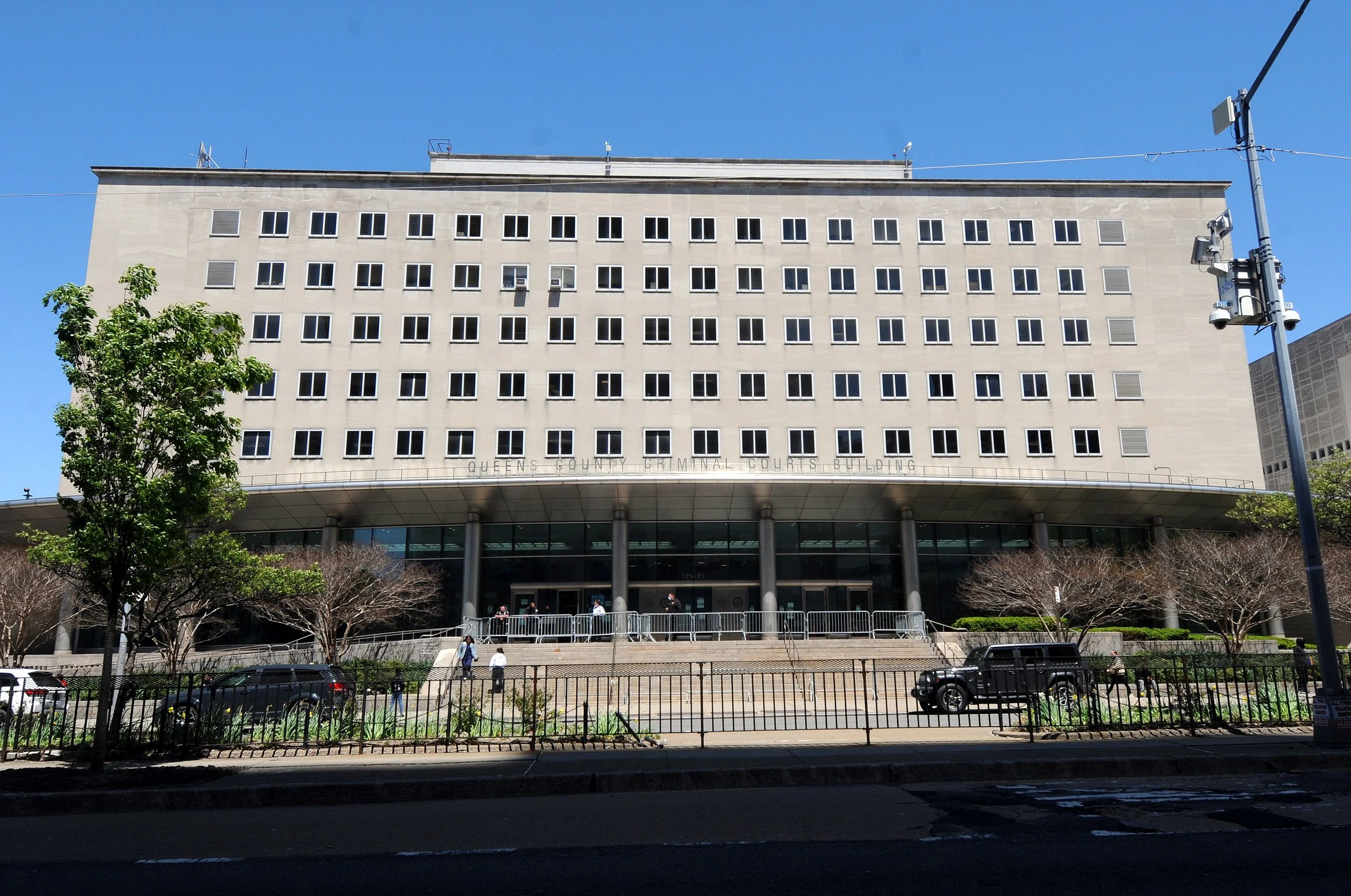
A new report from eight local bar associations says that over $50 million is sitting unused for the city’s Assigned Counsel Program. Eagle file photo by Walter Karling
By Noah Powelson
Legal advocates say indigent legal service providers are in a “state of crisis,” yet a new report shows that tens of millions of dollars in already allocated state funds aren’t being used to support them.
Eight local bar associations released a joint report this week that found the city’s Assigned Counsel Program – which provides attorneys for New Yorkers who can’t afford one during their criminal cases – has not been able to access over $50 million in allocated state funding.
The report, which was released by the Force on the New York City Assigned Counsel Plan, points the finger at the Mayor’s Office of Criminal Justice for their alleged inability to utilize the funds since 2018. MOCJ oversees the city’s ACP, and is responsible for seeking reimbursement for the program’s contracts.
According to the report, MOCJ has not accessed over $50 million of funds that the State’s Office of Indigent Legal Services, also known as ILS, allocated to them over the course of two contracts.
The first contract ran from April 1, 2018 through June 30, 2023, in which ACP was allocated approximately $33 million for administrative expenses. Funds were allocated for staff positions, quality improvement measures, a mentoring program, training, office equipment and other expenses.
The second contract runs from July 1, 2023 through June 30, 2026, and allocates $34.5 million to the ACP for similar expenses.
Under the contract terms, in order to access the funds, MOCJ must incur expenses and then submit reimbursement claims. But according to the report, MOCJ did not submit a single claim for the first two and a half years of the first contract.
MOCJ made their first claim in August 2025, according to the report, but the vast majority of the claims were for the salaries of ILS-funded ACP staff. The report says that MOCJ has yet to begin the implementation of quality improvement initiatives, or work with ACP to fill the 34 open staff positions in their current contract.
“It is clear that MOCJ cannot access the vast majority of funding because it has largely not
incurred the relevant expenditures in the first place,” the report reads. “By failing to make any sort of positive change in the way ACP representation is provided, MOCJ has thwarted the ACP’s legislative mandate and failed hundreds of thousands of low-income individuals accused of crimes.”
The coalition said they would release a second report in the future that would include reform recommendations for ACP. But the coalition has already made one recommendation clear – ACP should be taken out of MOCJ’s oversight.
“The Task Force has concluded that the ACP must ultimately be restructured outside of the MOCJ under an independent governing board consistent with ILS and ABA principles,” the report reads. “That process will take time, and immediate steps must be taken to stabilize and strengthen the ACP now.”
The coalition called on the city to make use of all available state funds, approve pending positions, and expedite hiring for open positions to address administrative problems within ACP as the program’s future remains up in the air.
In a statement to the Eagle, a MOCJ spokesperson said the agency is in agreement with many aspects of the report, including that ACP contracted attorneys provide important service and that ACP needs restructuring. The spokesperson also said the solutions presented in the report, however, were short term in nature and would complicate the future of ACP.
“Addressing some of the organizational challenges identified in the report with immediate ‘fixes’ — such as doubling the current administrative staffing — would further complicate that restructuring and chances for long-term success,” the spokesperson said.
The spokesperson said MOCJ is continuing to access allocated funds, hiring more ACP staff, and is in active conversations with the task force on potentially separating ACP from MOCJ. But what that reorganization may look like, the spokesperson said, is still unknown.
“There are many challenges that face the ACP, but we have welcomed the task force as a partner and we are proud of our work thus far to improve the ACP's ability to respond to the needs of vulnerable New Yorkers,” the spokesperson said. “We look forward to hearing more from the task force about their ideas for long-term solutions toward restructuring.”
Assigned counsel attorneys, otherwise known as 18-B attorneys, represent low-income clients and children and are paid by the state or the municipality in which they practice. Assigned counsel panels throughout the state have struggled for years to recruit needed attorneys as they have historically been paid far less than their federal counterparts in private practice.
Unlike other federal and state-employed attorneys, 18-B attorneys do not have a pay structure that increases wages over time.
New York State was sued by multiple entities in 2022 and 2023, including the New York City Liberties Union and the Assigned Council Committee of New York, who argued that inadequate pay rates violated the constitutional rights of vulnerable populations by compromising the quality of their legal representation.
The lawsuits and ongoing pressure from the state’s legal community eventually led to one of the first pay increases for 18-B attorneys in Governor Kathy Hochul’s 2024-2025 state budget. The increase put the wages of New York’s 18-B attorneys on par with what federal assigned counsel attorneys made at the time – $158 per hour.
In the years following the pay raise, 18-B attorneys have reported it has given some relief, but the need for more attorneys remains high as panels juggle hundreds of cases at a time.
But Wednesday’s report highlights that uncompetitive pay and high caseload is not the only issue assigned counsel attorneys face.
“The New York City Assigned Counsel Program administration is in a state of crisis,” the report states. “The administration of the ACP fails to meet the ILS and [American Bar Association] Standards. The ACP administration lacks independence, proper governance, and sufficient staffing to provide panel attorneys with the requisite level of support, training, mentorship, and access to experts and specialized professionals set forth by ILS and the ABA.”
“These shortcomings are not merely administrative: they risk undermining the constitutional right to counsel and perpetuating unequal justice across the city,” the report added.