Confusion and catharsis as Queens bus redesign rolls into final stop
/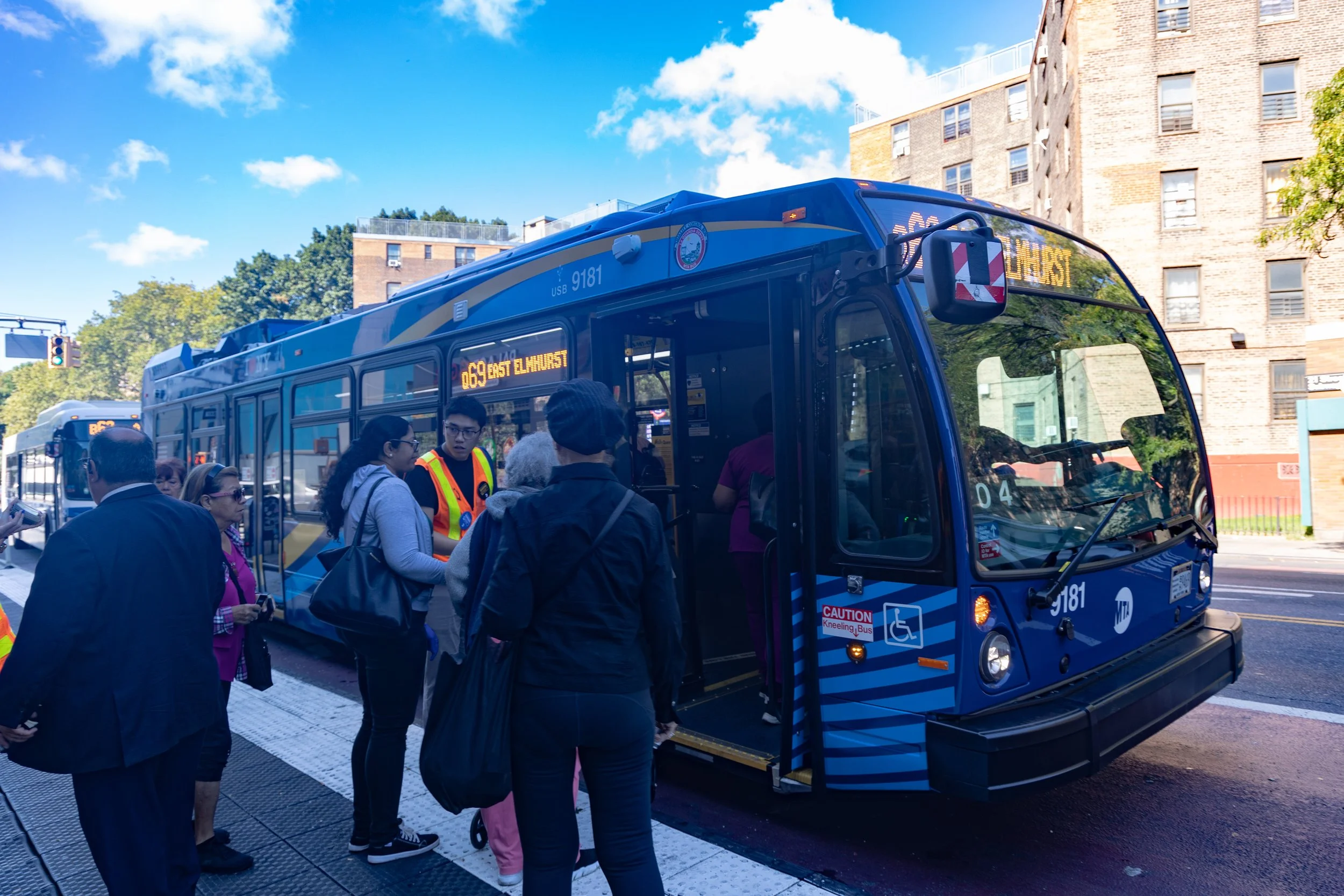
While most commuters are settling into changes, some locals are confused amid MTA bus route changes in Queens. Eagle photo by Ryan Schwach
By Ryan Schwach
On a busy corner adjacent the Queensbridge Houses, Queens straphangers got on a bus as they had many mornings before.
But on Tuesday, some, much to their frustration, had little idea where they were going.
This week, the MTA is rolling out the second and final phase of the implementation of their redrawn Queens bus maps. The rollout marks the end of an arduous 6-year process to rework the borough's bus routes with the goal of making buses faster and more frequent.
Though the MTA sees it as the last stop on a long and tricky commute for the agency, it is likely that locals and elected officials will have more to say before the book is finally closed on Queens’ bus redesign.
At the intersection of 21st Street and 41st Avenue in Long Island City on Tuesday, MTA brass celebrated the auspicious end to their toil over the bus map – a process that spanned over half a decade and included several poorly received maps – but some locals boiled over their new commute.
“It is very confusing,” said Bianca Abraham, who was waiting for a bus outside Queensbridge on Tuesday, her first day of retirement after a career of driving school buses. “I was getting ready to take a bus from point A to point B. And now I don't go from point A to point B. I have to take two buses.”
Abraham, who was not aware of the changes before being told about them by MTA employees Tuesday, would usually take the Q102, but as part of the changes, her stop at the intersection was scrapped.
She now has to take the Q66 to 35th Avenue, then walk to a different Q102 stop down the road.
The elimination of the Q102 at the 21st Street/41st Avenue intersection was causing headaches for several riders on Tuesday.
“I don't know what bus to take to get to where I got to go,” said Jaqueline Davis, a Queensbridge resident and usual Q102 rider, who already has to walk from one end of the NYCHA development to the other to get the Q102. “I’m just confused.”
Both ultimately got on the Q66 to then make the transfer to the Q102, but they were not alone in their confusion.
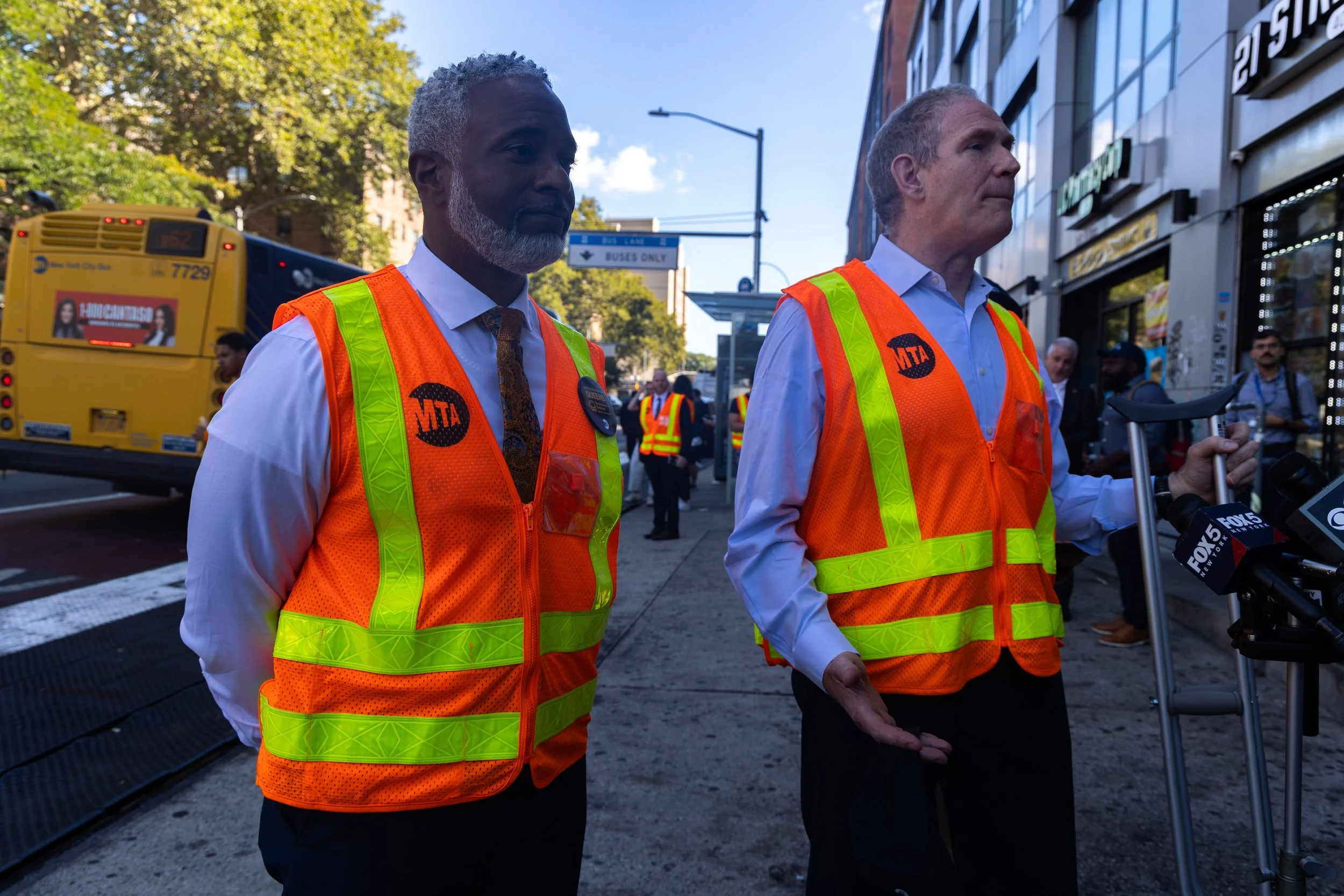
MTA CEO Janno Lieber and Transit President Demetrious Crichlow helped roll out the second and last phase of the Queens Bus Network Redesign in Long Island City on Tuesday. Eagle photo by Ryan Schwach
“There has been some confusion, questions about the redesign,” said Queens State Senator Kirsten Gonzalez, who spoke alongside MTA brass on Tuesday. “But even in working with the MTA team on this, we know that it is working towards a goal of more frequent service.”
For the most part, riders seemed to know where they were going, and some said they had seen the MTA out both this week for phase two and earlier in June, when phase one was rolled out.
“I think the MTA is doing a good job in making people aware of the changes,” said Jamaica resident Fared Rais, who was finishing his commute to Astoria on Tuesday. “They're putting all the promotional stickers inside the buses outside the MTA, briefing the people, giving the brochures, all those things to make the people aware of the changes.”
Rais said he was aware of the changes during the two phases, but admits there was some confusion. Earlier this summer, his bus blew past his stop because he didn’t realize there was no longer a stop there.
“It takes some time for the people to get aware of the changes,” he said.
Making riders aware of the changes has been the MTA’s main focus since the maps were officially finalized in January.
The agency has deployed workers to bus stops with notable differences throughout the borough, whose job it is to hand out flyers and inform riders on the changes and clear up any of the confusion or frustrations with route and stop changes.
“Everybody needs information. Nobody is reading the newspaper and watching TV to find out about this every day,” MTA President and CEO Janno Lieber said in Long Island City on Tuesday. “That's why we're out… that’s why we have 4,000 people out here talking to people one by one.”
“So far, it's going really well,” he added, saying that the number of complaints have overall been low.
Lieber admitted though that people like the folks confused over the missing Q102 stop may not have gotten the memo and will need to be informed about the changes.
“There are always people who haven't gotten the word yet,” he said. “What we try to do is just share information, provide them with details on the buses that they ride, and to make sure that they understand that the goal is to give them better service, faster service and more service.”
Prior to the MTA board’s approval of the maps earlier this year, the MTA’s own ride to this stop has been riddled with potholes, missed stops and detours.
Initially, the MTA set out to redraw Queens’ complicated bus map – which is the biggest bus system in the country – before the pandemic.
That plan was ultimately scrapped by the city following a monumental amount of backlash from the public and elected officials.
Two other attempts in the last two years saw a similar fate, ultimately resulting in this final draft, itself the culmination of over 20,000 public comments and over 300 public input sessions over the last several years.
Most of the negative input on the final maps were over the elimination of certain stops, which the MTA did to increase bus speed. In some cases, it has made commutes longer, adding a longer walk to the bus stop for some riders, like those confused outside Queensbridge on Tuesday.
The final plan includes a total of 124 routes, 11 more than the initial map. It also features 94 local routes and 30 express routes.
Queens Borough President Donovan Richards, who has long described the redrawing process as “perfectly imperfect,” applauded the MTA’s efforts in a statement on Tuesday.
"With 800,000 daily bus riders here in Queens — double the daily bus ridership of Chicago — it understandably took years of careful planning, community conversations and meticulous design in order to modernize our bus network in The World's Borough,” he said. “But now that the final phase of the redesign has been implemented, I'm confident that our commutes home, to work, to school and to wherever else we need to go will be faster than ever. A modernized, more sensible bus network is what our families have always deserved, but there will always be tweaks worth making.”
“I look forward to hearing from them on the effectiveness of the plan in the months ahead, as well as working with the MTA ahead of its 2026 analysis as we make this new network as smooth as possible,” he added.
While the MTA’s new Queens bus maps are finalized and approved by the MTA board, it still may not be the end of the redrawing.
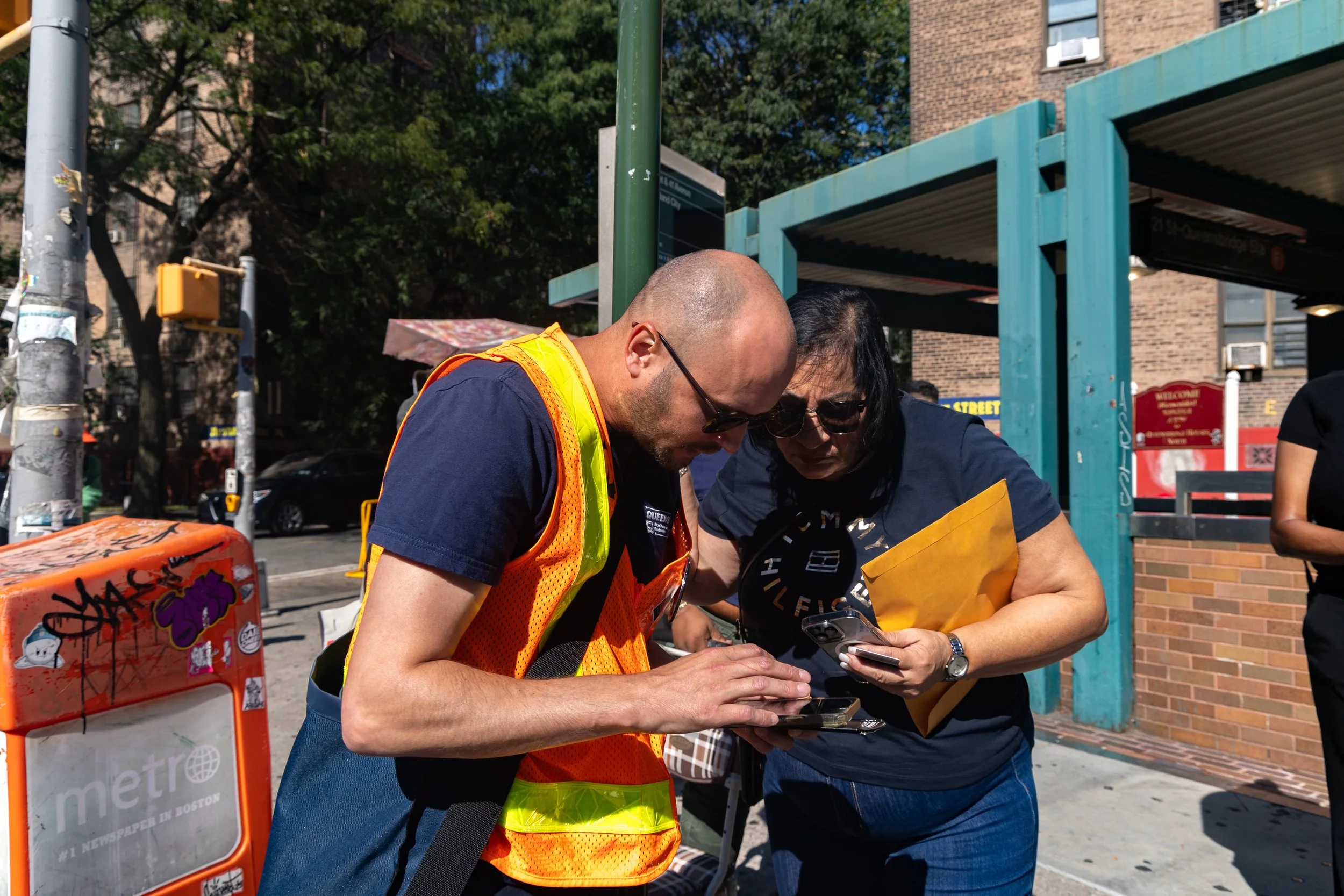
The MTA has deployed customer ambassadors to help commuters, like Bianca Abraham (right) understand the changes to their bus routes. Eagle photo by Ryan Schwach
For the next several months, the MTA will be monitoring the changes brought on by the redrawing with the expectation that they will need to make tweaks, and they already have.
Just this month, the MTA had to reinstate a bus stop in Woodside that was removed by the plan after intense local backlash.
Spurred on by uproar from locals and Assemblymember Steven Raga, the MTA put back the Q32 stop on Roosevelt Avenue and 58th Street adjacent to a popular church and well known watering hole, Donovan's Pub.
“The MTA has worked with stakeholders in Woodside to understand concerns with the proposed removal of the Q32 bus stop pair on Roosevelt Avenue and 58th Street, and after a thorough analysis those bus stops will remain given the need to access local businesses and a church along a sloped portion of Roosevelt Avenue,” the MTA said in a statement following that issue.
Other officials like Gonzalez will be keeping tabs on the roll out.
Wearing a Queens Bus Network Redesign hat, the senator told Eagle that the MTA will need to educate community members and listen to locals and representatives on where some issues may lie.
“It is going to be a continued effort between us and them to make sure that all of the feedback is captured,” she said. “In cases where things have not worked as they are intended, it is 100 percent our job to meet with the MTA and see if anything can be done to correct it.”
For a full look at the route changes, go to www.mta.info/project/queens-bus-network-redesign.