Civil legal services in dire need of funding in face of budget cuts, officials say
/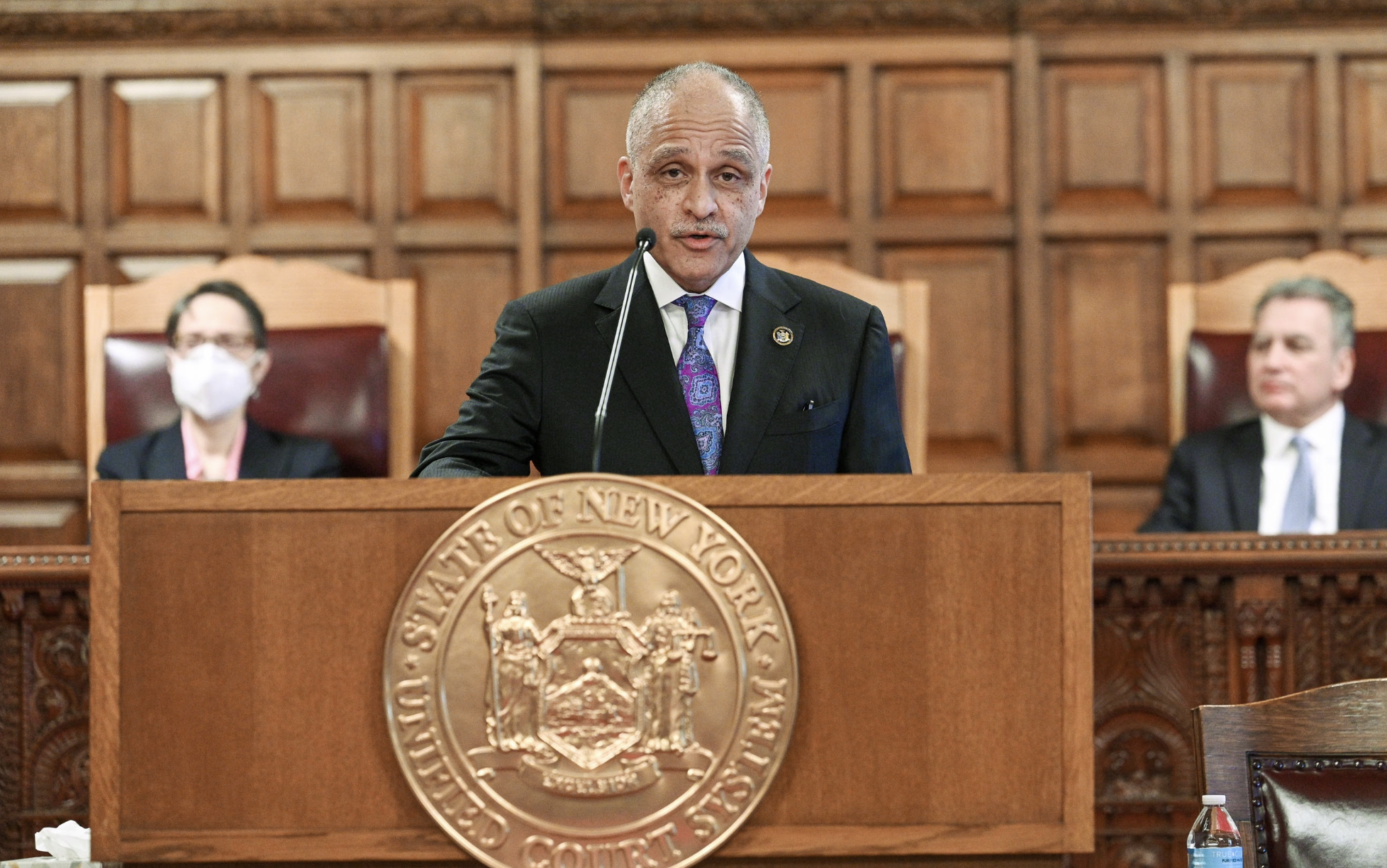
Chief Judge Rowan Wilson held an annual public hearing addressing the needs of civil legal services in the face of mounting federal cuts.Photo by David Handschuh/Unified Court System
By Noah Powelson
New York’s court leaders have called for expanded civil legal services for years. But in the face of massive federal funding cuts for social services enacted earlier this year, they said last week that the funding has never been more desperately needed.
Court officials throughout the state gathered in Albany last week to hear from a series of experts and panels about the state of civil legal services in New York, and where the gaps in representation access still persist.
Chief Judge Rowan Wilson led the panel, along with Chief Administrative Judge Joseph Zayas, New York State Bar Association President Kathleen Sweet, and the presiding justices for the four appellate departments, Dianne Renwick, Hector La Salle, Elizabeth Garry and Gerald Whalen.
Echoing comments made in years past, Wilson said New York continues to be a national leader in expanding funding for civil legal services, but gaps still exist. Those gaps are only more likely to expand, experts said on Thursday, after President Donald Trump’s One Big Beautiful Bill cut federal funding for food stamps, Medicare, Medicaid and other social services.
“As the federal government continues to cut funding for central programs and services, many of us draw some measure of comfort because we live in New York,” Wilson said. “It may feel like we have some protection from the federal entrenchment happening all around us…Everyone here knows that there is a tremendous amount of work still to do in both the state and the nation to close the gap in access to civil justice.”
In 2023, New York’s Permanent Commission on Access to Justice released a report that estimated an additional annual $1 billion would be needed to provide civil legal representation for individuals who are at or below twice the federal U.S. poverty line. This estimate included the representation costs for matters of housing, health care, family issues, education and consumer debt.
Already an astronomical undertaking that would take years of advocacy and legislative policy changes, the prospect of bringing in more funding has begun to seem even more daunting, said Christine Fecko, the executive director of the New York State Interest on Lawyer Account Fund, otherwise known as the IOLA Fund, the public judiciary fund that often provides grant funding to legal non-profits that represent low-income New Yorkers.
“Recent and anticipated additional federal funding cuts and restrictions pose a serious threat to the civil legal services safety net in New York State,” Frecko said. “This moment requires urgency. The erosion of federal support for civil legal services threatens not only our sector, it threatens the bedrock principle of equal justice for all.”
Fecko said that IOLA partners received $137 million in federal funding this year, roughly 14 percent of all legal services funding in the state. Fecko also said these funds support over 50 organizations that provide representation for evictions, immigration, disability rights and many other matters.
The Legal Services Corporation, which is the largest federal funder for legal services, has told IOLA grantees to expect a minimum cut of 20 percent. Fecko said this loss would account for about $6.8 million.
But LSC is not the only funding source at risk. Fecko said that roughly 61 percent of New York civil legal services are funded with money received by the Department of Justice, the Department of Health and Human Services, and the Department of Housing and Urban Development.
While the full extent of current, pending and anticipated funding cuts and their impacts are not currently known, Fecko said the IOLA Fund’s own data analysis estimated up to $80 million of federal funding to New York civil legal services as “at significant risk.”
“The future of this funding is entirely unclear,” Fecko said. “The recent targeting of other safety net programs like Medicaid and SNAP, and the open hostility recently demonstrated towards the homeless population in Washington DC would suggest these grants are at high risk.”
Likewise, the recent cuts on the Internal Revenue Services and Department of Education makes it all the more likely these agencies will cut back on their own civil legal services grant programs, experts said.
According to Fecko, New York legal services organizations collectively served over 450,000 New Yorkers with legal problems in fiscal year 2025. Any funding cuts would have devastating impacts, she added, and would likely offset any progress made to close representation gaps in recent years.
“State dollars alone cannot backfill the scale of federal disinvestment we’re seeing,” Fecko said. “Without action thousands more New Yorkers, low-income families, people with disabilities, seniors, veterans and immigrants will be locked out of the legal system.”
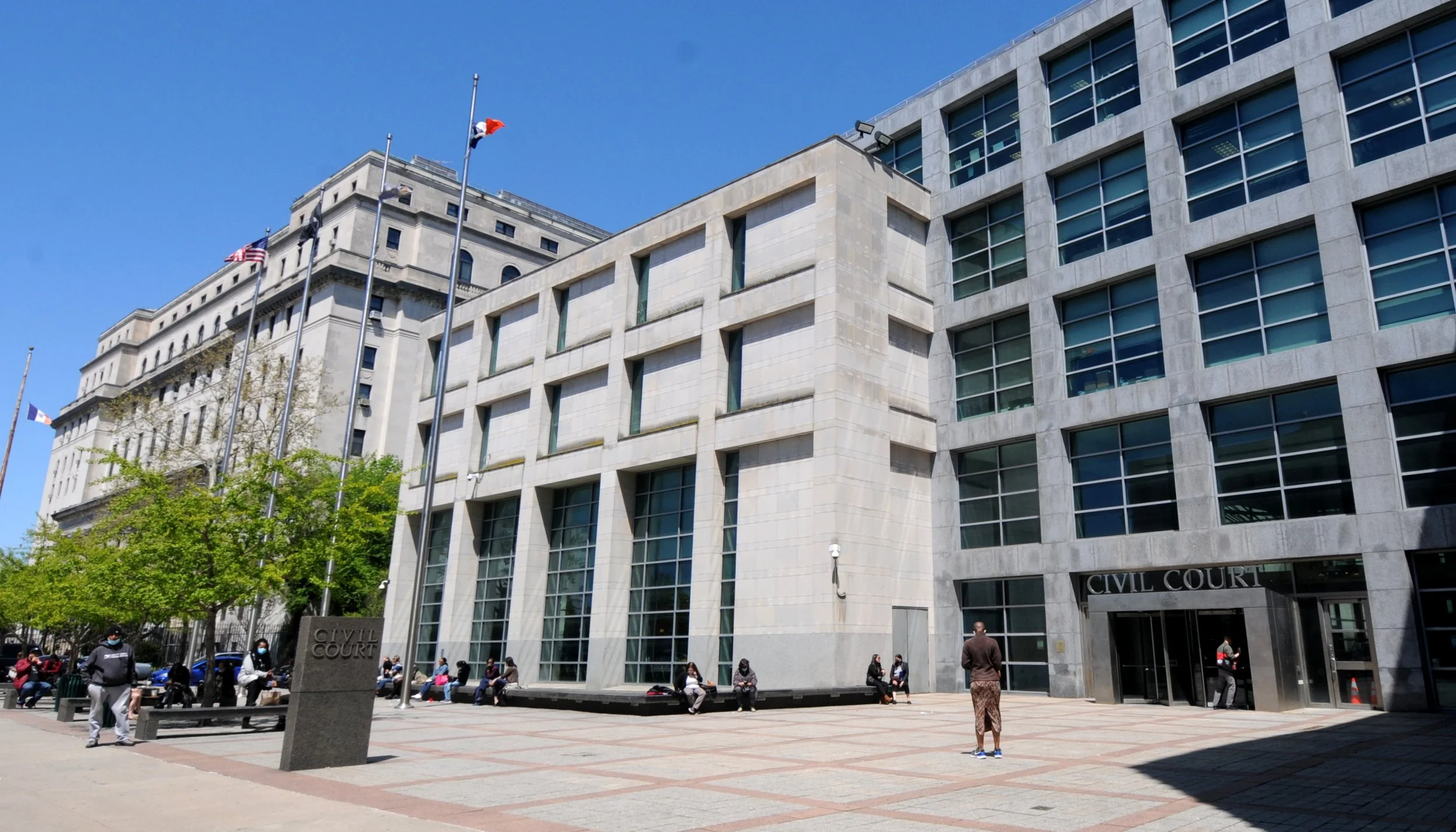
Court leaders gathered in Albany to discuss the current expected budget cuts to civil legal services in the current federal administration. Eagle file photo by Walter Karling
Whalen also warned that further cuts could have a domino effect as attorneys and organizations still providing legal services will lose resources and staff while facing increasing workloads and pressure.
“That pressure is going to build, it’s going to be maybe unbearable,” Whalen said.
The New York Unified Court System has enjoyed recent success in getting expanded state investments into its civil legal services. In the recently approved 2026 Executive Budget, state funding for UCS amounted to a $3 billion budget, marking the third year in a row the court system received more funding.
Civil legal services received a record breaking $150 million in funding, a $45.5 million increase from the previous year. Additionally, the Alternative Dispute Resolute program received $33 million, and the Attorney for the Child program received $6.5 million, a 35 percent increase from 2023.
But that investment is still far away from giving all low-income New Yorkers access to representation.
Addressing the judges, attorneys, and others gathered on Thursday, Wilson argued expanding legal civil services funding will pay itself back over time.
Wilson said civil representation helps New Yorkers avoid evictions, job losses, debt and having their families broken up, and that in turn takes strain off other safety net programs and organizations.
Citing studies published by LSC, Wilson said that every dollar spent on indigent legal services returns five to 10 dollars in avoided costs.
But the benefits of expanded funding are not just economical, Wilson said, it’s just as important to build trust in the courts. Democracy depends on the public’s belief in the rule of law, Wilson said, and any damage to the courts that erodes that public trust will thereby erode the foundations of democracy.
The most important way to build that trust is to make sure the most vulnerable have their fair day in court, according to the chief judge.
“For the rule of law to survive, people must believe in it,” Wilson said. “It is very hard to believe in a system that perennially stacks the deck in favor of the wealthy while leaving the less fortunate to fend for themselves.”
Correction: An earlier version of this story misspelled the name of New York State Bar Association President Kathleen Sweet.