‘NYC’s most underappreciated park’: Flushing Meadows Corona Park is underfunded and underused, report says
/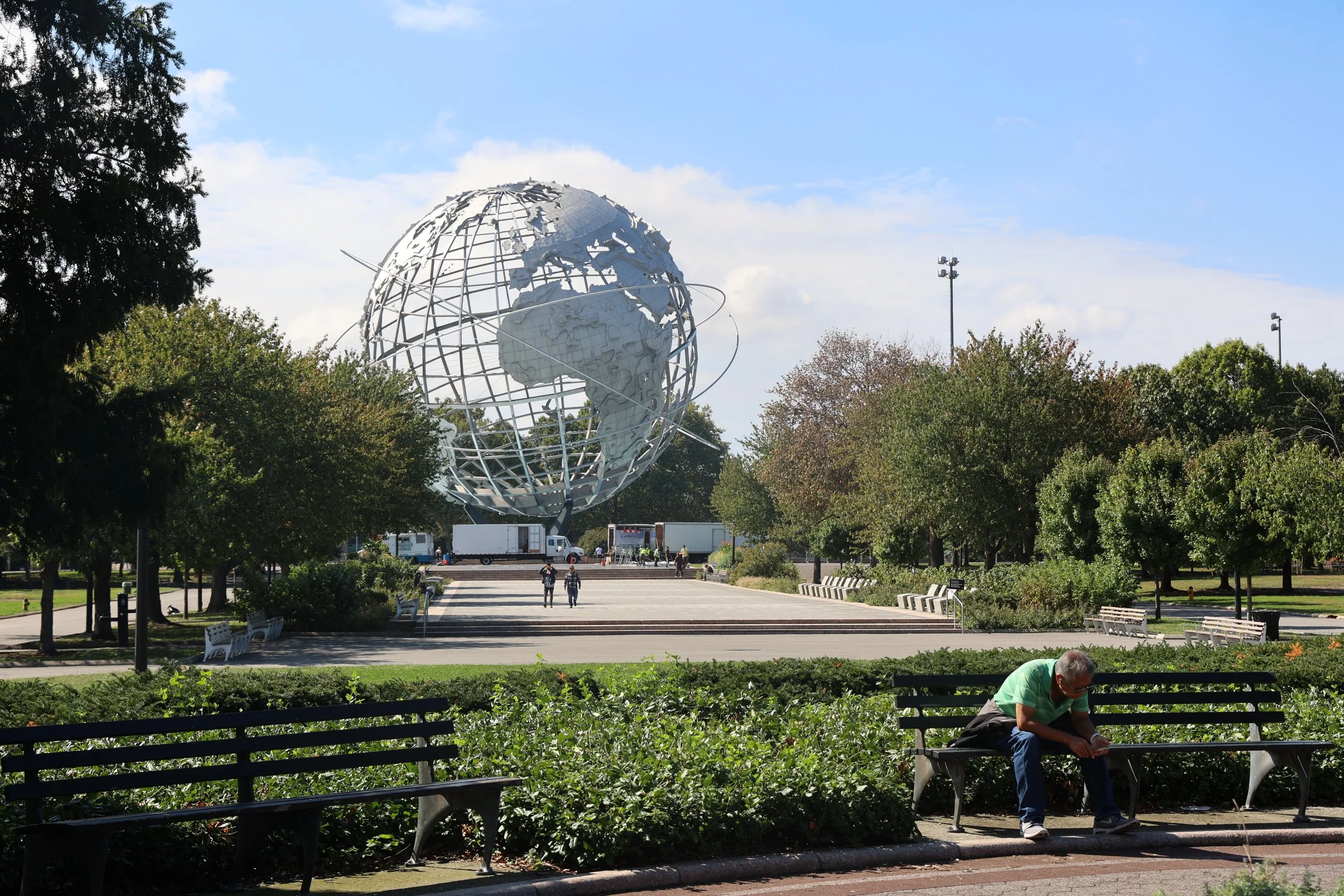
A new report lays out suggestions to help Queens’ Flushing Meadows Corona Park overcome underfunding and reach its full potential. Eagle photo by Ryan Schwach
By Ryan Schwach
This year, the Central Park Conservancy raised $100 million in private funds to renovate the park’s famed ice rink and pool. While $100 million raised only accounted for a portion of the capital project, it’s also equal to the amount city funds that has been invested into Queens’ Flushing Meadows Corona Park going back more than a decade.
Flushing Meadows Corona Park, one of the World’s Borough’s most predominant landmarks, has seen scarce public funding in recent years, and lacks the private funding infrastructure to make up for the financial gaps.
Any bright summer day at Flushing Meadows brings hundreds playing soccer and volleyball, tennis players, runners, birders and cyclists enjoying the park’s open spaces. However, a lack of consistent funding has resulted in poor upkeep, languishing infrastructure projects, consistent flooding issues and a park that’s already home to the Unisphere, the New York Mets and the U.S. Open falling short of its full potential, advocates say.
The lack of attention to the park is detailed in a new report from environmental think-tank The Center for an Urban Future, who argue that Flushing Meadows Corona Park is New York City’s “most underappreciated important park.”
If the underfunding is reversed however, the report argues that there is a potentially bright future for the park that was initially built with the purpose of showing off the potential of the future and the strength of New York CIty.
The report outlines 20 ideas for the area, like new playgrounds, a new ferry connection and more gress and less asphalt.
“FMCP has the potential to be one of the most dynamic urban parks in the country – and, crucially, a far more attractive and inclusive open space and recreational resource for the mostly low- and middle-income New Yorkers who use it on a regular basis,” the report said. “It could become a national model for equitable investment in public space.”
It also calls for a redoubling of efforts to FMCP’s funding, putting it on par with the city’s other famous green spaces like Central and Prospect Parks.
“Flushing Meadows…is almost wholly reliant on city and state funding from a patchwork of different elected officials, each one responsible for just a portion of the overall landmass,” the report said. “But the public capital dollars committed to FMCP have been inadequate to keep pace with its growing infrastructure needs. It’s time for city leaders to reverse the park’s chronic underfunding and make a long-term commitment to upgrading the park’s infrastructure.”
FMCP has brought in $100 million in city funds dating back to 2012, and more than half of it went to a single project – the renovation of the observation towers at the New York State Pavilion. The majority of the 897-acre park hasn’t seen much investment in the last 15 years.
A number of structural issues have popped up in that time, like flooding, which is a major issue at FMCP, as it is in many areas of Queens.
“When you walk [the park], you encounter flooding all the time, you see just deteriorating infrastructure, water bubbling up from under the asphalt, faded monuments,” said Jonathan Bowles, the executive director of the Center for an Urban Future.
According to the report, “for days after most rainstorms – adding up to several months each year – giant puddles cover large sections of the path around Meadow Lake, making it difficult, if not impossible, for parkgoers to run, cycle, or walk through one of its most picturesque areas.”
“Elsewhere, green spaces ideal for picnics and volleyball are often waterlogged for days, and one baseball diamond remains submerged for much of the season,” the report added.
Many of the flooding issues revolve around a drainage and sewer system built nearly a century ago for the World’s Fair.
The report argued that only a small portion of that $100 million – a total that does not include federal and state money given to the city post-Hurricane Sandy – for the park has gone to flooding and drainage issues, while other major parks have seen major infrastructure fixes.
In the late 1990s, Central Park received a $71.5 million public-private investment to install a 31,000-foot underground drainage and irrigation system.
“In those other parks, there's more maintenance on a regular basis,” said Bowles. “You don't see the kind of flooding that occurs every time it rains in Flushing Meadows.”
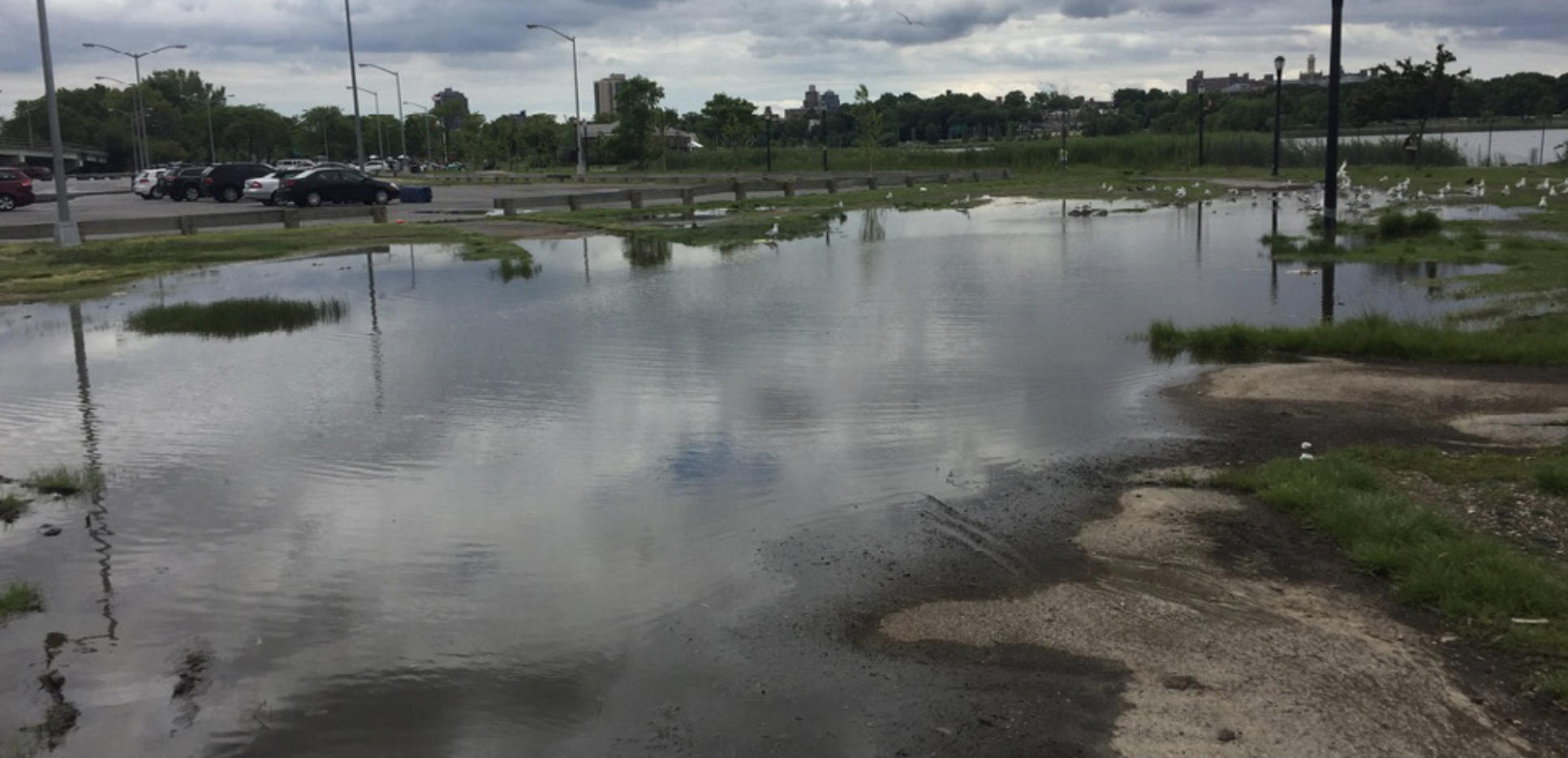
Flooding is a consistent and serious issue at Flushing Meadows Corona Park. Image via the Center for an Urban Future
To solve the problem, Bowles and Urban Future argue that public and private funding needs to be poured into the park.
The report suggests that the next mayoral administration should provide at least $150 million in new funding, and join with private sector companies that are headquartered in or do significant business in Queens raising an additional $20 million to $50 million.
“There needs to be a strategic plan that really guides investments in decision making, a long term strategic plan,” said Knowles. “I think this is where you can do several of the things that we're kind of recommending, but I think that you need a plan to kind of say, ‘Here's what our priorities are, and here's what our priorities aren't right.’”
If an increase in public and private money behind the park comes to pass, the potential for the park’s public benefits can grow.
The report lays out several ideas and plans for the future of Flushing Meadows Corona Park if the right attention is paid to it.
The ideas center around increasing green space in the park and the access to it, and creating more destinations for people to visit.
Built to originally house the World’s Fair, FMCP was never designed to be a green open space like Central or Prospect Parks. That’s left it with swaths of mostly unused concrete and roads that hinder usage and access.
“This is really about turning it from the leftover World’s Fair infrastructure to an actual functioning park,” says Andrew Hollweck, a former deputy commissioner at the Department for Design and Construction and a board member of the Alliance for Flushing Meadows Corona Park. “This huge open space was built for another time and purpose. There are way too many roads for cars, and infrastructure that just doesn’t physically work anymore or serves no purpose for park users. You get rid of a lot of the asphalt, and all of those big unnecessary paths to nowhere would disappear and be replaced by expanded sports fields.”
The report suggests that replacing roads with grass shouldn’t stop at the smaller streets inside the park, but the highways that cut through it.
“This web of highways essentially walls off the park from its surrounding communities and forces anyone on foot or bike to traverse a series of unpleasant and often dangerous overpasses, underpasses, and bridges just to enter the park,” the report said.
The answer; building infrastructure above the highways to connect the park and make room for more greenspace and housing.
“It is a great park, but it has a sewer of cars going around it,” says Claire Weisz, a founding partner of WXY, a leading design firm. “What it needs is for the highways around it to be covered, and those highways then will connect neighborhoods.”
Some of the ideas are a little bit less ambitious.
The report suggests a new full-time restaurant or cafe at the park, and an expansion of the Queens Night Market, which has proven to be a major success.
These amenities would bring FMCP up to par with Central Park, Brooklyn Bridge Park and even McCarren Park, which has year-long food options.
The report argues that chasing these hopes are more important now than ever while money and attention is already aimed at the areas around the park.
The city is currently constructing a new neighborhood and soccer stadium in nearby Willets Point, and Mets owner Steve Cohen is hoping to build a casino in Citi Field’s parking lot, right across the street from the park.
Borough President Donovan Richards is already behind the findings in the report.
“Flushing Meadows Corona Park is the ultimate crown jewel of our borough – a confluence of countless cultures, languages and cuisines in the shadow of Queens’ most historic landmarks and major sports stadiums,” he said in a statement he lent to the report. “However, there are certainly plenty of upgrades and improvements that are needed throughout Flushing Meadows, as we work to cement its status as both the premiere neighborhood park for our neighbors and
an international attraction for visitors from around the world.”
The Parks Department, in response to the report, said that it is committed to efforts to improve and maintain the Queens park.
“We are continuously exploring innovative and creative approaches to enhance our parks for the benefit of all New Yorkers, and we value the spirit of this report and the passion that CUF brings to the vital work of parks funding,” a spokesperson said. “NYC Parks remains steadfastly committed to providing Queens residents with exceptional greenspaces and recreation opportunities at Flushing Meadows Corona Park, one of our city's most treasured destinations. Our dedicated park maintenance and operations teams work tirelessly year-round to clear catch basins and pump areas during severe weather events, striving to keep the park accessible and safe for all visitors.”
Parks also pointed out $65 million worth of work on resiliency in different parts of the park.
For the Center for Urban Future, it's all about getting Flushing Meadows Corona Park to its potential.
“We're not saying let's change the park,” said Bowles. “Let's make it a better resource for the millions of Queens residents that use it on a regular basis.”