From fridge to food pantry: How a Flushing synagogue became a center of food relief after the pandemic
/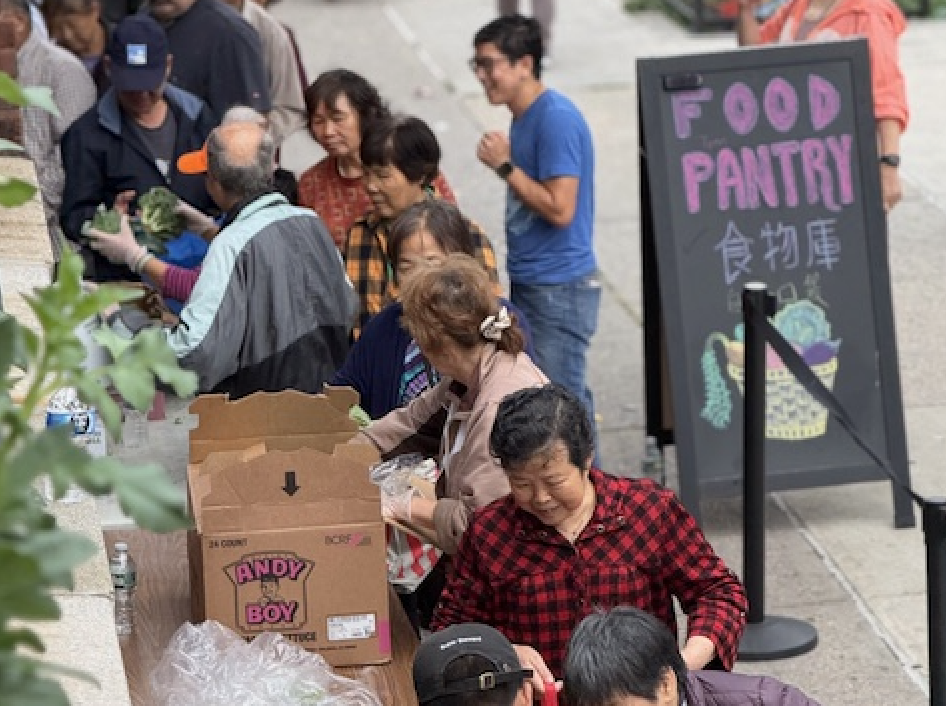
The Free Synagogue of Flushing has built up a food pantry service for hundreds of Flushing residents over the years.Photo courtesy of The Free Synagogue of Flushing
By Noah Powelson
What once started as a fridge on a sidewalk in the heart of Flushing has grown into an organized community activist project aimed at addressing the city’s growing food insecurity crisis.
For years, the Free Synagogue of Flushing has been operating a pop-up food pantry, moving hundreds of pounds of produce each week to community members. Hundreds of Flushing residents line up outside the synagogue to collect fresh produce whenever a new pop-up pantry is announced.
The operation was born during the COVID-19 pandemic when many people, especially immigrant and non-English speaking communities, were left in desperate need of new ways to feed their families.
While many food pantries or nonprofits start with grant proposals, business partnerships and food drives, the Free Synagogue of Flushing’s own pantry services started with a simple fridge.
At the height of the pandemic, a friend of the synagogue community offered to donate a fridge that once belonged to a family member who passed. With a full kitchen at their disposal, the synagogue didn’t have much use for a second fridge themselves but saw an opportunity for a larger project.
Thus, the synagogue’s community fridge was set up on the sidewalk outside, bringing in produce, milk, eggs and other dairy products to their neighbors.
They didn’t know what would come of it initially, but when hundreds of local Flushing residents lined the sidewalk out of the synagogue to get free eggs, they knew they were filling a void. Cantor Alan Brava, the executive director of the Free Synagogue of Flushing, said their philosophy behind every service they offer is to keep their doors open and not turn anyone away.
"We don't care what you look like, and we don't care what you call your God,” Brava said. “If you get in line, we'll help you."
The synagogue operated the community fridge for about six months, until the cost of keeping the fridge functional and protected proved too burdensome to be worth it. Despite that setback, one member of the Free Synagogue of Flushing recognized the community was still in need of an active grassroots operation that supplied families with food. In 2022, the synagogue’s pop-up food pantry was created.
The pop-up food pantry was largely conceived, organized and managed by Souksavat “Souks” Soukhaseum, the director of community outreach at the Free Synagogue of Flushing. Souks, who immigrated from Laos with his family as a child, is frequently seen loading and unloading freshly donated produce in the back of his truck that will be handed out to his community. Souks was also instrumental in organizing several partnerships with community groups and nonprofits to ensure they can offer as much food as possible.
The barrier of entry is as low as it could be. No ID or paperwork is required, and everyone who shows up gets a bag of produce that often includes foods like corn, tomatoes, string beans, bok choy, lettuce or peaches. Guests are also told to take what they need and donate what they can. Brava estimated that they serve 250 people whenever they open.
The pop-up food pantry does not have a regular schedule, and that’s by design. They usually open in the early evening, and are usually open twice a month but they have done more. When they’re open, they put a sign out front and spread the world on their social media and through their neighbors. Brava said they don’t have a common schedule to ensure the immediate community gets first pick of the available food, and to keep the set up as grassroots as possible.
“During the height of the pandemic, our synagogue, along with other organizations, gathered at FSF to distribute much needed groceries to our food insecure neighbors.” Brava said. “Each week, for over 9 months, close to 250 people would line up on Sanford Avenue in front of our Administration Building as early as 7:00 a.m. to secure a place in line for a distribution that wouldn’t begin for another 5 plus hours.”
Community efforts like the one offered by the Free Synagogue of Flushing have been increasingly relied on in recent years after the pandemic. The increasing rate of food insecurity is especially prevalent in Queens.
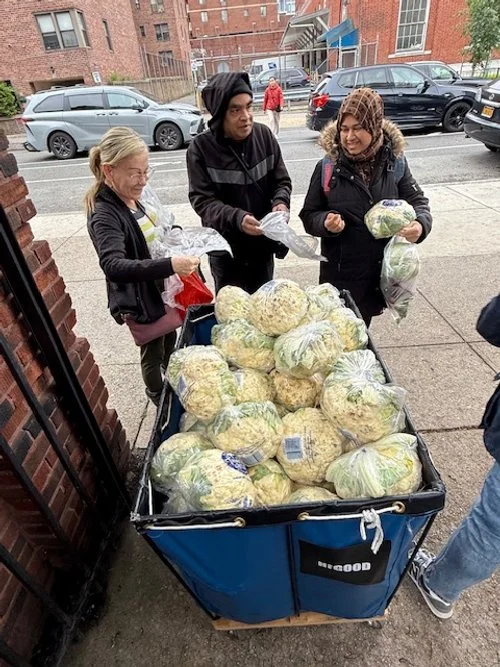
The Free Synagogue of Flushing serves roughly 250 people every week with their pop up food pantry. Photo courtesy of The Free Synagogue of Flushing
According to a 2024 report from the nonprofit organization Hunger Free America, Queens contained the highest number of individuals living in food insecure households compared to the rest of the city, reaching over 310,300 people between 2021 and 2023. From 2018 to 2020, roughly 11.2 percent of Queens households were considered food insecure. From 2021 to 2023, that number went up to 13.8 percent.
Federal government rollbacks of benefits coming from the Supplemental Nutrition Assistance Program, otherwise known as food stamps, and other social safety nets have only exacerbated the issue.
As part of President Donald Trump’s spending bill passed at the beginning of the month, about $186 billion was cut from SNAP through 2034. It will be a while before the consequences of these cuts will manifest, but undoubtedly as New Yorkers have less food stamp funds to rely on, food pantries like the one at the Free Synagogue of Flushing will be an important resource for more families.
Brava said the common question the synagogue gets is if they are concerned people are taking more than they actually need. But he said whenever he sees an elderly man carrying an oxygen tank come to visit the pantry, or a mother bringing her disabled son with her as she picks up groceries, Brava said people taking more than they need is the least of his concerns.
"I don't care whose double dipping," Brava told the Eagle. "Because we fulfilled the needs of that one woman and that one child, that's all that matters."
Brava also said the success of the pop-up food pantry has only encouraged them to build their services as far as they can go.
Currently, the Free Synagogue of Flushing plans to keep the food pantry going indefinitely, and are working on ways to open more frequently with more food options. Once that’s secured, and if more funding options open up, Brava envisions the synagogue will expand to offer immigrants and non-English speakers with workshops on accessing government social services.
"We're going to do it forever," Brava said. "As this synagogue metamorphizes into a greater presence in our community, we plan to do it more often and expand to even more services."