Plan to rezone Downtown Jamaica moves to City Council
/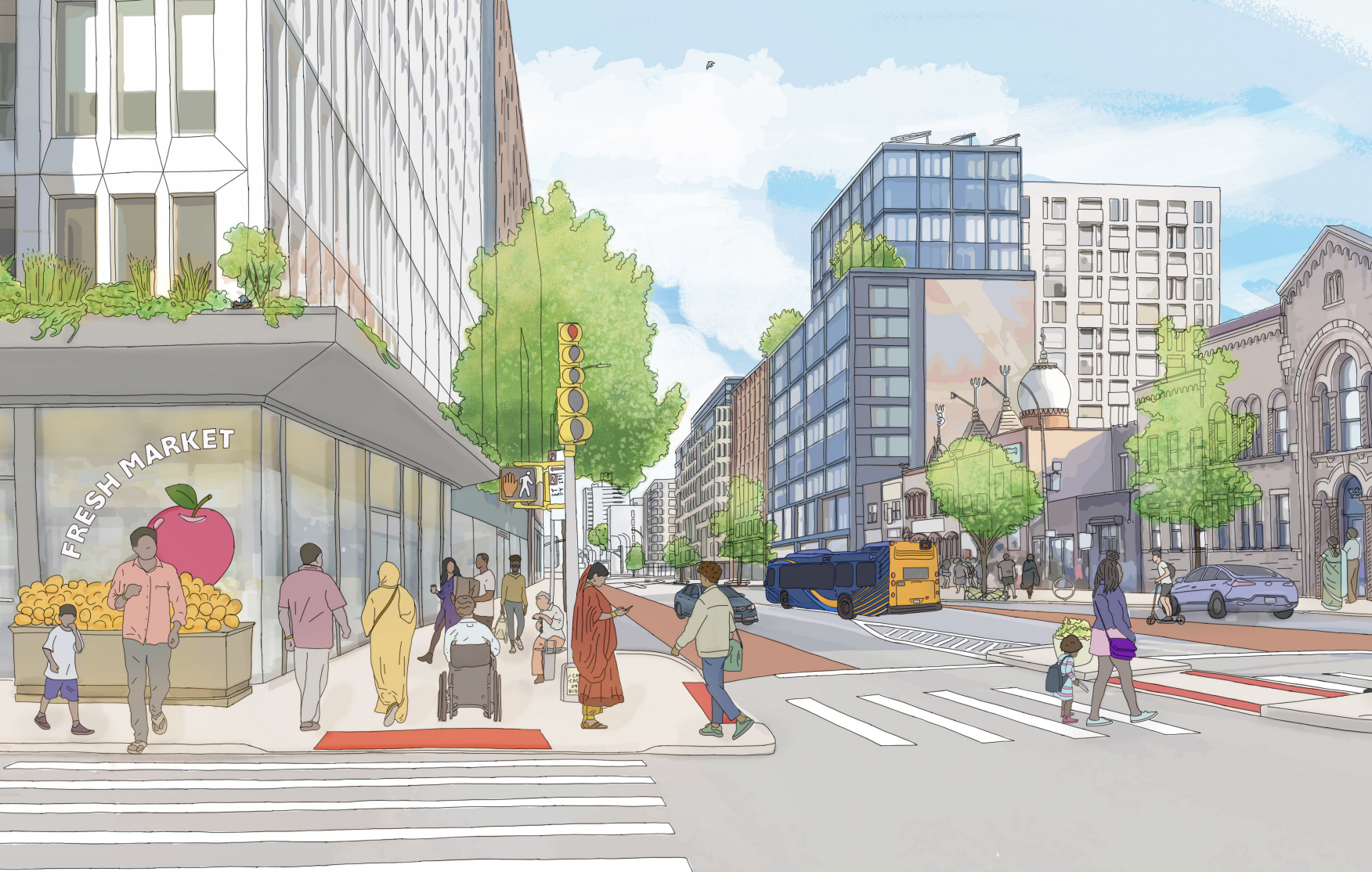
The City Planning Commission on Wednesday voted 11-2 in support of the city’s plan to rezone a major section of Jamaica. The city hopes the rezoning encourages housing and commercial development. Rendering via Department of City Planning
By Jacob Kaye
The city’s plan to rezone a major section of Jamaica in the hopes that it invites massive housing and commercial development was approved by the City Planning Commission on Wednesday, the final step before the plan comes for a final vote before the City Council.
The City Planning Commission voted 11-2 in support of the Jamaica Neighborhood Plan, which city officials say will result in the creation of 12,000 new homes, 2 million square feet of new commercial space and thousands of new jobs to the once-thriving section of the borough.
“Jamaica has long been one of the most bustling commercial and transit hubs in the city, but outdated zoning and a lack of housing and investment have held it back,” Dan Garodnick, the director of the Department of City Planning and the chair of the City Planning Commission, told the Eagle ahead of the vote on Wednesday.
“[The neighborhood plan] is designed to ensure that Jamaica remains a vibrant home for families of all income levels,” he added. “Our hope is to set Jamaica on a path to an even brighter future, one that unlocks its limitless potential.”
With the CPC’s approval, the rezoning plan will now head to the City Council, which will hold a public hearing and a vote on the proposal at some point in the next month and a half. Should the City Council approve the plan, Mayor Eric Adams, whose administration launched the effort in 2023, would give the proposal its final approval.
“With its rich diversity of culture, cuisine, music, and more, Jamaica represents so much of what makes our city great,” Adams said in a statement. “Unfortunately, the neighborhood’s outdated zoning code is not one of them. For decades, Jamaica’s zoning has curtailed new housing and limited new businesses; it’s made it harder for working-class families to work and stay in the area.”
“But our Jamaica Neighborhood Plan will help change that,” he added. “With this ambitious vision, we’ll bring thousands of new homes and jobs to Jamaica and make sure that working-class families can live in the city they love.”
The possible passage of the plan could result in a complete redesign and overhaul of one of Queens’ most historic neighborhoods.
Jamaica was once the commercial capital of Queens and served as the original county seat of the borough. But the neighborhood has seen better days, officials say.
While it’s home to one of the city’s most prominent transit hubs and a large population of Black homeowners, a lack of investment in the neighborhood over the decades has stifled opportunity in the area, according to the city.
And while the city’s housing crisis has been felt in neighborhoods across the five boroughs, it’s been particularly dire in Jamaica.
From 2010 to 2020, the neighborhood's population grew by over 13 percent, which is nearly double the rate of growth citywide.
Meanwhile, the housing in the area and in the borough as a whole hasn’t kept pace. Queens’ vacancy rate is currently around 0.88 percent, while the citywide vacancy rate is 1.4 percent. In Jamaica, nearly 60 percent of residents are rent burdened.
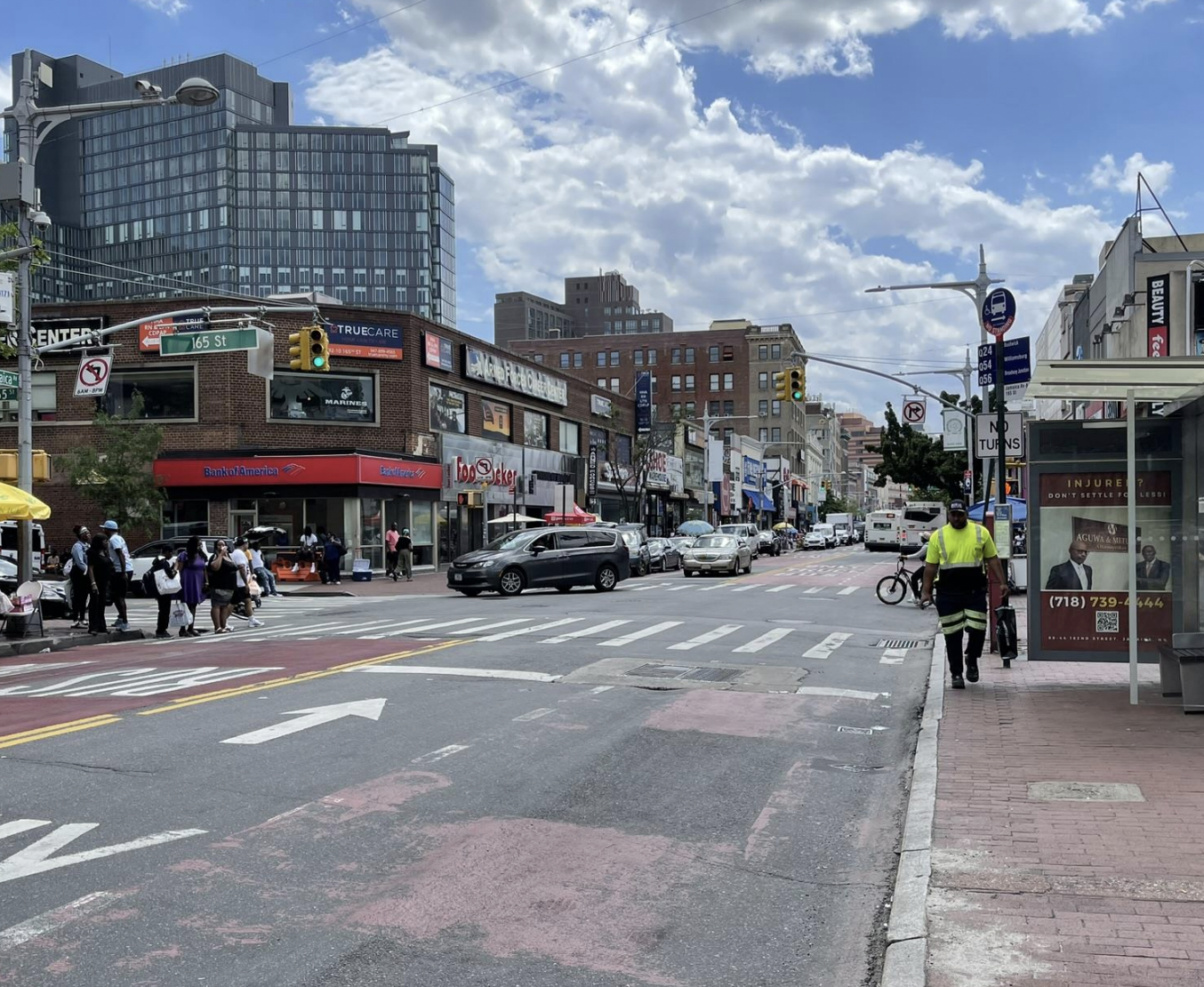
Downtown Jamaica could be rezoned to allow for 12,000 new homes and 2 million square feet of new commercial space under a neighborhood plan making its way through the city’s review process. Photo via DCP
According to the city, the neighborhood plan could be a major part of the solution.
Of the 12,000 homes the Jamaica Neighborhood Plan is expected to create, 4,000 would be income-restricted, making it the largest Mandatory Inclusionary Housing zone in the city.
“For far too long, outdated zoning and lack of housing and investment have held [Jamaica] back,” Garodnick said at the CPC’s meeting on Wednesday. “Even where new housing is permitted, there are few options for affordability and none for required affordability. It's past time that we change that.”
But as Garodnick praised the plan’s inclusion of income-restricted housing, others said the affordable housing components of the plan won’t do enough to address the housing and affordability crisis in the neighborhood.
“I have a real issue with having a neighborhood plan where the main issue is affordability, but affordability is not the issue that is actually being addressed,” said Leah Goodridge, one of the two CPC members to vote against the plan.
Queens Borough President Donovan Richards gave the Jamaica Neighborhood Plan his approval in June but said at the time that he too wanted the city to make additional affordable housing investments in and around the area slated for rezoning.
In a statement on Wednesday, Richards said the CPC’s “approval paves the way for much-needed transit-oriented development, affordable housing, and much-needed investment in our community.”
The Jamaica Neighborhood Plan also received pushback from both of Jamaica’s local community boards. One board voted 1-35 against the plan while the other voted 17-18 against it.
Board members, however, were less concerned with the affordability of the housing and more concerned with parking – three of the six concerns listed by Community Board 8 in their May recommendation related to parking.
The Jamaica Neighborhood Plan would cover approximately 300 blocks in the area.
The city divided the proposal into five sections. The North Core, which runs from Hillside Avenue to Jamaica Avenue, currently lacks housing but is near multiple transit lines. Under the proposal, the North Core would be rezoned to allow for more housing.
The Downtown Core, which runs from Jamaica Avenue to Archer Avenue, would be rezoned to allow for buildings as tall as 18-stories high and encourage mixed-use development.
The Southern Corridor, which covers major blocks including Sutphin Boulevard, Guy R. Brewer Boulevard and Merrick Boulevard, would be rezoned to allow for developers to construct buildings as tall as 11-stories high. The area currently only allows for buildings as tall as eight stories.
The South Core, which covers the area directly south of Jamaica Center and includes the busy Archer Avenue bus terminal, would be rezoned to allow for 15-story tall buildings.
The Industrial Area, which covers the eastern portion of the study area, would be rezoned in an effort to bolster and preserve the industrial businesses already local to the neighborhood. It would mostly remain an industrial area under the zoning plan.