Controversial proposed pipeline off Queens’ coast could make comeback
/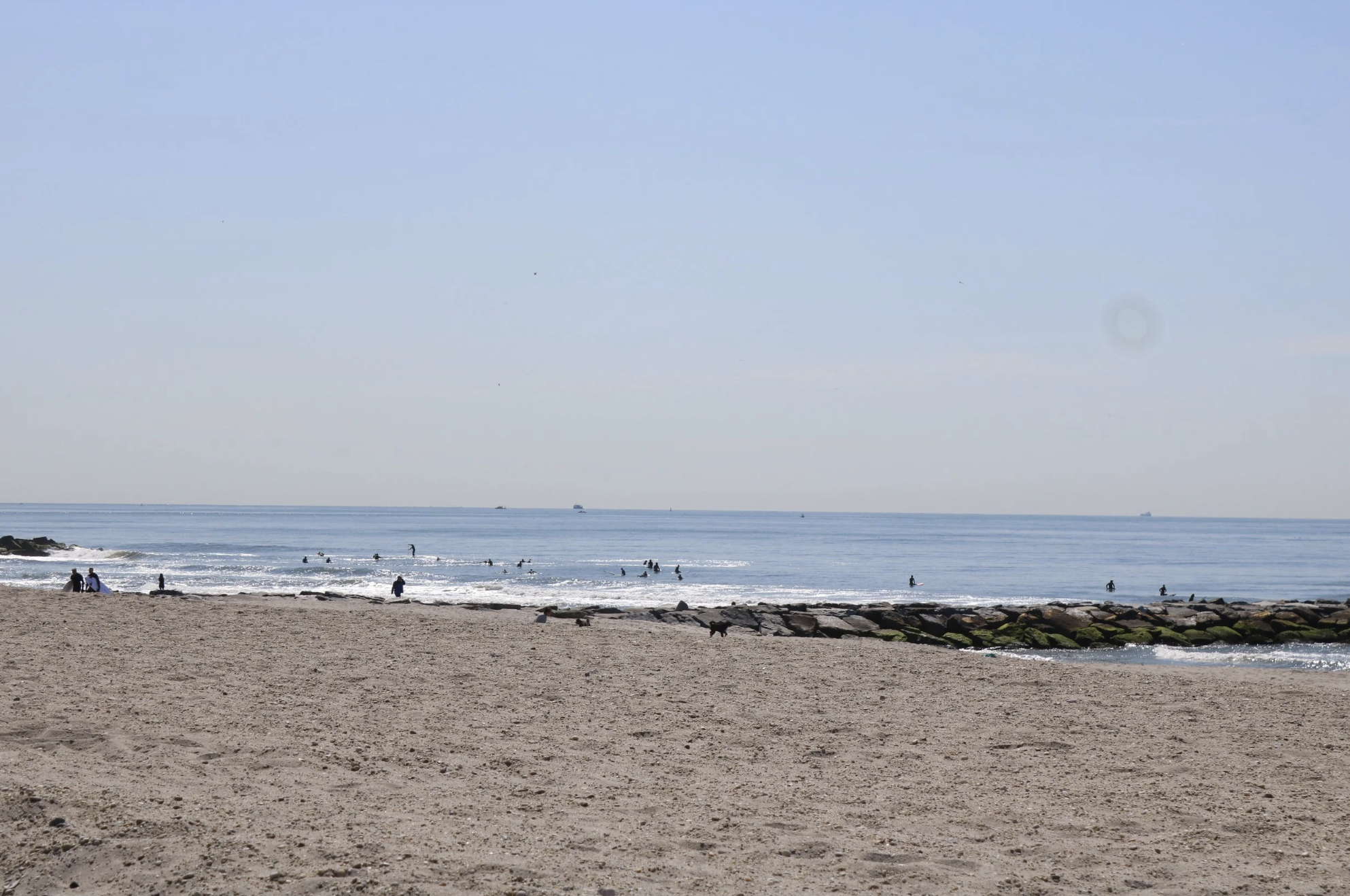
Queens locals are opposing a plan to resurrect a gas pipeline that would be built just a few miles off the coast. Eagle file photo by Ryan Schwach
By Ryan Schwach
An energy company is trying to resurrect a controversial and potentially harmful fracked gas pipeline that would run off the coast of Queens, and is being met with a familiar backlash after trying to build the pipeline three times before.
The Williams Northeast Supply Enhancement, better known as the Williams Pipeline, is a proposed 23.5 mile underwater pipeline – 17.4 miles of which would be in New York State waters – that would be constructed off the coast of Queens’ Rockaway peninsula, and would connect with energy company Williams Transco’s wider network of gas pipelines. The company says the pipeline would spur economic development, create jobs and lower energy bills, in line with the Trump administration’s support for similar projects.
But environmental activsts and locals have long criticized the project for its potential negative impact on the environment and marine life. Environmentalists warn that long before any gas is actually pumped into the 26-inch diameter pipe, just the construction work to get it in place could kick up harmful toxins into New York’s waters. In the worst case scenario, activists have warned about the catastrophic consequences should the pipe leak or explode, which gas pipelines often do.
Efforts from Williams to construct the pipeline have been shot down three other times – once in 2018, then again in 2019 and most recently in 2020. Through all those attempts, the pipeline received an onslaught of criticisms from locals and environmentalists.
Activists say that the new bid in 2025 is no different.
“It would still dig up toxins for 24-miles through the Raritan Bay in New York Harbor, off the coast of Staten Island, Coney Island and the Rockaway peninsula,” said Kim Fraczek, the director of the Sane Energy Project. “This is not good for safety or reliability.”
When Williams first proposed the pipeline in 2017, it was met with protest in the five boroughs.
In 2018 the New York State Department of Environmental Conservation shot down the project because it did not comply with water quality standards that date back to the Clean Water Act.
The agency squashed it again a year later.
“Because the Department does not have reasonable assurances that construction and operation of the Project would meet all applicable water quality standards, it is denying the application without prejudice,” DEC’s notice of denial, dated May 2019, read. “Most notably, according to [Williams’] own submissions…water quality standards for both mercury and copper are projected to be exceeded in certain areas in New York State waters.”
Environmentalists say that Williams’ new application before the DEC, which is currently under public review until Saturday, Aug. 16, is identical to the one it originally put forward previously.
“It's the exact same project,” said Matt Gove, the Mid-Atlantic policy manager for the Surfrider Foundation. “Williams has even said it's the exact same project, so we're kind of doing the same thing, because the project that they put in before did not pass New York's water quality standards.”
“How could you possibly say the same project now is okay when you said it was not okay five years ago? That's very confusing,” Gove added.
In order to build the pipeline, Williams would need to dredge up – or trench – the sea floor less than 10 miles off the coast of Rockaway, potentially stirring up toxins that have been settling there since the CWA passed in 1972.
“All of the industrial toxins have settled onto the floor of the ocean since the Clean Water Act stopped a lot of the industrial dumping off the coast of Rockaway,” Fraczek said. “If that pipeline starts trenching the bottom and pulling up all of those industrial toxins that have been allowed to settle and remediate over the last 50 years, that would be detrimental for the economy of Rockaway, which is a huge water economy.”
Since the CWA, New York’s waters are significantly cleaner. Currently, they are the cleanest they have been since 1909, according to a city Department of Environmental Protection study.
“New York harbor used to be one of the most toxic bodies of water in the whole world, and now we see dolphins, there's whales…there's a return of life in our ocean,” Fraczek said. “So if the federal administration right now is looking to violate that, that's very detrimental for not only the local community in Queens, but also our marine family.”
While Williams has argued the pipeline would increase access to gas and thus lower utility costs by up to $6 billion over the next 15 years, the detractors don’t buy it. They say that local utility payers are more likely to have the $926.5 million cost of the pipelines’ construction passed onto them through their energy bills with National Grid.
The energy company’s customers would “be on the hook,” Fraczek said.
Beyond the potential for kicked up industrial metals and a strain on New Yorkers’ wallets, the most apocalyptic of scenarios comes with the dangers of a gas pipeline just a stones throw from Queens homes and the nation’s largest industrial hub.
“Gas pipelines explode, they leak, they rupture,” said Fraczek. “It is not a safe method in the 21st Century to be digging up the ground to transport it and burn it for energy and bringing flammable materials into our homes.”
According to the Pipeline and Hazardous Materials Safety Administration, which is part of the United States Department of Transportation, there have been 13,021 pipeline related incidents since 2005.
Those incidents have resulted in 254 deaths, 1,075 injuries and around $11.4 billion in damages.
For Rockaway Beach locals, the potential impacts of the pipeline could be calamitous.
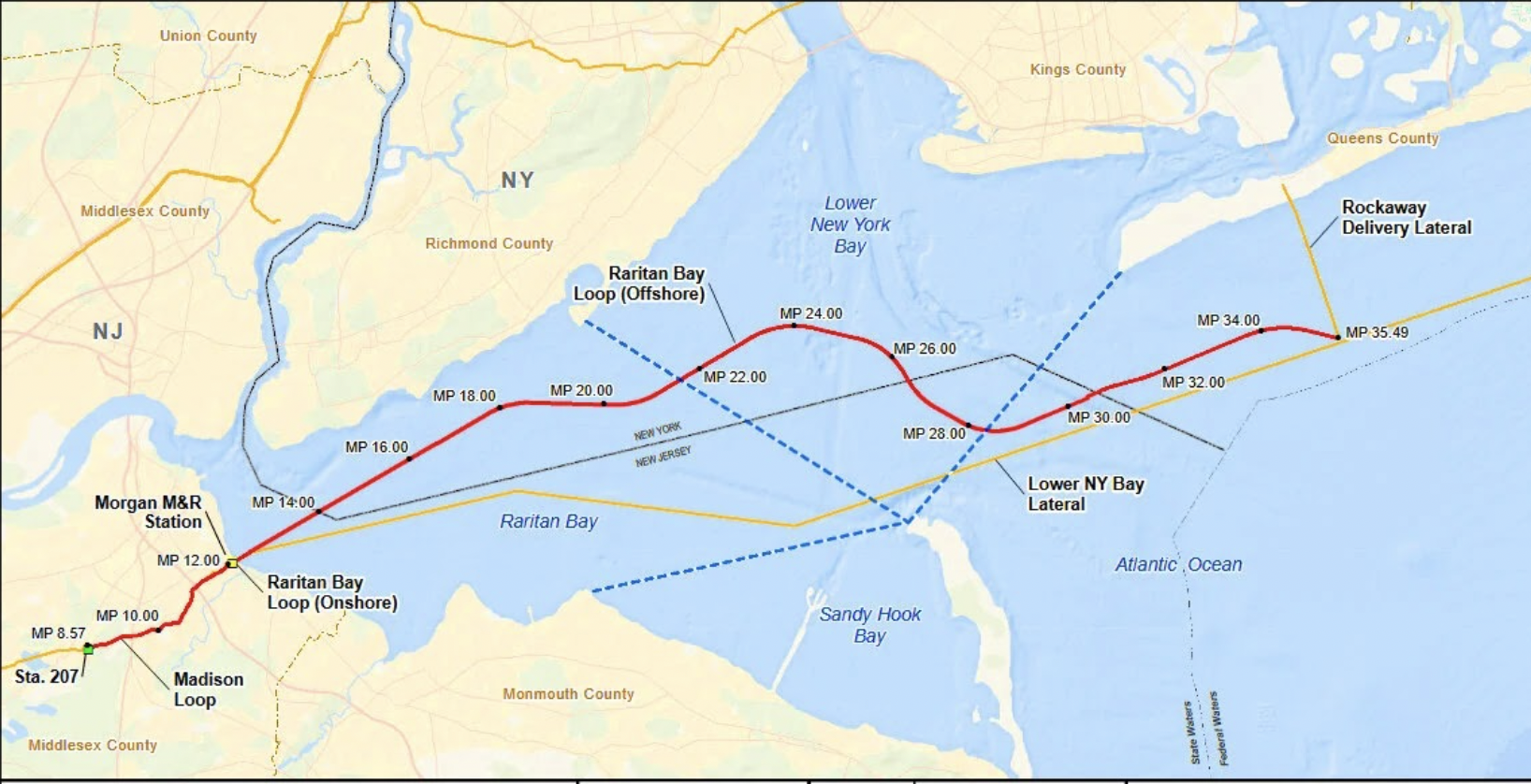
The Williams Northeast Supply Enhancement, better known as the Williams Pipeline (colored in red) is a 23.5 mile underwater pipeline that the company says will lower energy bills, but activists say could harm the environment. Map courtesy of the Williams Company, file
“Whether it's fishing, whether it's beach visitors, whether it's people who live in Rockaway, not having a spoiled immediate environment is essential to all of the things of a waterfront community,” said Bridget Klapinski, the president of the Rockaway Beach Civic Association and longtime opponent of the Williams Pipeline. “We need clean, healthy water for that to happen.”
Rockaway has a history of dealing with environmental impacts, most recently Hurricane Sandy in 2012.
“We've endured storms,” said Klapinski. “A big leak, a spill, an explosion, it could be very, very dangerous.”
Klapinski, along with Fraczek, are pushing for community members and locals to weigh in on the project, which is currently in a short public review window until Saturday.
The window was initially 30-days, but was open for an additional 15 after groups protested.
However, the input period still included no public hearings.
According to Fraczek, a total of 50,000 comments will be turned in against the project before Saturday's deadline.
“New Yorkers know what they want [and] they know they don't want this pipeline,” Fraczek said
Local officials, including Republicans, have also criticized the pipeline plans.
“Rockaway residents deserve affordable, reliable energy, but that shouldn't come at the expense of our waters and marine life,” said local Republican Councilmember Joann Ariola. “I think we need more transparency regarding the safety of this project and its environmental impact, and our communities deserve the chance to weigh in and get a better understanding of what this will entail for the peninsula.”
On Thursday, Comptroller Brad Lander called on the DEC to reject the proposal.
“Not only is this pipeline a step backward on climate, it’s a massive financial burden for New Yorkers,” Lander said. “The $1.4 billion NESE pipeline will saddle National Grid customers with an estimated $200 million a year in utility bills for the next 15 years. With utility debt in New York City nearly doubling and shutoffs at record highs, ratepayers cannot afford another costly, unnecessary gas project.”
“The NESE project also poses grave environmental harms,” Lander added. “Building the pipeline would require excavating 23.3 miles of seabed, disturbing toxic marine sediments contaminated with arsenic, lead, mercury, PCBs, and dioxins near Staten Island and the Rockaways.”
In a statement to the Eagle, Williams pushed the potential positives of the project, and the company's commitment to transparency.
“As energy supplies become more constrained in densely populated areas like Brooklyn, Queens, Staten Island and Long Island, the need for reliable, affordable energy delivery systems is becoming more urgent,” a Williams spokesperson said in a statement. “The Northeast Supply Enhancement project, which is an expansion of the existing Transco natural gas pipeline system, is designed to move enough natural gas equivalent to meet the daily needs of approximately 2.3 million homes, reinforcing the region’s energy resilience and supporting its continued growth.”
“Williams has been building and operating energy infrastructure in the Northeast region for decades and is committed to transparent engagement with local communities and following rigorous environmental standards as we develop the project,” the spokesperson added.
While the 2025 pipeline proposal is effectively no different than its previous iterations, one factor appears to have changed: President Donald Trump.
While Trump has always fought back against renewable energy construction and supported the fossil fuel industry, his opposition to climate change efforts has grown in intensity during his second term, advocates say.
“We've seen a couple other projects come back from the dead with this administration," Gove said.
There have also been reports of a potential deal with New York State this time around.
Nonprofit outlet New York Focus reported last week that Williams’ announcement that it was reapplying for approval for the pipeline came just ten days after Governor Kathy Hochul met with Trump.
At that meeting, Trump said he would lift a stop-work order on the Empire Offshore Wind Project, a major clean energy effort Hochul supports.
Days later, the White House said that Hochul “caved” on “two natural gas pipelines” in New York State, giving some environmentalists the indication that the governor may have traded Empire for the Williams Pipeline.
In his statement on the pipeline, Lander criticized the governor for the alleged deal.
“The governor is undermining New York’s climate mandates by bringing back a previously rejected fracked gas pipeline project without any meaningful opportunity for public input,” he said. “We can’t let backroom deals with Trump override New York’s science-based climate mandates.”
Hochul’s office denies any deal was made.
“The governor has made it clear she supports an all-of-the-above approach to energy that includes renewables, natural gas, and nuclear power which prioritizes affordability and grid reliability,” said her senior communications advisor on energy and environment, Ken Lovett. “Any applications must be reviewed impartially by the required agencies to determine compliance with state and federal laws.”
“The only commitment the governor has made is to work with everyone, including the Trump administration, on new energy projects that meet the legal requirements under New York law,” Lovett added when asked about the rumored deal.
Still, the efforts continue to kill the pipeline for a fourth, and maybe final, time.
Earlier this week, 400 people marched across the Brooklyn Bridge to rally against the project, including Lieutenant Governor Antonio Delgado, who is challenging his boss in next year’s gubernatorial race.
This Friday, the Sane Energy Project will deliver an additional 10,000 public comments against the project to Hochul’s Manhattan office.
“We're out there fighting this and we should win,” Gove said. “Hopefully, we'll win.”