Council bill would require city to build courthouses medical clinics
/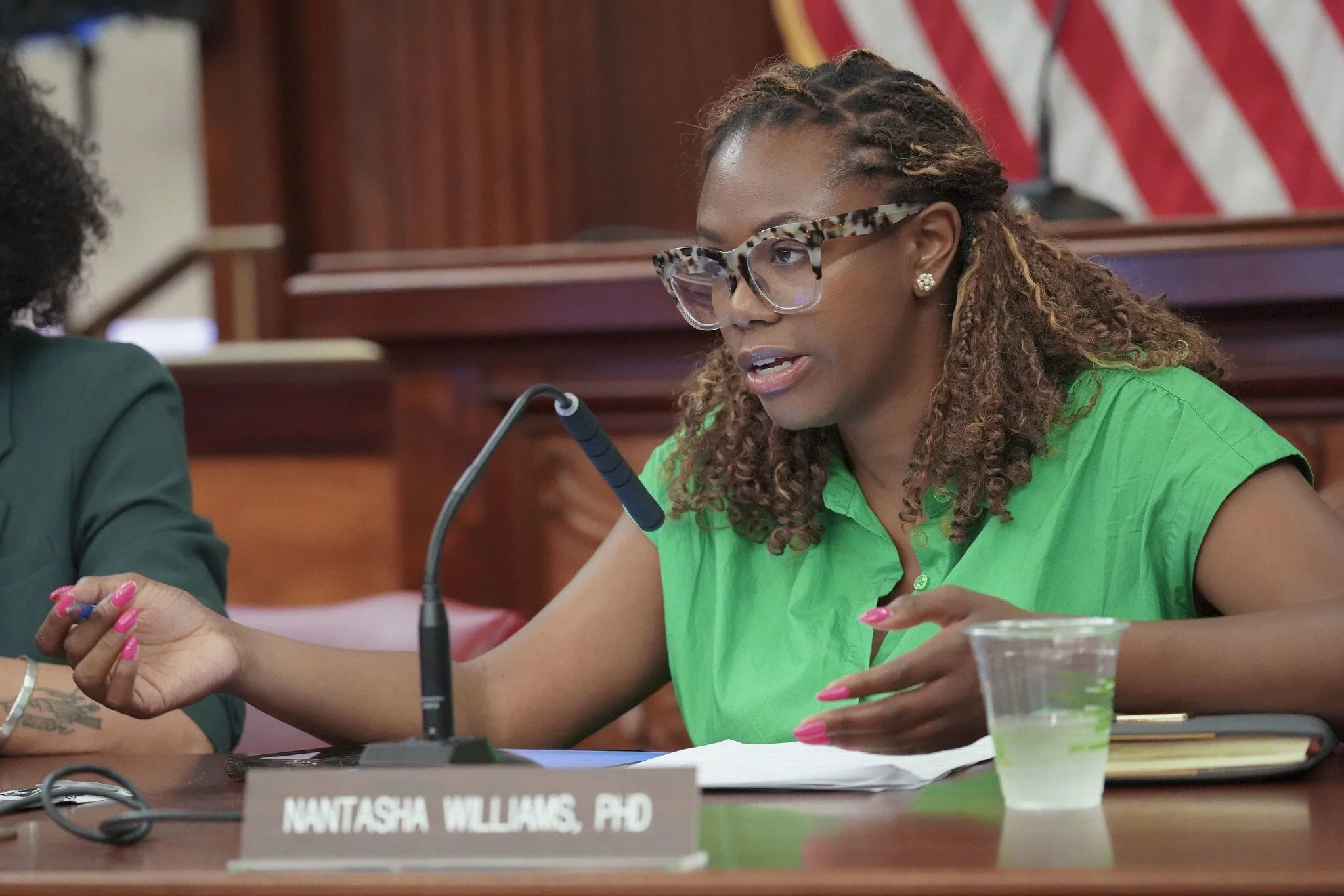
A bill from Queens City Councilmember Nantasha Williams would require the city to build medical clinics in courthouses. Photo by Gerardo Romo / NYC Council Media Unit
By Jacob Kaye
Following the deaths of two men in courthouse holding cells earlier this year, the City Council is considering a bill that would require the city to build health clinics in all of its criminal courthouses.
The bill, backed by South Queens Councilmember Nantasha Williams, would demand that Correctional Health Services, the branch of the city’s Health + Hospitals system that provides health care in the city’s jails, and the Department of Correction open seven clinics in courthouses throughout the city.
According to lawmakers, suffering a medical emergency while waiting for a judge could have fatal consequences for detainees. Should a detainee need medical assistance, regardless of the severity of the issue, often the only option is to call 911, an expensive and inefficient solution, according to some councilmembers.
“Access to medical care in our city's court facilities is not consistent, and the consequences of that are becoming harder to ignore,” Williams said during a Council hearing on the bill on Monday.
On March 21, 32-year-old Soso Ramishvili was found dead inside a holding cell in Brooklyn Criminal Court just an hour before he was set to appear before a judge. The New York Post reported at the time that an officer in the courthouse saw Ramishvili sitting on the floor, alive and alert, one minute, only to see him slumped over and laying on the ground the next. He was pronounced dead at the scene by EMS medics. Ramishvili, who was not in DOC custody at the time of his death, had been held for three days in the holding cell awaiting his first appearance before a judge.
Five days after Ramishvili’s death, a 43-year-old man was found unconscious while in NYPD custody in a Manhattan Criminal Courthouse holding cell. Like Ramishvili, the man was treated by EMS first responders who took him to a local hospital, where he was pronounced dead.
“These may feel like isolated cases, but the patterns behind them are not,” Williams said on Monday. “Our criminal legal system moves people consistently between precincts, jails, courts and hospitals, and with each hand off, the basic responsibility to provide care becomes harder to track, harder to verify, and too easy to ignore in the process.”
“People's medical histories are lost, their medications are delayed, their conditions go unmonitored, and they wait often for hours, sometimes overnight, in holding cells, where no medical staff are present and no real system exists to respond if something goes wrong,” she added.
According to Williams, her bill would provide “infrastructure and coordination” to a moment in the criminal legal process that she claims lacks both.
In addition to building out the clinics, the bill would require CHS to produce a document detailing the medication, food or other medical services a person may require while in a court facility.
Half of the City Council has signed onto the bill as a co-sponsor.
But support from the city is lacking.
Both the DOC and CHS told the Council on Monday that they believe the bill addresses a need that doesn’t exist and would be too costly to implement.
Jeanette Merrill, a spokesperson for CHS, told the Council that aside from medical emergencies, there are few detainee medical needs that can’t be addressed during a clinic visit before or after their trips to court.
Currently, detainees on Rikers Island are gathered beginning around 5 a.m. and bussed to various courthouses throughout the city. Before they leave the jails, they are fed breakfast and offered a trip to the clinic. They are also offered a trip to the clinic upon their return, which often comes in the late evening.
But getting detainees to medical appointments has long been difficult for the DOC. In June, around 16,000 scheduled medical appointments were missed by detainees, including 1,477 of which were missed by detainees because the doctor’s visits conflicted with court appearances.
Brooklyn Councilmember Lincoln Restler questioned CHS’ backlash against the bill, asking Merrill if there were less costly ways to deal with medical issues in courthouses, like building a clinic.
“Since nobody's [at the courthouse] to provide that assessment, if [a detainee says] ‘I need medical help,’ the only answer is send them to the emergency room,” Restler said. “I think we are spending a lot of time and energy and money sending people to emergency rooms that lead to delays to our court system, that delays lead to delays to how much time people are spending in jail that are very costly, that are highly inefficient use of government resources, instead of providing the on site medical assessment and treatment.”
But building out the clinics would come with its own costs.
The Office of Management and Budget said in a report that it would cost at least $61 million to staff the clinics over the first four years of their operation, should the bill pass.
And then there would be the cost associated with the building of the clinics themselves, which OMB did not calculate in its report.
But construction of the clinics would likely be costly, officials said on Tuesday. Many of the city’s courthouses, which are managed by the city’s Department of Citywide Administrative Services, are decades old and may lack the space for new medical facilities.
A spokesperson for the Unified Court System declined to comment for this story.