
Mayor wrongly blocked solitary confinement ban, judge says
/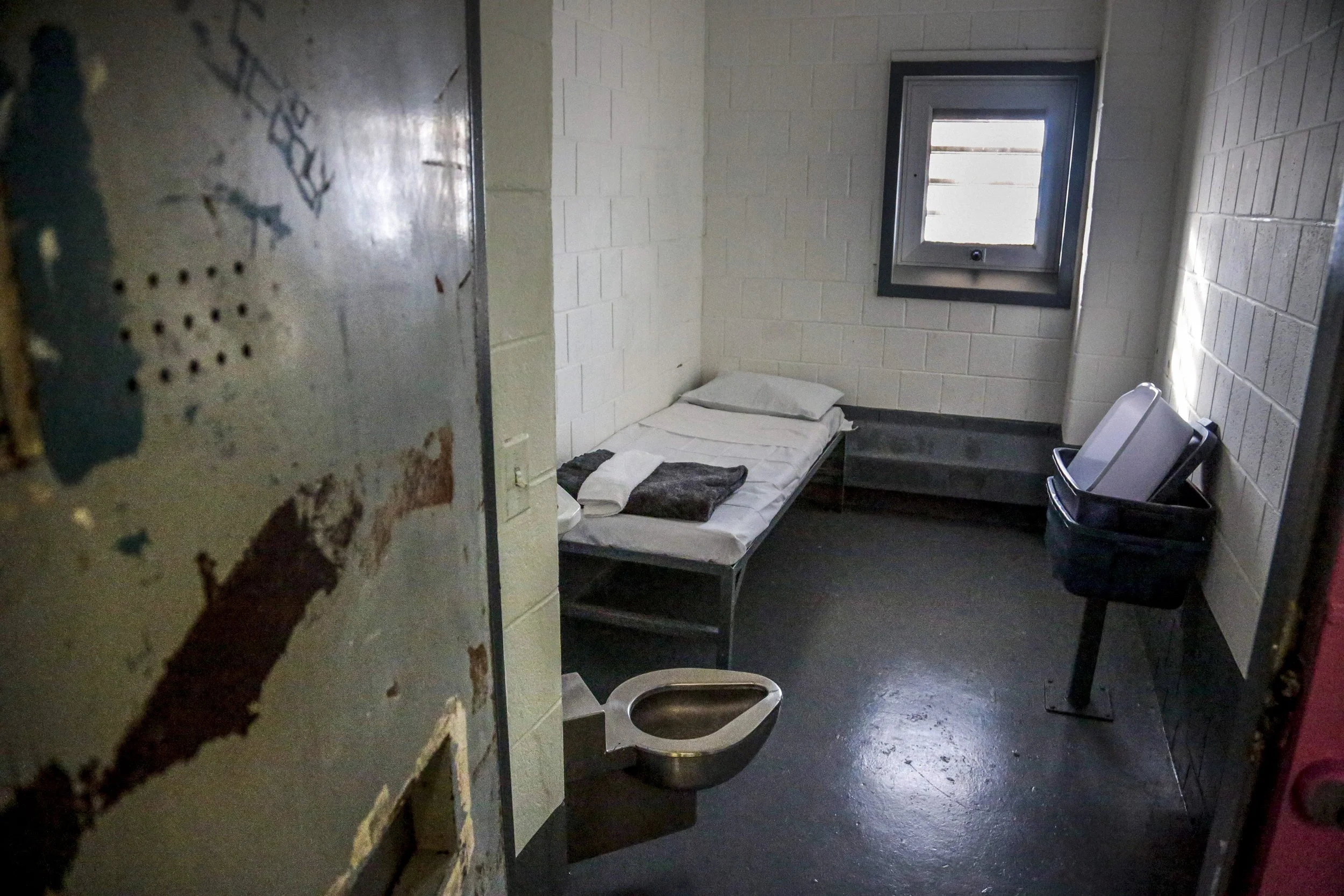
A Manhattan Supreme Court judge on Monday said that Mayor Eric Adams’ attempt to skirt around the implementation of a law banning solitary confinement in the city’s jails was illegal. AP file photo by Bebeto Matthews
By Jacob Kaye
Mayor Eric Adams illegally declared a state of emergency in the city’s jails in an effort to skirt around implementing a law banning solitary confinement in New York City, a judge ruled on Monday.
Manhattan Supreme Court Justice Jeffrey Pearlman said in a decision that the mayor broke the law last year when he passed an executive order declaring a state of emergency on Rikers Island to get around implementing the City Council’s law banning the use of solitary and other detainee confinement measures by the Department of Correction.
While the judge’s ruling doesn’t specifically order the law, known as Local Law 42, to be implemented, it orders the mayor to vacate his long-standing executive order.
The judge’s ruling comes around six months after the City Council sued the mayor over his refusal to implement the law.
After the Council passed the bill sponsored by Public Advocate Jumaane Williams in December 2023, the mayor vetoed it a few weeks later. The Council quickly overrode the mayor’s veto, cementing the law in the city’s books.
But just a day before the ban on solitary confinement was set to go into effect, the mayor declared a state of emergency in the jails and said implementing the law, which also puts restrictions on how the DOC can restrain detainees as they are being transported, would put both detainees and the officers who work on Rikers in danger.
Pearlman said in his Monday ruling that the mayor’s order didn’t meet the criteria for a true state of emergency and was only passed because of his opposition to the Council’s bill.
“There is a single tool available to the mayor, however, to prevent the implementation of a bill that the mayor opposes: the veto,” Pearlman wrote. “When the City Council overturns a mayoral veto, it is not an emergency, it is a democratic process, clearly laid out in the New York City Charter.”
Pearlman added that even though state law gives the mayor “immense power,” “that [the mayor] disagreed with the City Council on the passage of [Local Law] 42 cannot be considered an emergency.”
In a statement to the Eagle, a spokesperson for the mayor said that the mayor’s office was “reviewing our options” but did not immediately say if they would file an appeal.
The mayor and his Department of Correction commissioner, Lynelle Maginley-Liddie, have long denied that the DOC uses solitary confinement to punish detainees who commit violations behind bars. However, multiple reports and first-hand accounts from detainees, lawyers and researchers dispute that claim.
Last year, a former social worker on Rikers Island told the DOC’s oversight board, the Board of Correction, that officers regularly locked detainees with mental illnesses inside cells for weeks or months at a time without access to their needed medication, leaving them to deteriorate. The alleged practice called deadlocking, which had not previously been described to the public, would likely be in violation of a number of elements of Local Law 42. The Board of Correction issued a report last week about its investigation into deadlocking, supporting the claim made by the social worker. The report claimed that BOC staff found seven instances where detainees in mental health units were locked in their cells over the course of five weeks.
A spokesperson for the mayor on Monday again claimed that the city has not used solitary confinement in the five years since the state legislature passed a law banning the practice deemed torture by the United Nations throughout New York State.
"Let’s be clear: Solitary confinement has not been used in New York City jails since 2019, and Local Law 42 creates a new definition of solitary confinement out of thin air and then aims to ban that,” the mayor’s spokesperson said Monday. “Local Law 42 will create a public safety emergency in our jails that threatens the lives of both people in our care and our staff, and this court decision paves the way for that.”
Beyond Maginley-Liddie, at least one other jail authority agrees with the mayor’s concerns over the law’s implementation – federal monitor Steve J. Martin.
Earlier this year, Martin, who oversees conditions on Rikers as part of the ongoing detainee rights case known as Nunez v. the City of New York, said in a report that Local Law 42 was not a “viable” tool to separate those who commit violence behind bars from other detainees or staff.
As such, Martin said the law should be put on hold – at least for the time being.
“The monitoring team has grave concerns about the implementation of certain problematic sections of [Local Law 42],” Martin said in his report. “To the extent that the monitor is required to approve or direct certain [Department of Correction] practices that include the problematic components of [Local Law 42], the monitor will not approve or direct such practices absent modifications to those requirements.”
In the wake of the judge’s Monday ruling, however, City Council Speaker Adrienne Adams called on the mayor to “begin working towards being in compliance with the local law.”
“Judge Pearlman’s decision confirms that Mayor Adams’ attempts to circumvent local law banning solitary confinement by issuing emergency executive orders were unlawful and an abuse of power,” the speaker said. “Today’s ruling is a win for our local democracy, human rights, and public safety. The mayor must follow the law, just like every New Yorker, and cannot abuse the powers of the office.”
“Solitary confinement has been proven to cause physical, psychological, and emotional harm, making jails and our city less safe,” the speaker added. “The Council duly enacted Local Law 42 because we cannot maintain the status quo of failed policies and practices that put everyone in danger. Now that the mayor’s emergency orders are no longer in effect, the mayoral administration must bring the City into compliance with the law.”
Under the solitary confinement ban, incarcerated individuals who commit a violation behind bars would be prevented from being held in an isolated cell for more than two hours per day within a 24-hour period and for more than eight hours at night directly after an alleged offense occurred – the confinement would be referred to as a “de-escalation” period. Should corrections officials determine that further confinement is required to de-escalate a situation, an incarcerated person could be held for up to four hours total in a 24-hour period.
The law would also require the DOC to hold a hearing before placing someone in restrictive housing. During that hearing, the detainee would be allowed to be represented by an advocate, be it a lawyer, law student, paralegal or another incarcerated person. Local Law 42 also requires that people in restrictive housing are given access to at least 14 hours of out-of-cell time per day. That time is supposed to include programming and activities, according to the law.
The legislation also limits the use of handcuffs to restrain detainees during trips to the courthouse.