Queens candidates go to court to get opponents kicked off the ballot
/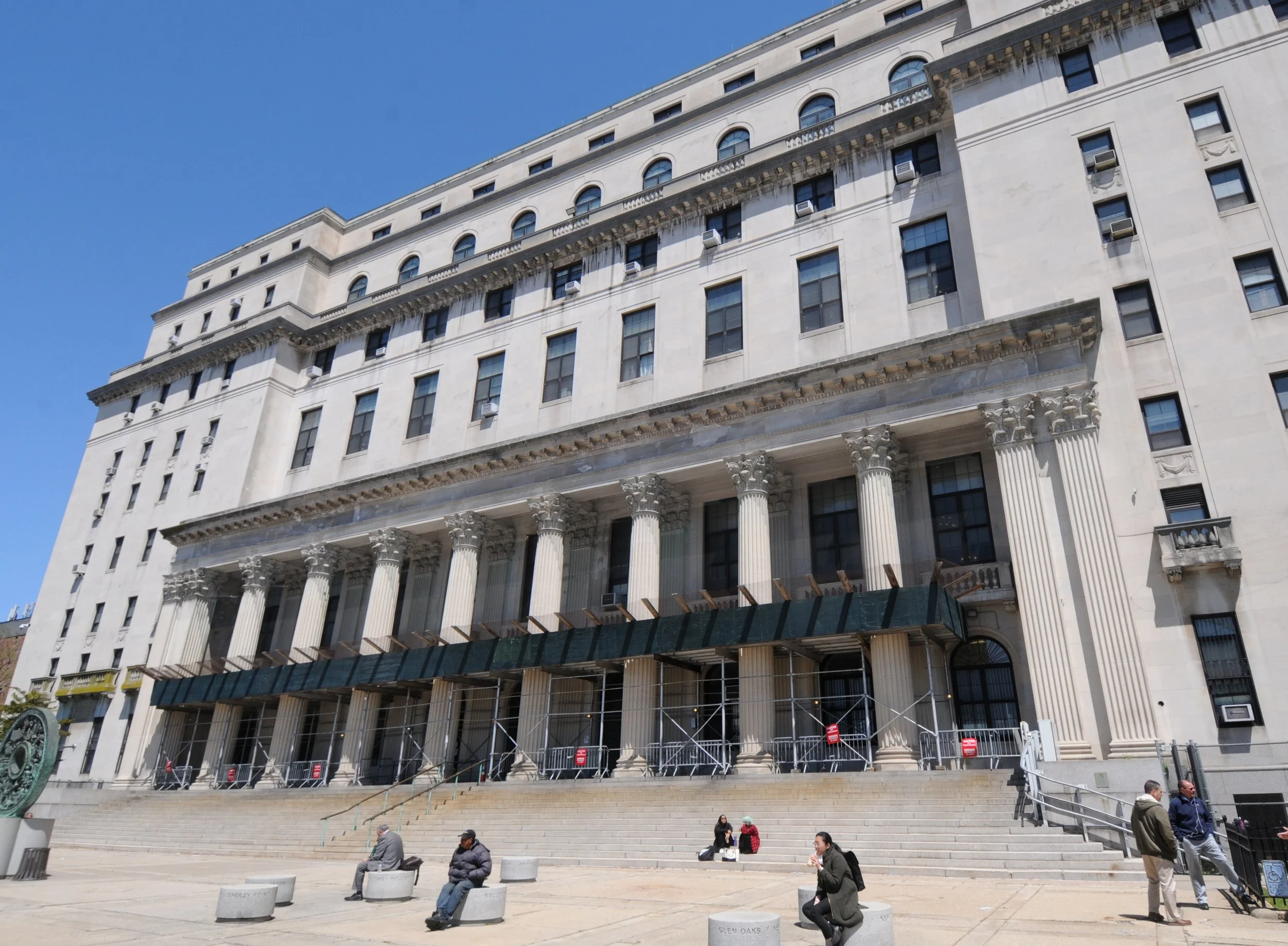
A number of Queens candidates and their attorneys will appear in Queens Civil Court on Monday as they challenge their opponents’ petition signatures or have their own signatures challenged. Eagle file photo by Walter Karling
By Ryan Schwach
Starting on Monday, lawyers for a handful of Queens City Council hopefuls will appear before a judge in Queens Supreme Civil Court to argue their client should stay on the ballot for the upcoming primary election – or that someone else should be kicked off of it.
Throughout the borough, several ballot petition objection lawsuits have been filed by Queens Council candidates seeking to invalidate their opponent’s petitions in an effort to disqualify them from appearing in the primary ballot in June.
It’s a relatively pro forma process, but one imbued with drama and potentially serious consequences.
Several candidates have claimed their opponents’ ballot petitions include fraudulent signatures, the signatures of people who aren’t registered to vote, illegible signatures and a number of other defects, intentional or not, that may destroy the validity of the petition.
Despite the formality of the process, some suits filed last week were unique.
One was brought against former City Councilmember Hiram Monserrate, who served 17 months in prison for corruption charges related to his time in office. The suit calls for Monserrate’s petitions to be tossed because he’s legally not allowed to take office in the Council under a city law that his supporters are currently challenging in a separate case.
Another was filed as a defensive measure. Former City Councilmember Ruben Wills, who was booted from the legislature around a decade ago after he was wrongfully convicted of corruption and who is now running to reclaim his former District 28 seat, said in a filing that should the Board of Elections decide to invalidate any of his petitions, such a ruling would be “erroneous” and need to be hashed out in court.
Wills’ suit, brought by his lawyer Ali Najmi, claimed that the petition objections made by the campaign of Queens County Democratic Party-backed candidate Ty Hankerson are "insufficient" and “without merit.”
“The filing of frivolous objections against my petitions by the Hankerson campaign is a waste of time,” Wills said in a statement. “I understand why they feel so threatened by my candidacy. I’m the most qualified person to become District 28’s next councilmember.”
According to Hankerson’s campaign, their issues with Wills’ petitions are numerous.
“This is about protecting the integrity of our democratic process,” a spokesperson for Hankerson’s campaign said in a statement. “The people of District 28 deserve to trust that their signatures and names have not been used without their knowledge or consent.”
Last week, several voters in Queens told the Eagle that they believed their signatures had been forged on a joint ballot petition circulating for Wills, public advocate candidate Marty Dolan, comptroller candidate Ismael Malave Perez and Queens judicial candidate Philip Grant.
Only Grant has been accused of having fraudulent petitions in court. Hankerson’s campaign did not file a petition to invalidate Wills’ collected signatures in court. It only raised objections to his petitions with the Board of Elections.
“If Mr. Wills submitted the required number of legitimate signatures from voters who actually signed his petition themselves, then he has nothing to worry about,” Hankerson’s camp added. “Our neighbors deserve a fair and integral election process."
Unlike the other Queens cases, Najmi filed the defensive suit in Manhattan.
Hankerson’s attorney, Michael Reich of the law firm that represents the Queens County Democratic Party, Sweeney, Reich and Bolz, told a judge on Friday that the case should be heard in Queens, where all other objections over petitions for Queens candidates will be argued.
In a statement to the Eagle, Wills claimed that his choice of venue had to do with his criminal conviction in Queens, which was overturned by an appeals court in 2020.
“After being wrongfully convicted in Queens Supreme Court, and the role that politics played in influencing the decisions of the judge to restrict exculpatory evidence, I have more confidence in my rights being better protected outside of Queens County,” Wills said.
As of the publication of this story, the judge in the case had yet to rule whether it would remain in Manhattan or be moved to Queens.
The courts get crowded
Attorneys for Queens Council candidates will be filing in and out of the Sutphin Boulevard courthouse this week.
District 21 candidate Yanna Henriquez, a local Dominican leader and district leader, is suing her primary opponent Sandro Navarro, who works in Senator Jessica Ramos’ office.
The suit alleges a number of potential issues with Navarro’s petitions. Navarro has counter-sued.
Neither campaign responded to requests for comment.
Democratic Party-backed candidate Dermot Smyth, who is running to replace conservative Councilmember Robert Holden in District 30, as well as Democratic incumbents Nantasha Williams, Lynn Schulman and Linda Lee, have also brought suits against their respective opponents.
Williams’ suit was filed against primary opponent Vera Daniels, who told the Eagle the objection “reveals a troubling truth about our political landscape – one where self-interest threatens to overshadow the voices of the people.”
Smyth is challenging the petitions of local priest Michael Lopez.
Schulman is objecting to the petitions of potential future Republican opponent Supreet McGrath, who is also facing objections from her primary opponent, John David Rinaldi.
Rinaldi, a perennial candidate known for harassing his opponents on the campaign trail, filed objections against 69 other candidates with the Board of Elections.
Lee is also attempting to knock off her potential future general opponent, Republican Bernard Chow.
A different kind of suit
The suit against Monserrate – while still centered on his petitions – is a bit different than the others.
The lawsuit is being brought by two of his primary opponents Yanna Henriquez and Shanel Thomas-Henry, who are themselves running against each other.
The suit argues that Monserrate misled petition signers when asking them to sign for his campaign because he’s not eligible for office in the first place.
“In knowingly obtaining signatures on his designating petition from voters for an office for which he was not eligible to be elected, or to hold, [Monserrate] misled the signatories and violated…election law,” the suit reads.
A law created by the City Council in 2021 was passed specifically to bar Monserrate from running for his old seat in the Council. The law disqualified people convicted of certain corruption charges from running for elected office in the city.
It’s not the first time the perennial candidate, who in the past year has spent his time advocating for an increased police presence on Roosevelt Avenue, has been prevented from running by the law.
“Monserrate was kicked off the ballot four years ago and two years ago for the same reason, and it still applies until some high court says it doesn't apply,” said Martin E. Connor, who is representing Henriquez and Thomas-Henry in the case. “This is kind of routine.”
“If he were to remain on the ballot and win, he can't take office,” Connor added.
Supporters of Monserrate are currently in the appellate court trying to get the law overturned.
Monserrate told the Eagle he thinks the suit is most damaging to his campaign’s finances.
“[Thomas-Henry and Henriquez] each [get] a benefit of $7,500 in my case, if I'm paying the same $15,000 when the attorney defends me and I don't get to split it,” he said. “There's an inherent disadvantage.”
Monserrate said he has requested a determination from the Campaign Finance Board’s attorneys on whether or not the action breaks any finance regulations.
As for the actual merits of the lawsuit, Monserrate is still confident that the law barring him from running will not stand up under a legal microscope.
“We're confident that, based on the constitutional issues that we have presented, that the law is invalid,” he said. “Under the current law in the City of New York, I could run for governor or president of the United States, but can't run for the City Council.”
Both Henriquez and Shanel-Thomas declined to comment on the suit.
A normal process
The objecting of petitions, through the Board of Elections and through the courts, is a normal and routine part of the New York City election cycle.
As election lawyer Jerry Goldfeder told the Eagle last week: “Opponents would rather knock off competitors than run a race.”
That is not to say it's a simple process.
It is a costly and time consuming effort to both file objections or bring them to court.
Howard Graubard, a New York election lawyer, said that candidates file objections with both the Board of Elections and the court – a move he called “belt and suspenders.”
But bringing objections to court means more work, and more of a burden to prove your case. However, the reward can be greater.
The courts can take a harder look at petitions. Unlike the BOE, candidates can allege fraud in court.
In addition to the greater effort, however, is the greater cost of bringing a case.
“It's cheap to do a challenge at the [BOE], it's court time that is expensive, and you're paying the lawyers by the hour,” said Graubard.
On Monday, Queens Supreme Court Justice Tracy Catapano-Fox will hear out many of the objections from Queens candidates.
Later in the month, the BOE will begin to rule on objections that were filed with their office.
Ballots will be finalized at the end of the month.