Queens Surrogate’s Court judge reflects on first year on bench
/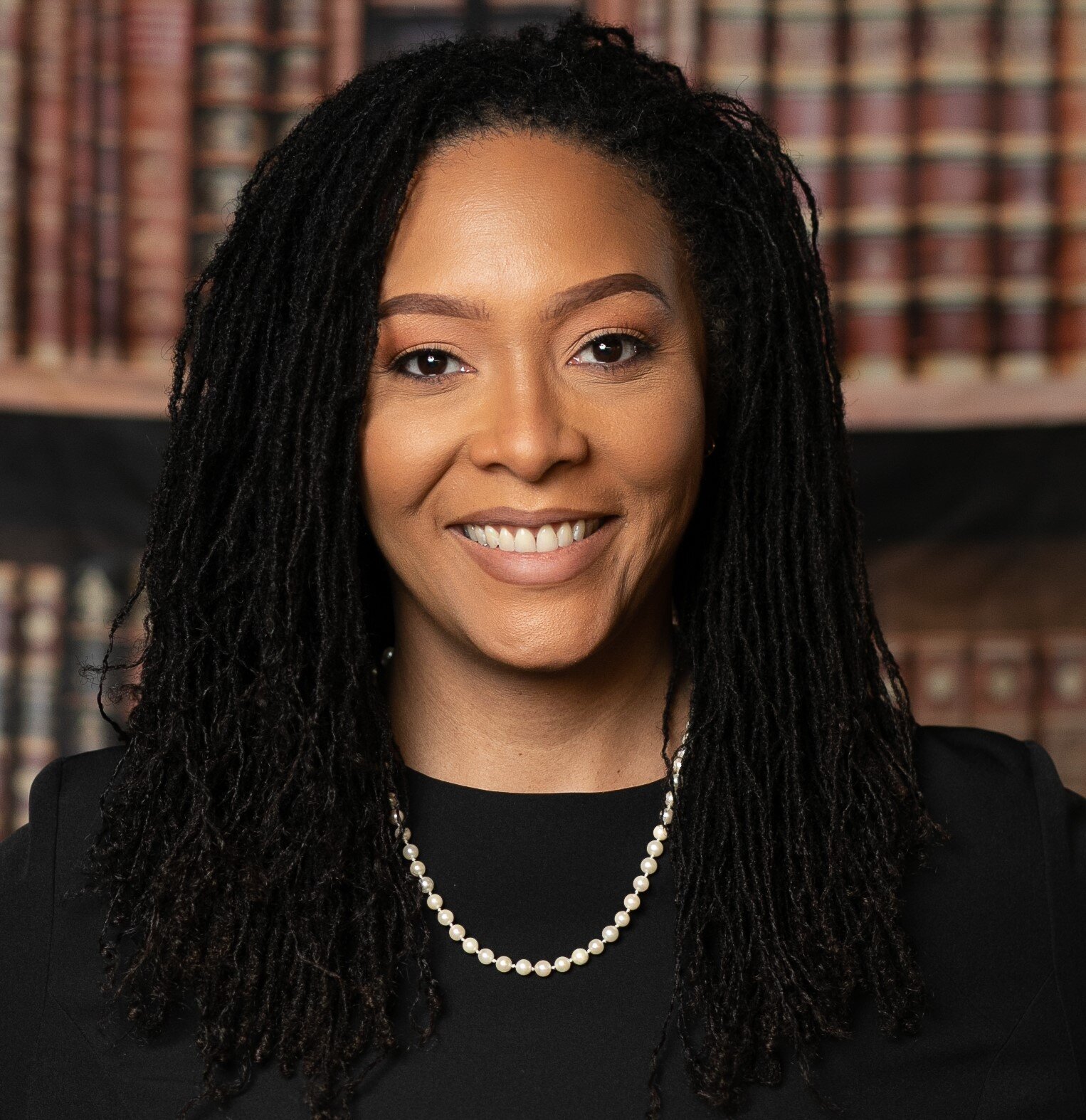
Queens Surrogate Judge Cassandra Johnson was the Queens County Bar Association’s recent guest for their Meet the Judge series. File photo via Johnson
By Noah Powelson
It’s been a busy year for Justice Cassandra Johnson. Nonetheless, she found time to talk with prospective attorneys and judges about how a Queens native mathematician became the first woman of color to serve as Surrogate’s Court judge in the World’s Borough.
The Queens County Bar Association held their seventh Meet the Judges fireside chat with the Queens judiciary this past Wednesday, this time speaking with Queens’ recently appointed surrogate judge. Johnson sat down with QCBA leadership – including former President David Adler, current President Kristen Dubowski-Barba and Executive Director Johnathan Riegal – for a virtual discussion on Wednesday to talk about how she came to the bench.
Johnson was born in Far Rockaway and raised in Queens Village, where she still lives today with her family. Like many attorneys, law runs in Johnson’s family – her mother was also an attorney working in real estate, personal injury and general practice. But despite her upbringing, Johnson said she never had intention of going to law school, and that her earliest passion mathematics.
“People are often surprised to know that I was a math major in college with the full intention of becoming an engineer,” Johnson said. “I love to put things together. I saw how math reveals problems, reveal their own logic.”
But a shift occurred while Johnson continued to work for her mother throughout college. She said she saw how many of her mother’s clients were in desperate situations and plagued with fear and uncertainty. She also saw how her mother didn’t just help her clients with legal issues, but restored their dignity and maintained security in their communities.
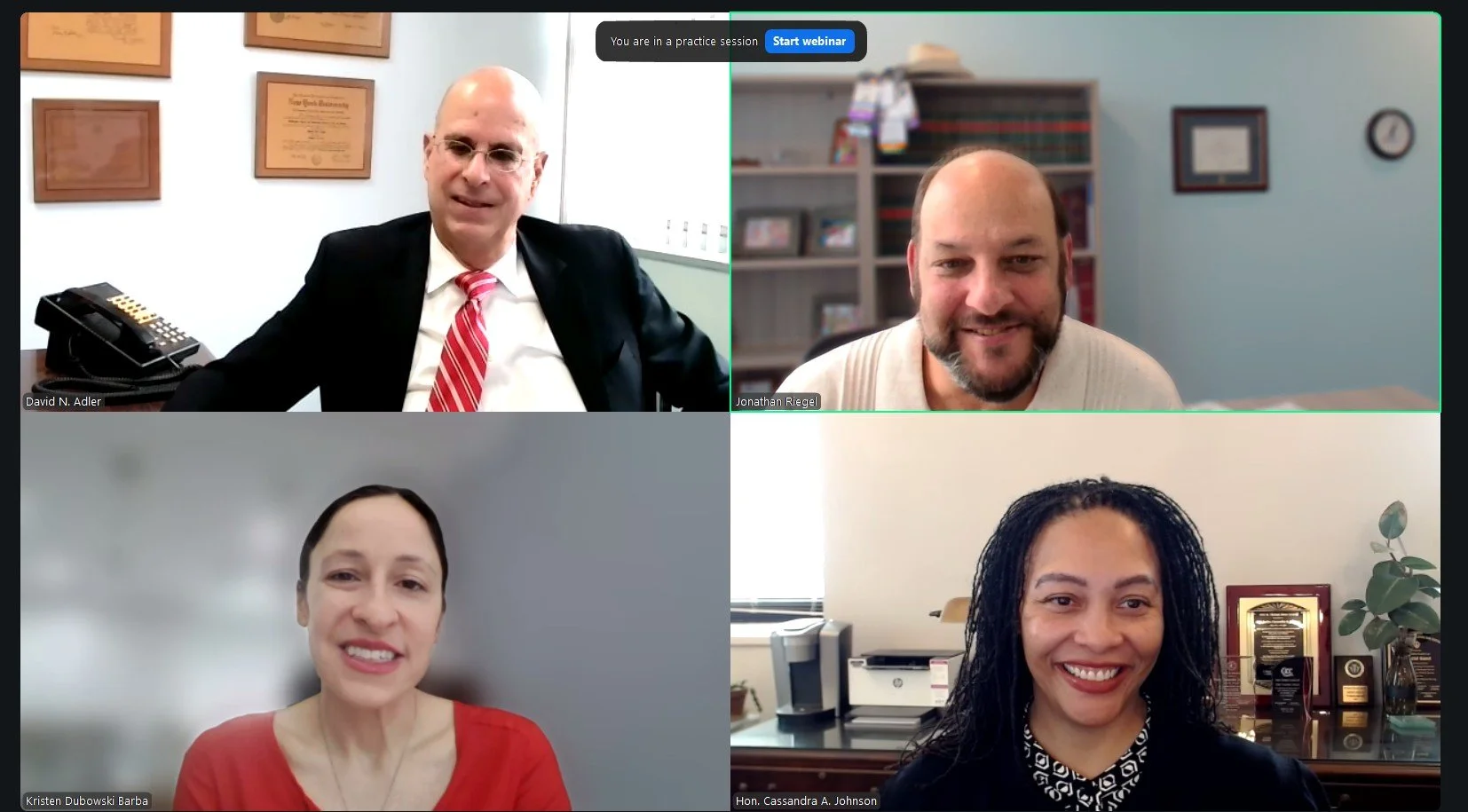
Queens Surrogate Judge Cassandra Johnson speaks about her career with Queens County Bar Association President Kristen Dubowski-Barba, former President David Adler and Executive Director Johnathan Riegal. Photo courtesy QCBA
“It kind of struck me that attorneys are, in a sense, social engineers,” Johnson said. “We help build and reinforce the structures that hold families together. Communities, institutions, society as a whole. And I've realized that the tools that I love so much in mathematics, the analysis and the structured problem solving, they had an even more profound purpose in the legal world.”
From there, Johnson took the LSAT and eventually went to law school at St. John’s University, the same university her mother went to and where she was eventually sworn in as Surrogate’s Court judge. She continued to work for her mother throughout law school, who she called her greatest mentor.
“She's a brilliant person, but also an excellent teacher,” Johnson said. “I was really lucky that I had the opportunity to work for her right out of law school.”
Johnson later worked as a law secretary for a judge in Queens Supreme Court, Civil Term, where she worked for about 12 years.
Johnson was nominated by the Queens County Democratic Party to run for election to the Civil Court in 2021, a race she won. Not long after, she successfully ran for a spot on the Supreme Court, becoming the first Haitian American woman to be elected to a State Supreme Court seat. But her greatest trailblazing moment was getting elected to the bench of the unique and powerful Surrogate’s Court, which primarily deals with guardianships, estates and wills. Unlike the borough’s Civil and Supreme Courts, Surrogate’s Court only has a single judge serving in it.
She’s served as Queens County’s surrogate judge for the past year, and said it’s unlike any job she’s ever had in her legal career.
“It's been an adjustment,” Johnson said. “It's really different than being a judge in Civil or Supreme Court. I'm the only one. There’s a different level of reliance on what I'm doing, what my thought process is surrounding every matter that comes before the court, from the clerks to the matters that are in the courtroom.”
Johnson called the court “deeply human,” noting that it often involves deciding matters of not just about law but about family legacy. Johnson regularly makes decisions over disputes on family inheritance following the loss of a loved one, sometimes deciding who is entitled to items or assets that go back generations.
“I have to deal with every matter being mindful that there is a story behind everything that has happened or everything that is happening, and that every decision I make or how we help parties resolve their matters will shape a family's future,” Johnson said.
Looking ahead to next year, Johnson said expanding access to justice is at the forefront of her concerns, including updating the court’s website, recruiting more mediators and doing more outreach work. Language access in particular is a priority for Johnson, who said her court frequently relies on other courts’ interpreters or per diem interpreters to keep the court functioning.
“Queens is not only the most diverse borough, but also county in the entire country, and it's important that we provide not just the physical access to the court, but language access,” Johnson said. “I've been working on getting our own interpreters instead of us having to borrow court interpreters from other courts or have per diems who come in…We definitely have a need to have our own interpreters in house.”